The Melon by Manet, Edouard
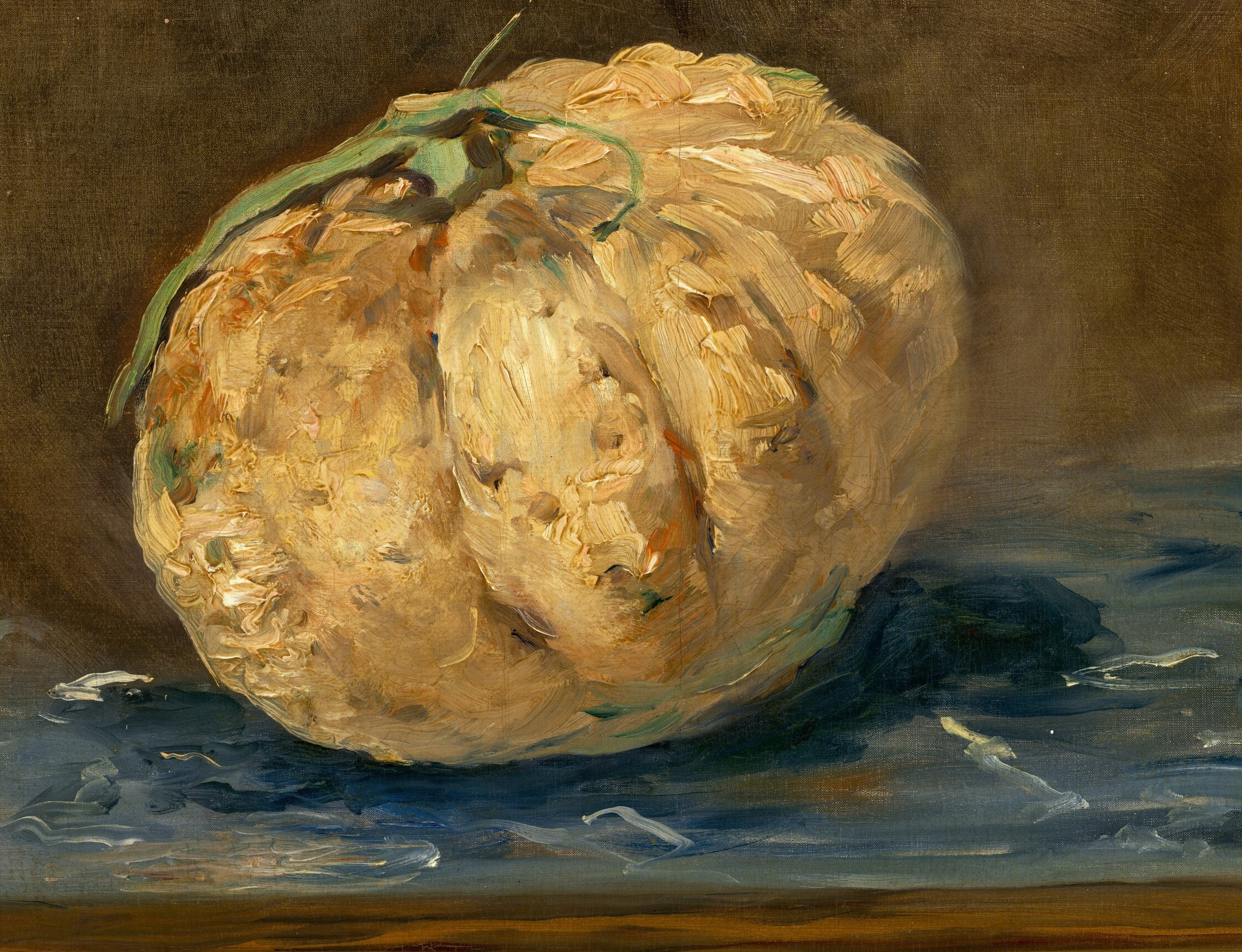
Édouard Manet's 'The Melon,' painted around 1880, captures a simple fruit with profound artistic depth. Now housed in a private collection, this still life showcases Manet's mastery even as his health declined.
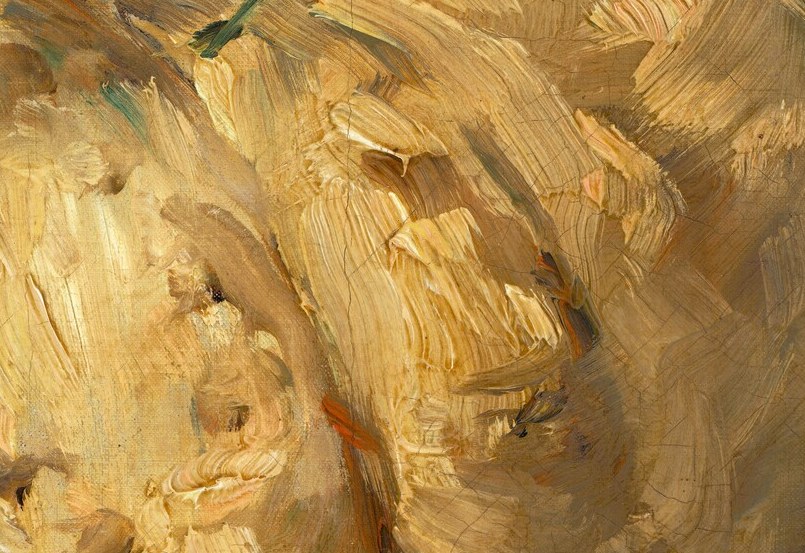
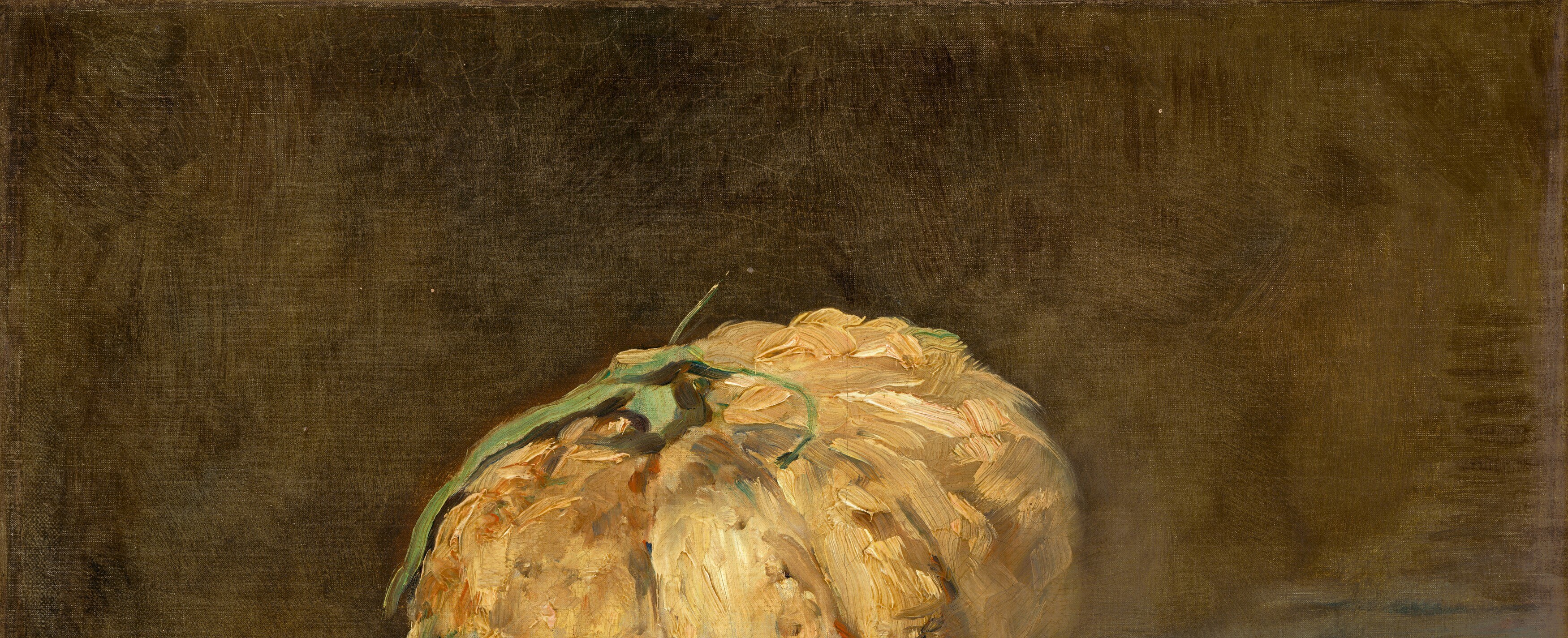
Notice the vibrant green stem and the thick, impasto brushstrokes that give the melon's rind a tactile quality. The strategic use of light creates a luminous highlight, emphasizing the fruit's volume and form against the dark background.
Created late in his career, 'The Melon' exemplifies Manet's shift towards a more direct and painterly approach, prioritizing immediate visual impression over meticulous detail. He elevates a mundane object, treating it with the same compositional rigor as his more famous portraits.
This painting is a testament to Manet's enduring focus on the interplay of form, light, and surface, showing an artist whose vision remained sharp until the very end. What everyday object would you elevate in a painting?
Details


Transcript
This painter was near the end of his life. Yet his vision for light and texture remained sharp. He captures the melon's bumpy, textured skin. See the thick, rapid brushstrokes on its surface. This direct, painterly approach defined his late work. A simple subject, elevated by his lasting genius.