The Death of the Venerable Odón de Novara by Vincenzo Carducci
The Death of the Venerable Odón de Novara by Vincenzo Carducci (c. 1632) is an early Baroque masterpiece from the Museo del Prado, showcasing a profound spiritual narrative through carefully chosen symbols.
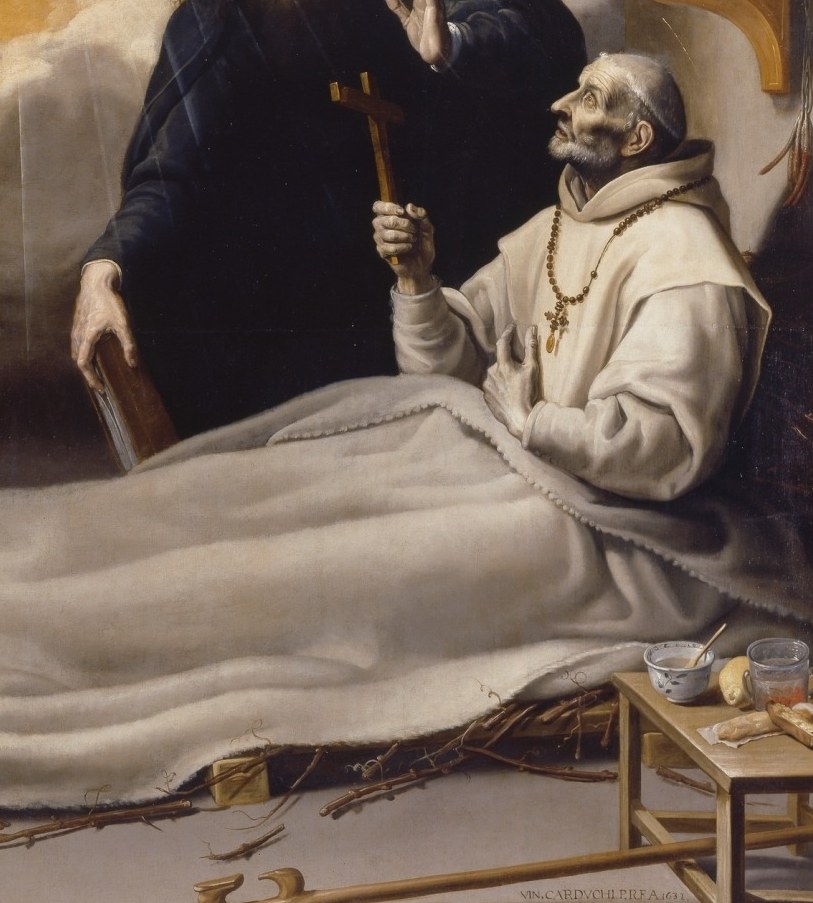
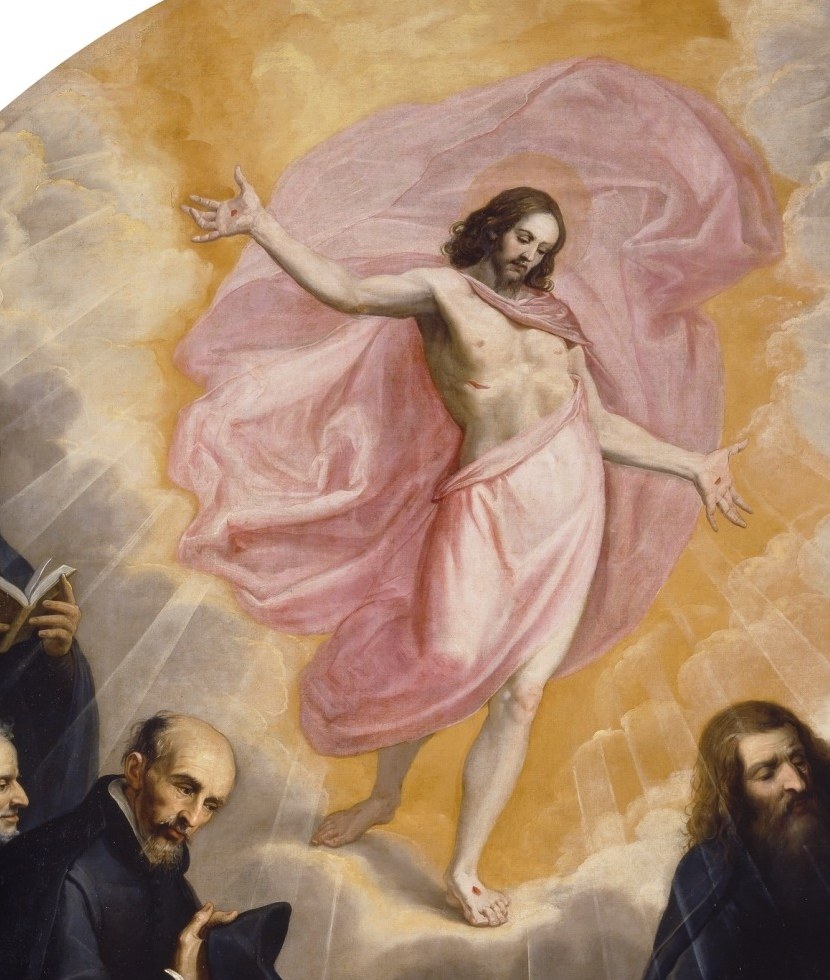
The painting centers on the dying monk Odón de Novara, his frail form a testament to earthly suffering. Observe the divine vision ascending above, and the monk's own folded hands, signifying his devout life and acceptance of fate.
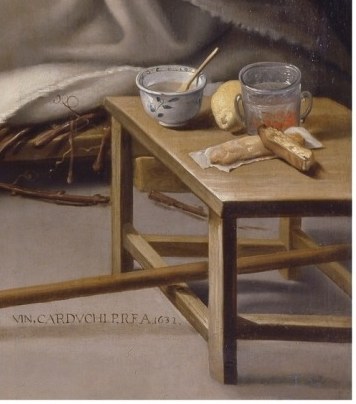
Created by an Italian painter working in Spain, this work exemplifies the period's dramatic use of light and shadow to convey religious intensity. The symbols of the open book, the bowl of bread, and the discarded crutches all speak to his faith, his sustenance, and his imminent release from worldly pain.
Each element is placed with intention, guiding the viewer through the monk's transition from mortal suffering to divine peace.
Details
Transcript
This monk awaits his final judgment. Above him, a divine vision appears. His folded hands show a life of prayer. The open book offers him sacred words. Bread and a bowl mean simple sustenance. Discarded crutches signal release from pain. Light from above blesses his passing. Odón de Novara died in 1632.