First Steps, after Millet by Vincent van Gogh
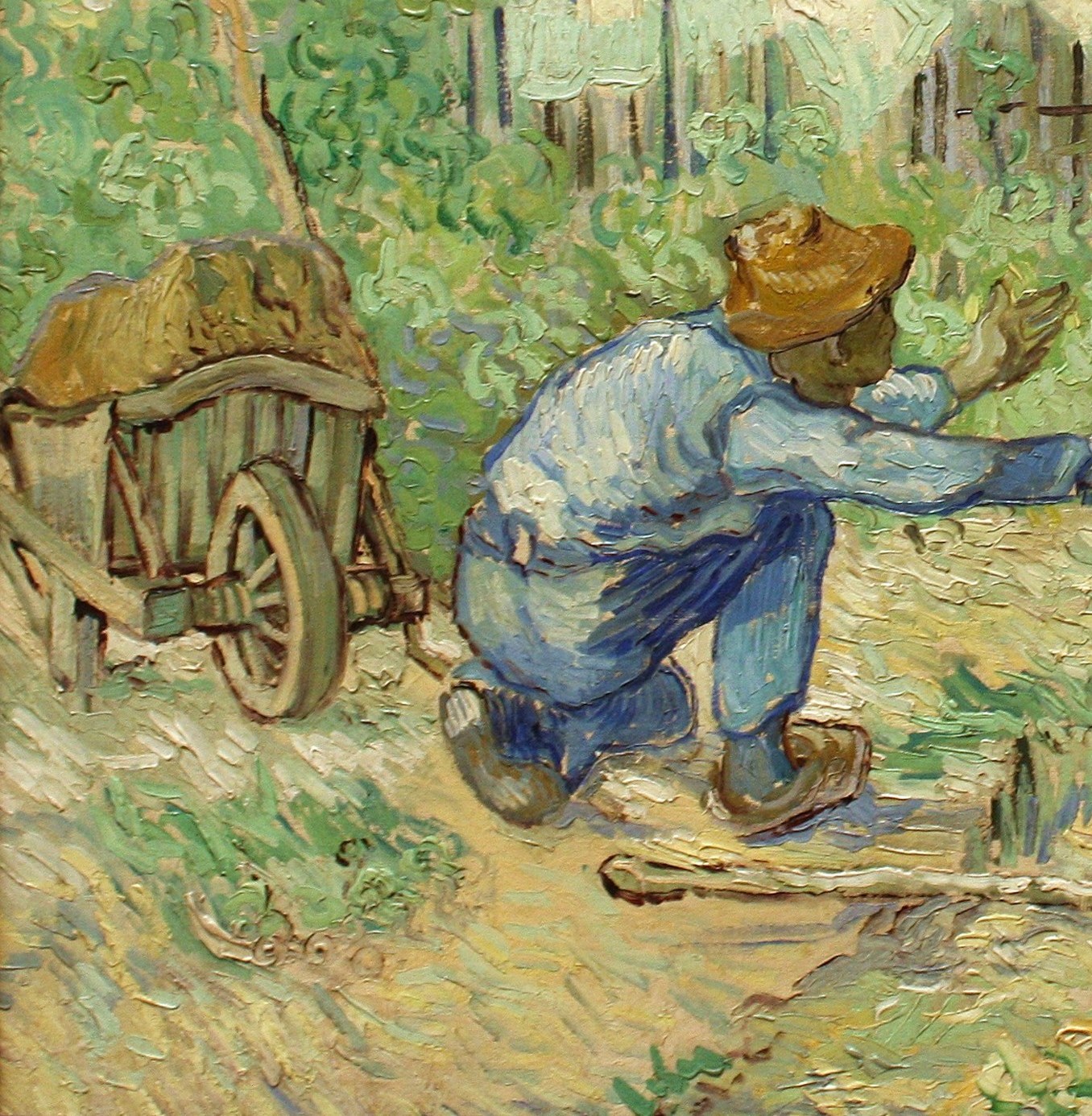
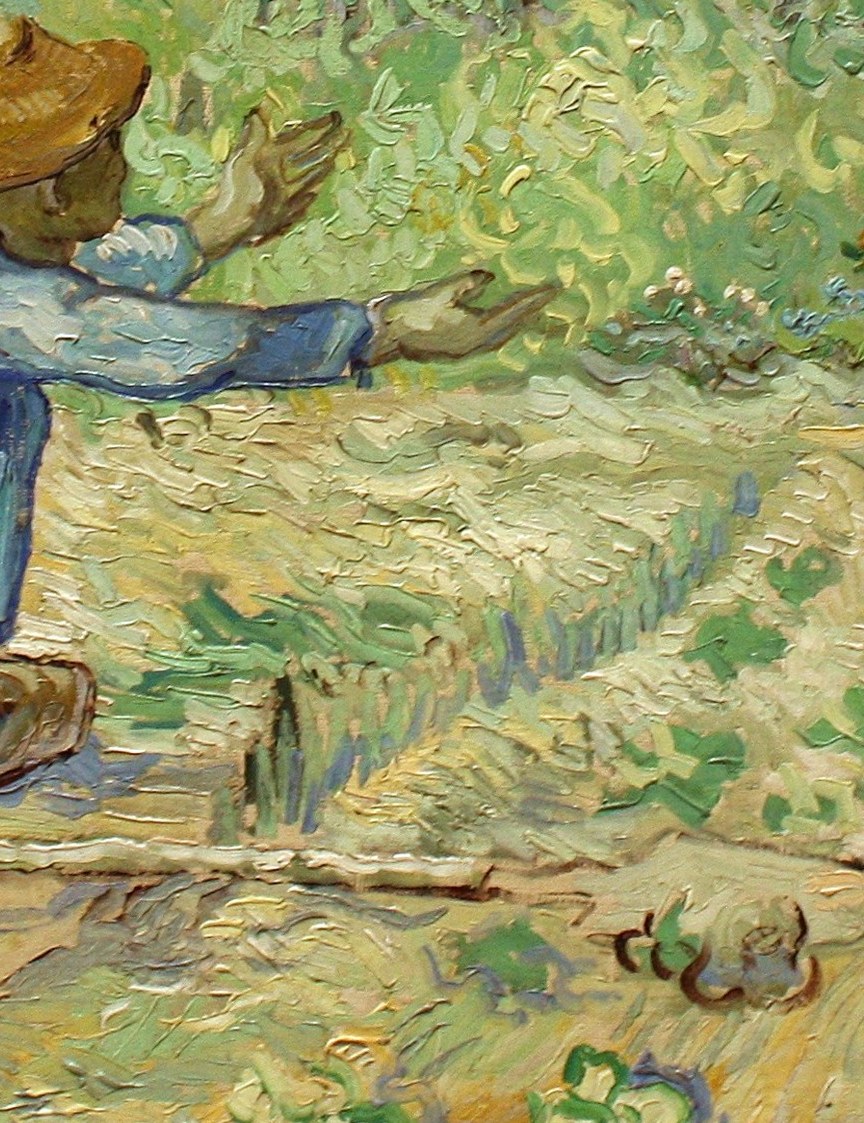
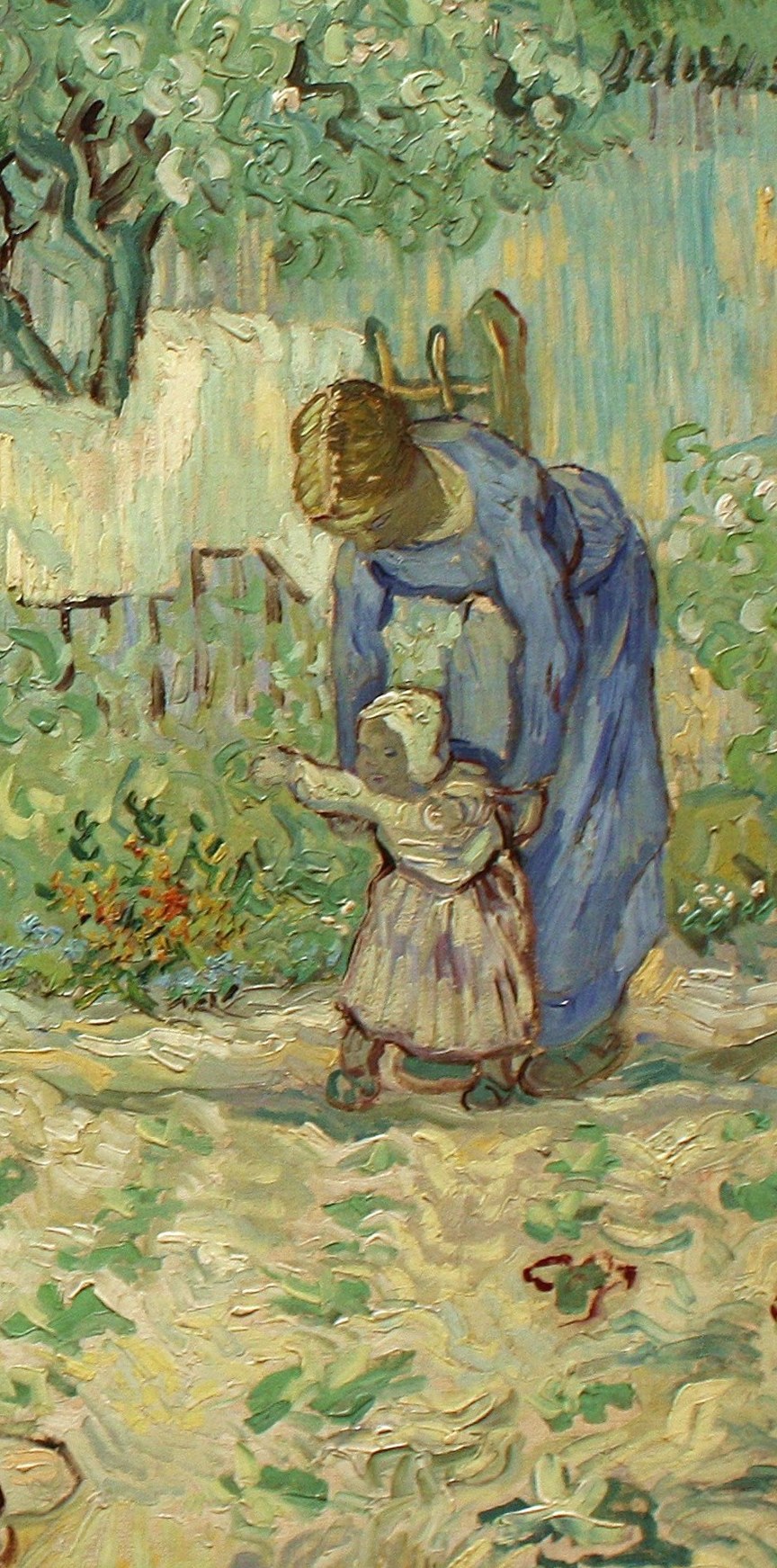
Vincent van Gogh painted "First Steps, after Millet" in 1890 while confined at the Saint-Paul-de-Mausole asylum in Saint-Rémy-de-Provence, less than a year before his death. The work now hangs in the Metropolitan Museum of Art. It is a copy after a drawing by Jean-François Millet, whom Van Gogh revered, but the thick, directional brushstrokes and the saturated yellow-green light are entirely his own.
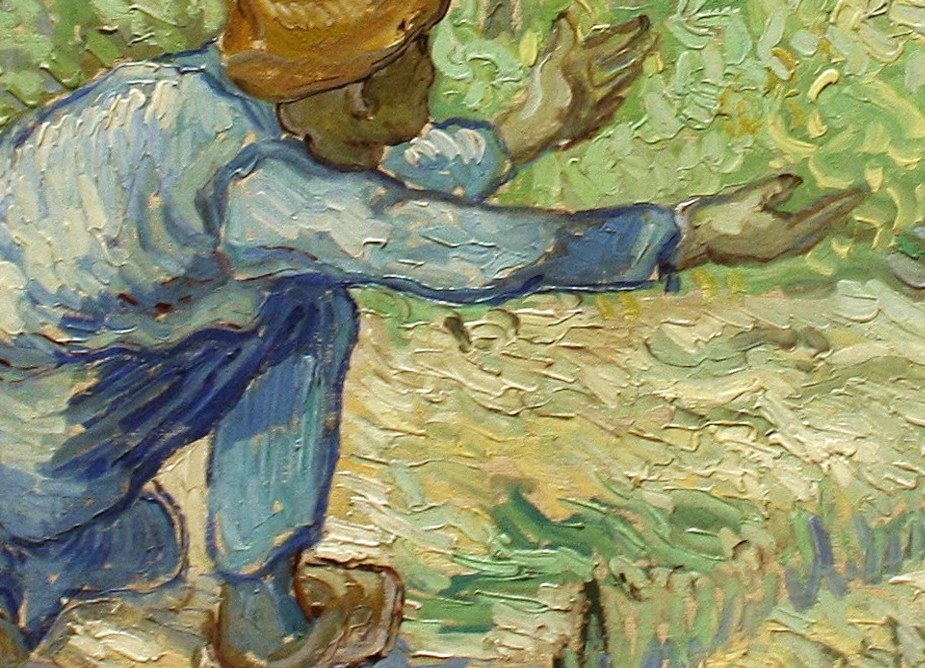
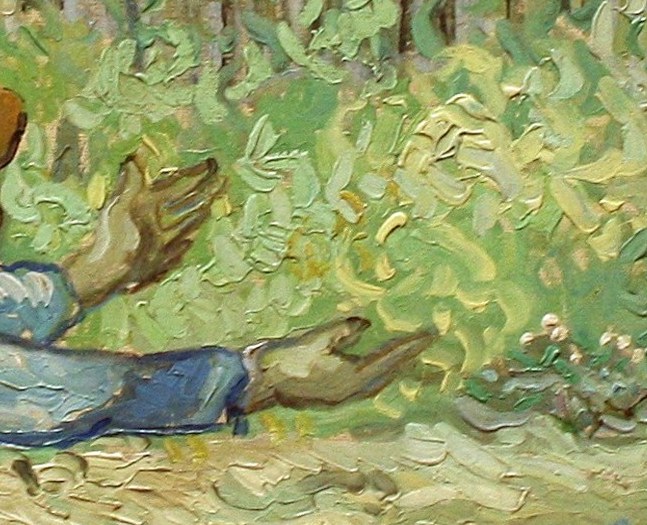
Look at the father. His blue shirt is a swirl of short, loaded strokes; his whole body leans into the child, arms making a bridge of expectation. The actual contact has not yet happened. The tiny face of the toddler points toward the father, not the mother who has just released her child at the right. Van Gogh freezes the most charged moment: the instant trust wins over gravity.
Van Gogh had a deeply fractured relationship with his own father, a strict Protestant minister, and he spent his adult life longing for a domestic wholeness that kept falling apart. By 1890 he had no wife, no children, no settled home. He made this scene of unconditional paternal presence not from life but from a black-and-white print, layering into the paint a tenderness he could only imagine.
Millet gave him the composition; the asylum gave him stillness; the brushwork gave him a way to feel it. For a few weeks that winter, he painted a family ready to catch him.
Details
Transcript
He painted this from an asylum, a year before he died. His entire body folds toward the child. He never knew his own children. He never had a home. A father who never touched him is reaching here. The little face turns toward the father, not the mother. Vincent borrowed this tenderness. He had to build it from memory.