The Tulip Folly by Jean Léon Gérôme
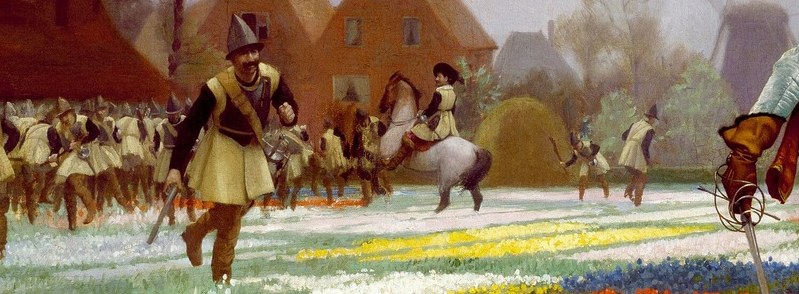
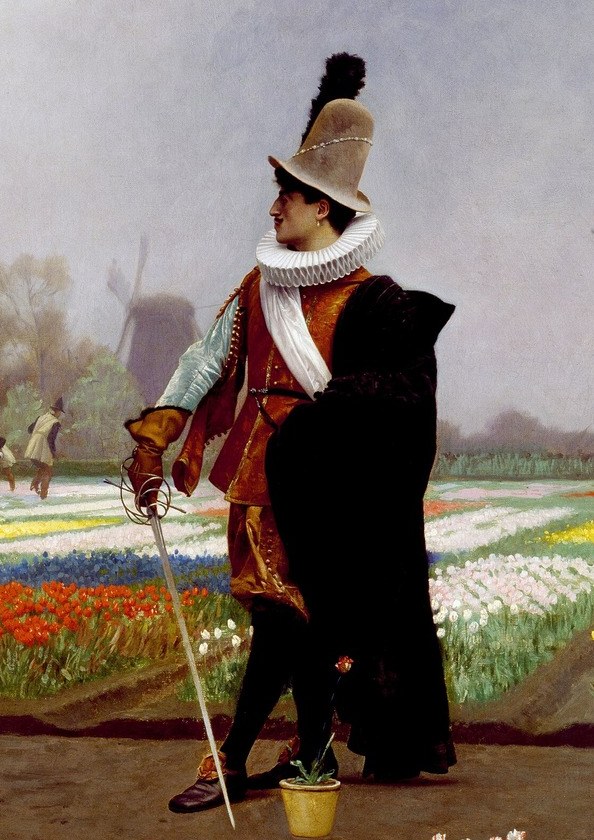
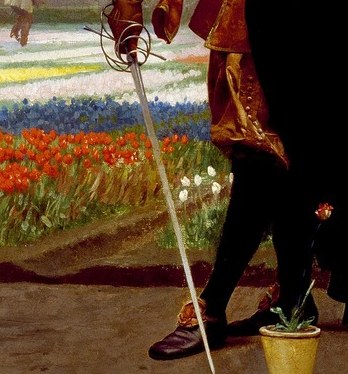
Jean-Léon Gérôme's 1882 painting, The Tulip Folly, captures a dramatic moment from 17th-century Holland's infamous "tulip mania." It depicts government soldiers destroying tulip fields to curb supply and prevent further price drops, while an aristocratic owner defiantly protects his prized, though broken, flower. The work is housed at the Walters Museum of Art.
Look closely at the foreground where vibrant tulips meet the soldiers' destructive efforts. The owner's elaborate attire and his protective stance over the broken tulip highlight the personal stakes involved in this economic bubble. The silhouette of St. Bavo church in the background grounds the scene in Haarlem, placing the historical event within its proper context.
The tulip, imported from Turkey, became an object of extreme speculation in the 1630s. Prices for some varieties soared to outrageous levels before the inevitable crash, leaving many investors ruined. Gérôme painted this work not just as a historical re-enactment but also as a commentary on contemporary financial instability, specifically the severe 1882 crash of the Paris Bourse.
The painting serves as a timeless reminder of the dangers of speculative bubbles and the often-unforeseen consequences of market frenzies. What other historical parallels do you see in today's world?
Details

Transcript
Holland, 1637. A speculative frenzy gripped the nation. Tulips, once a luxury, became a disastrous investment. When the market crashed, some fortunes evaporated overnight. Government soldiers destroy fields to stabilize plummeting prices. This aristocratic owner defends his single, broken flower. His defiant stance embodies the market's collapse. The artist painted this after the 1882 Paris stock market crash. A warning about bubbles, from one century to the next.