The Abduction of Rebecca by Eugène Delacroix
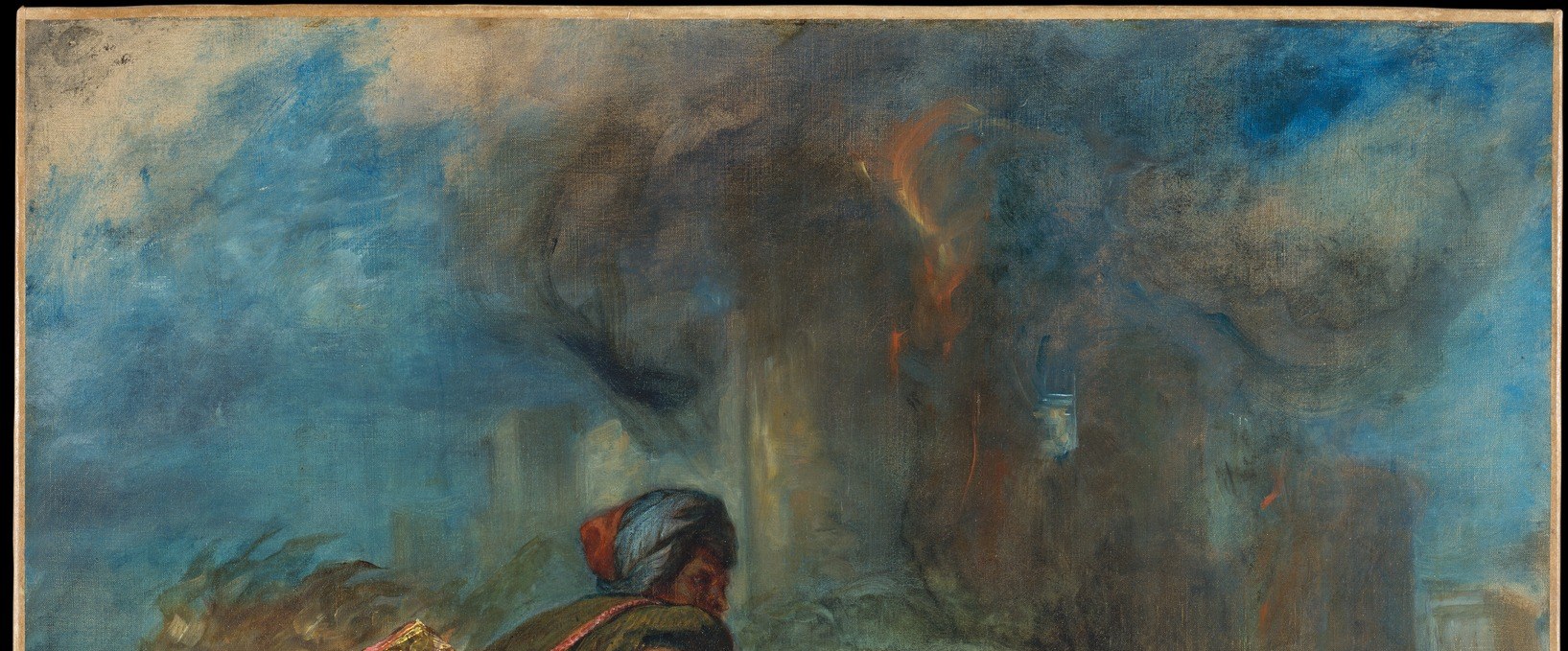
This is Eugène Delacroix's The Abduction of Rebecca, painted in 1846 and now at the Metropolitan Museum of Art. It depicts a scene from Sir Walter Scott's novel Ivanhoe where the heroine Rebecca is seized by the knight Bois-Guilbert. The painting is a summit of French Romanticism, a literary drama expressed entirely through paint texture and broken color.
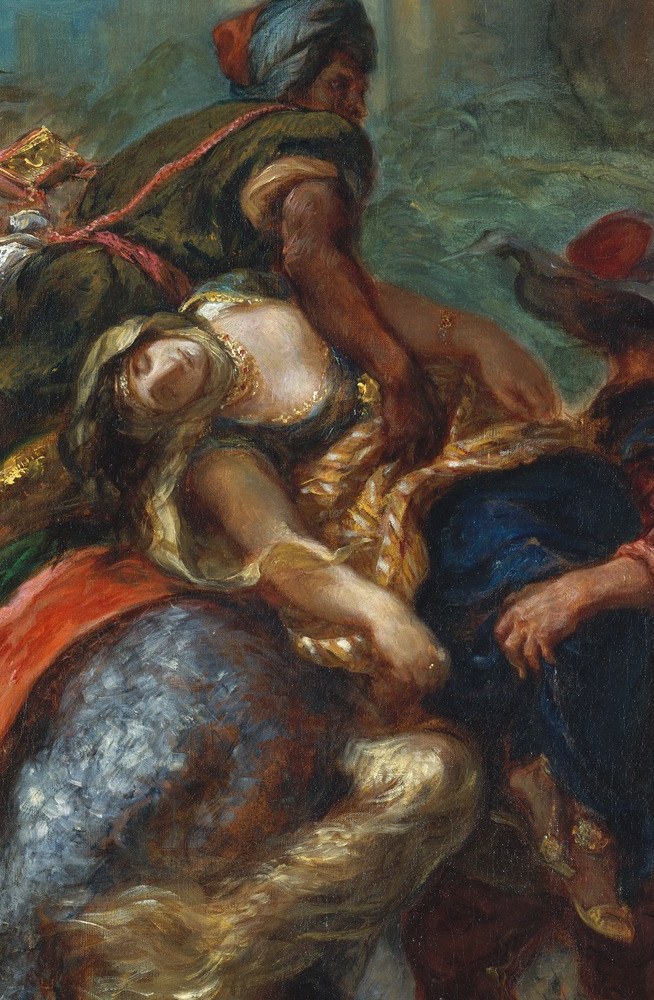
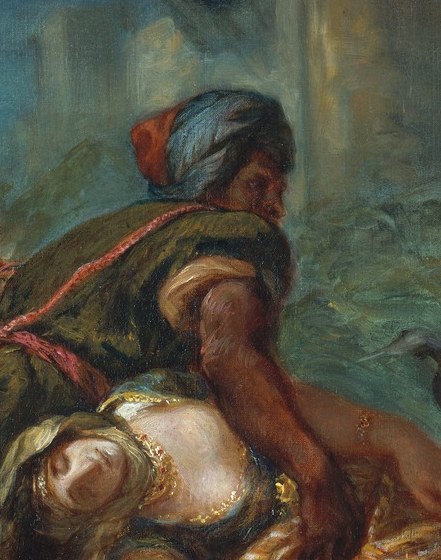
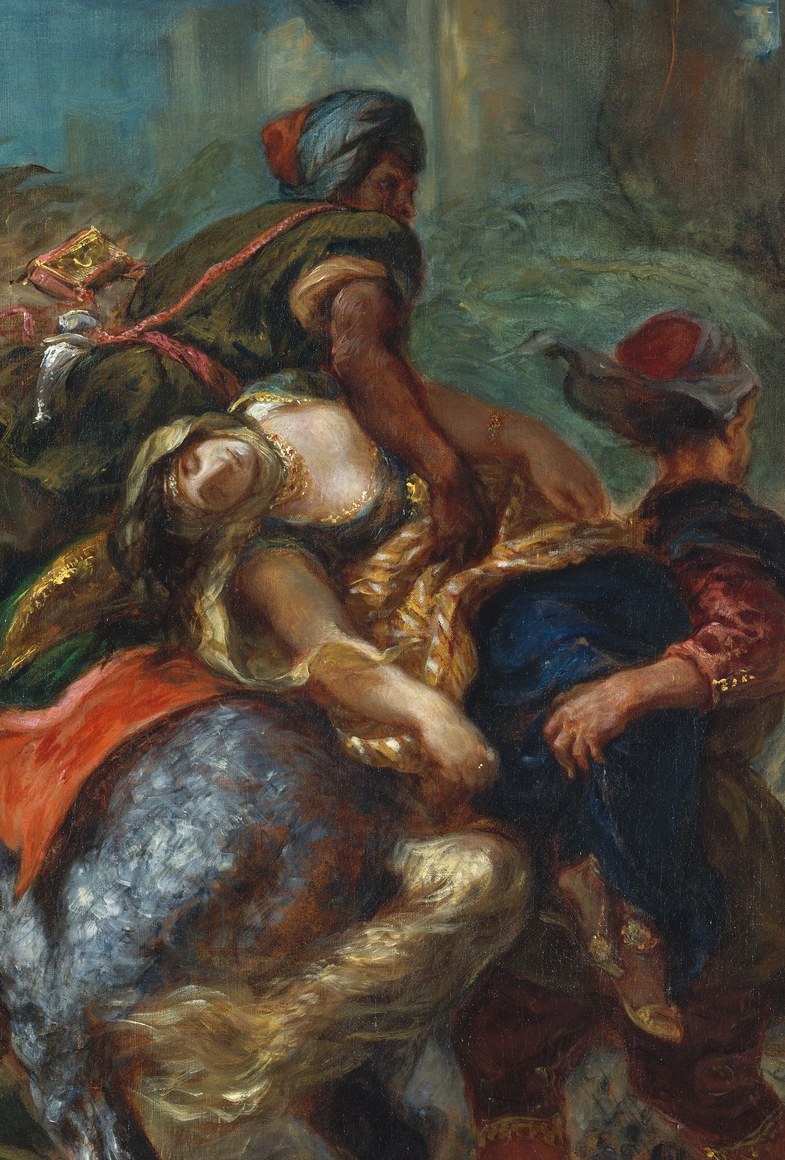
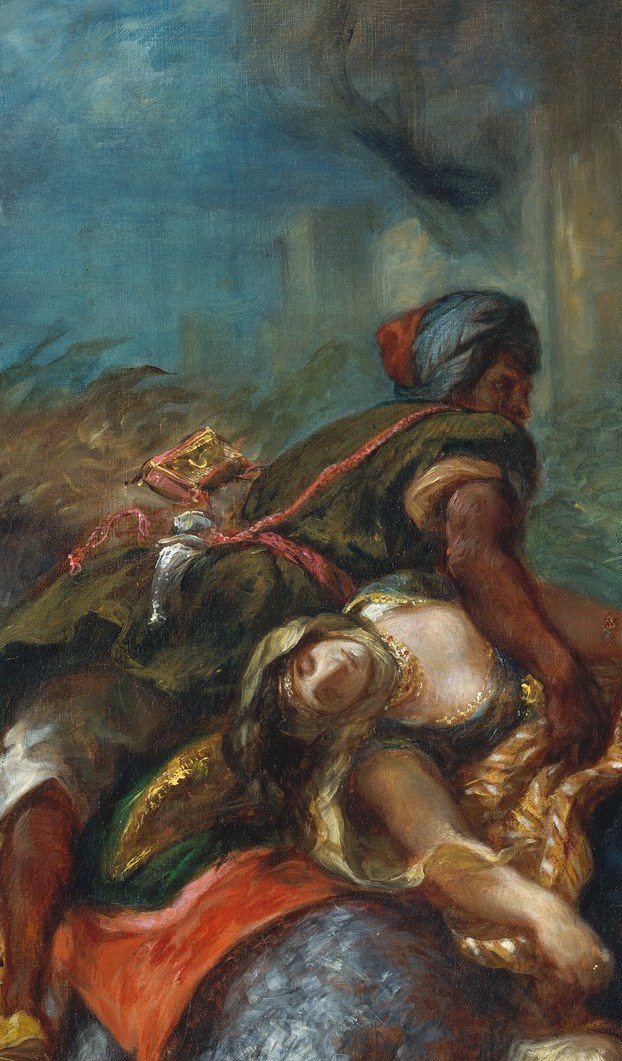
Look directly at Rebecca's white dress. Your eye insists it is bright white, incandescent even, against the smoke and fire. Now look closer. The dress contains no pure white at all. It is built from bold, separate dabs of grey, blue, pale green, and ochre, laid side by side so the eye mixes them at a distance. This optical blending, called flochetage, is what makes the fabric seem to vibrate and glow.
Delacroix learned this from the Flemish master Peter Paul Rubens. The principle is simple but punishingly difficult to execute: do not add white to lighten a form, add color, cool greens and blues for shadow, pale yellows and pinks for the lifted planes. It means rejecting the smooth, invisible finish of academic painting for a surface that looks almost chaotic up close and resolves into radiant light only from a step back. The technique became foundational to the Impressionists.
The dress does more than glow. It carries the entire moral weight of the scene. A white shape held aloft in a maelstrom of red, black, and gold. Delacroix was not sentimental, but he was exact about where he placed the light. Everything around the dress is built to make you find it. What does the dress make you feel before you even read the story?
Details
Transcript
Look at the center of this chaos. A white dress, glowing like a lantern. It is not pure white. It is grey, blue, and green. Delacroix built it from thick, separate strokes of paint. He called this technique 'flochetage', painting with a charged brush. He learned this light from Rubens: color does the work, not white.