The Entombment of Christ by Angelico, Fra
This is The Entombment of Christ, painted around 1450 by Fra Angelico, a Dominican friar who produced some of the most radiant religious paintings of the early Florentine Renaissance. The panel shows the moment between the Deposition and the Resurrection, a biblical beat rarely given its own spotlight in art. Fra Angelico was painting for his brothers at the convent of San Marco in Florence, where works like this functioned as both devotion and daily instruction.
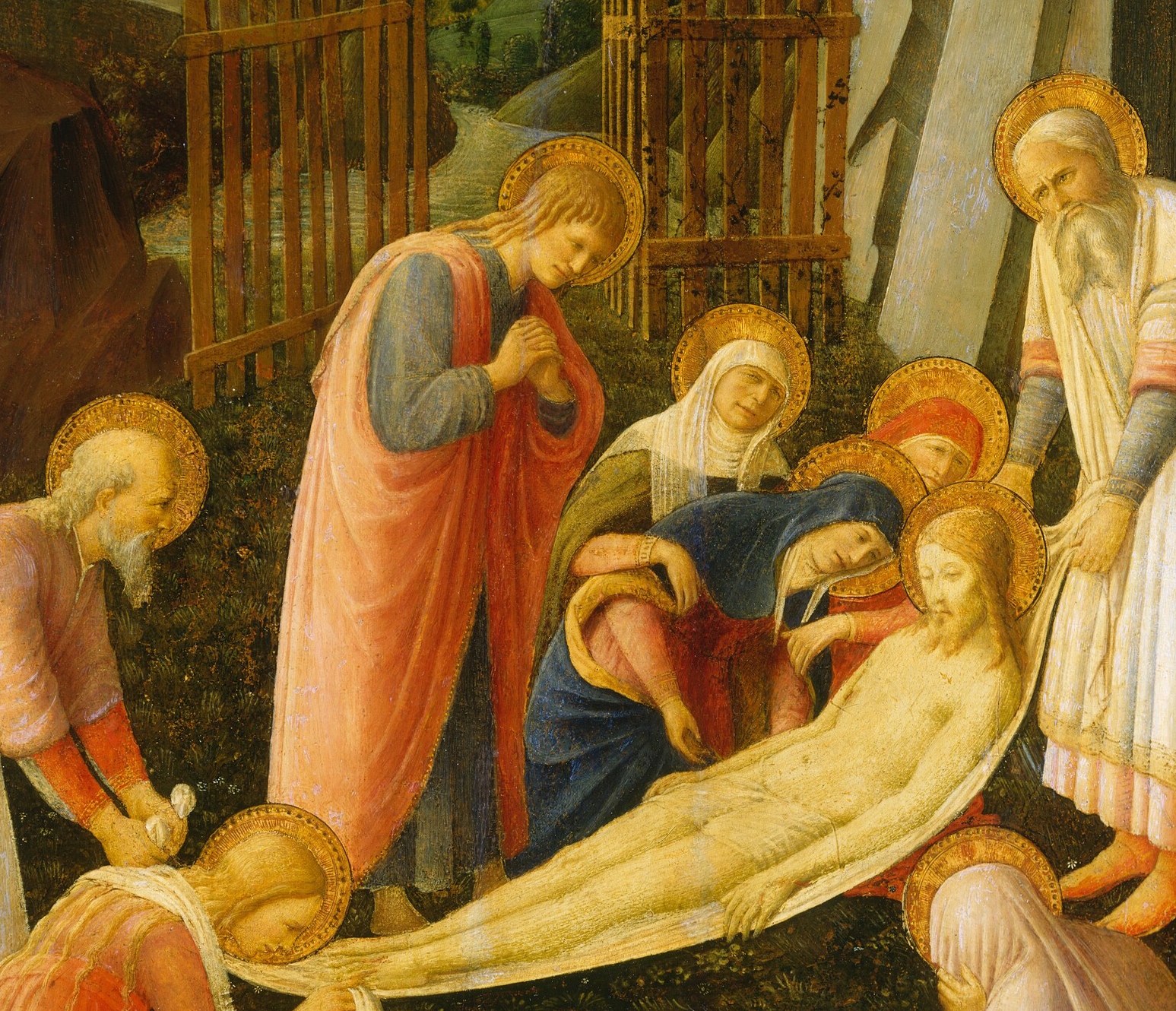
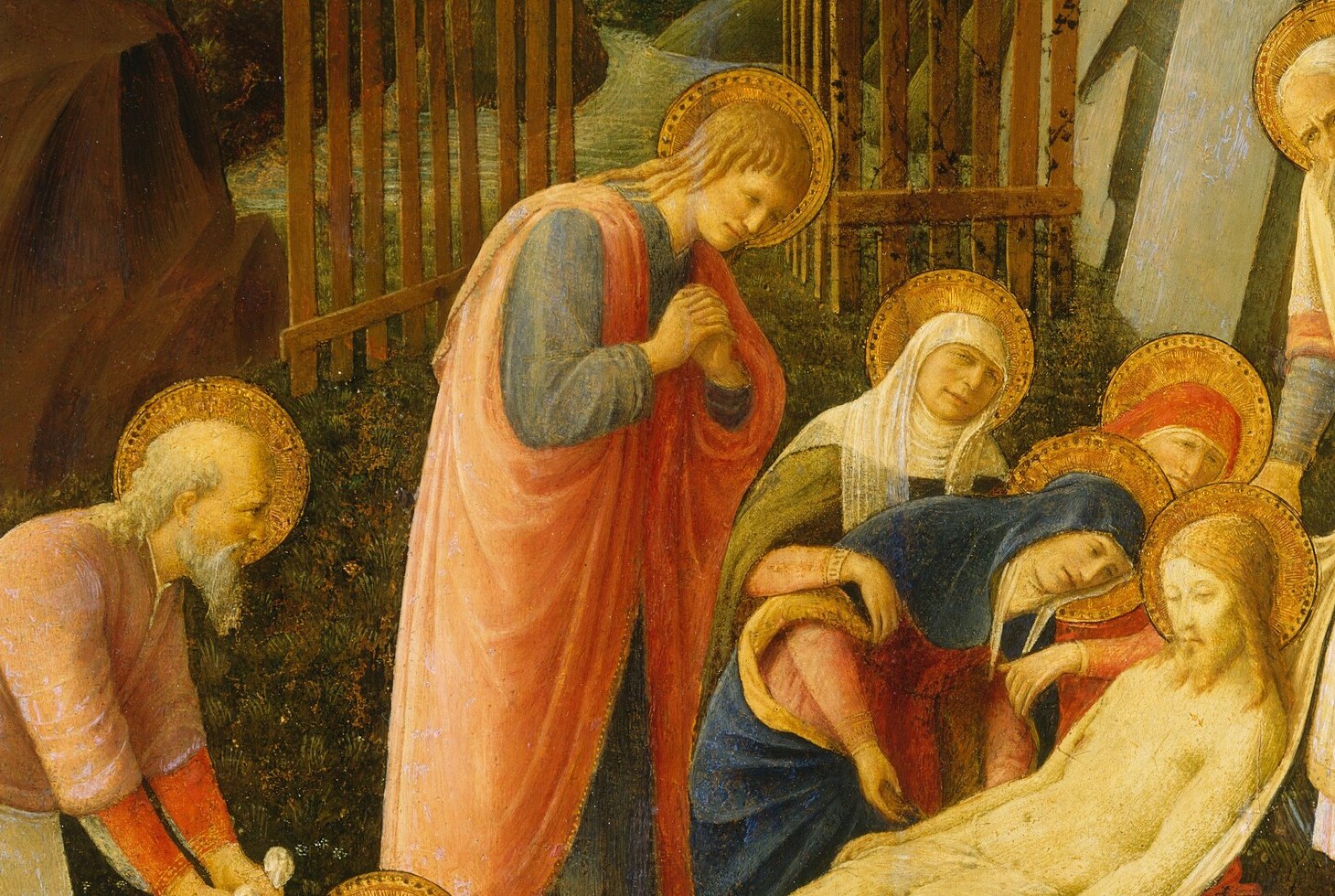
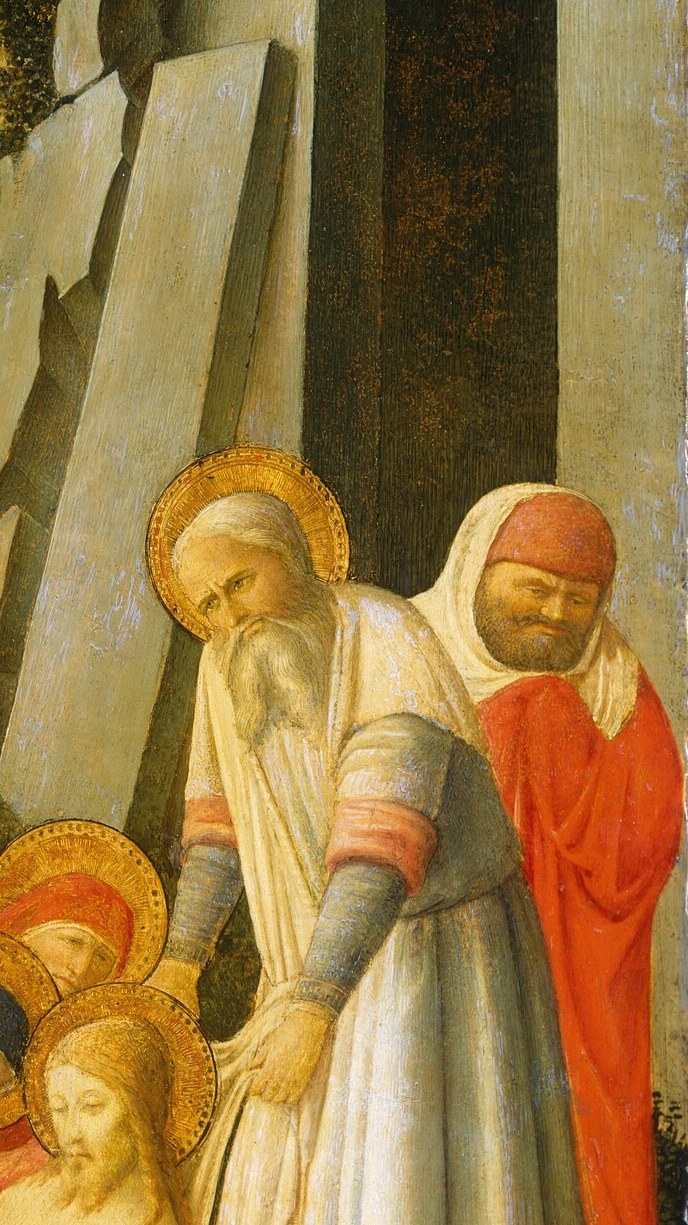
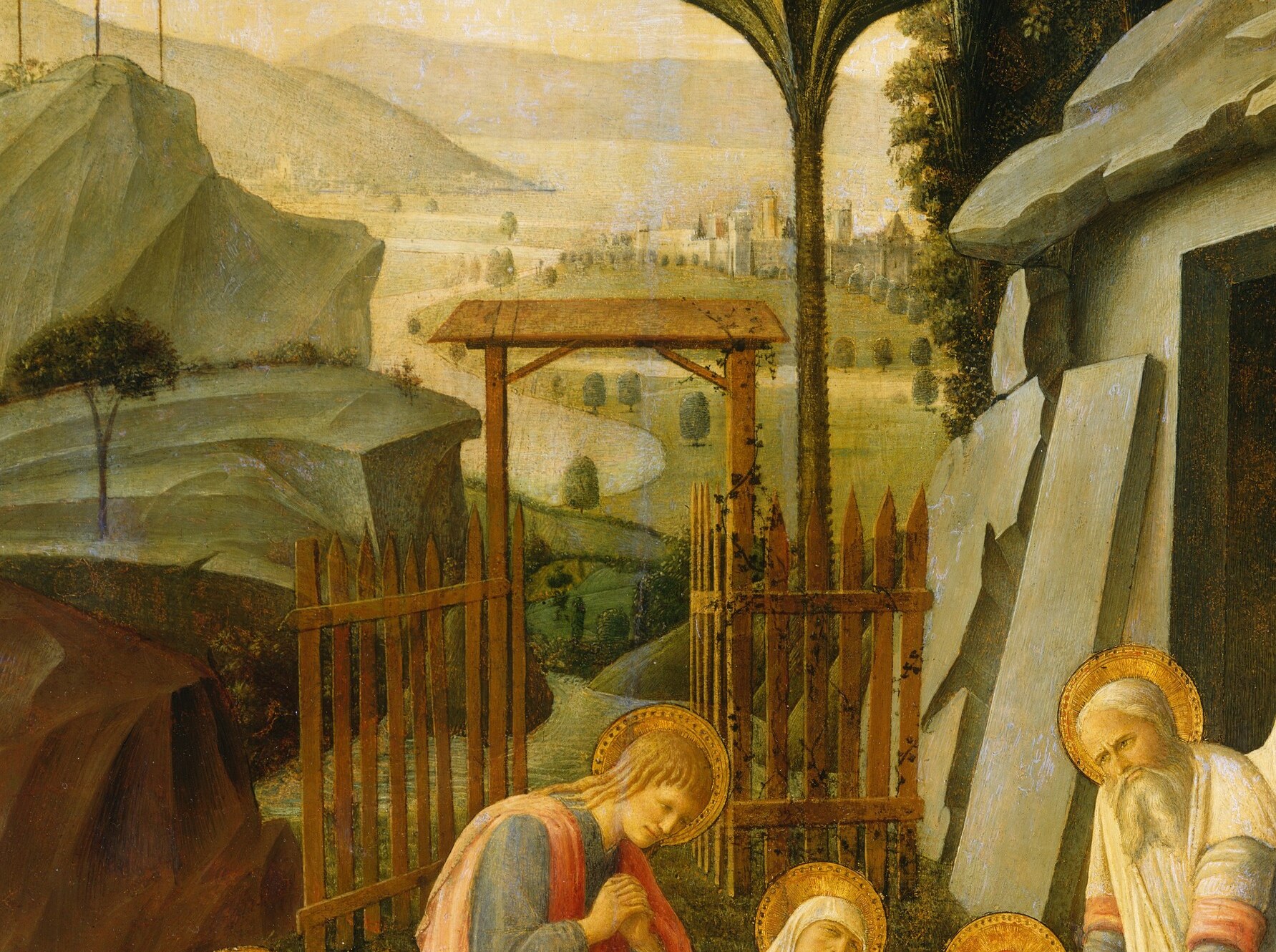
Notice how the pale body of Christ draws every eye in the composition. Around him, a thicket of hands grips the burial shroud, each mourner bearing a fraction of the weight, a quiet study in collective tenderness. At right, Mary Magdalene kneels to kiss Christ's feet, anchoring the scene with an intimate gesture of farewell. The only true darkness in the painting is the rectangular mouth of the rock-cut tomb itself, a visual shorthand for death before the light of Easter.
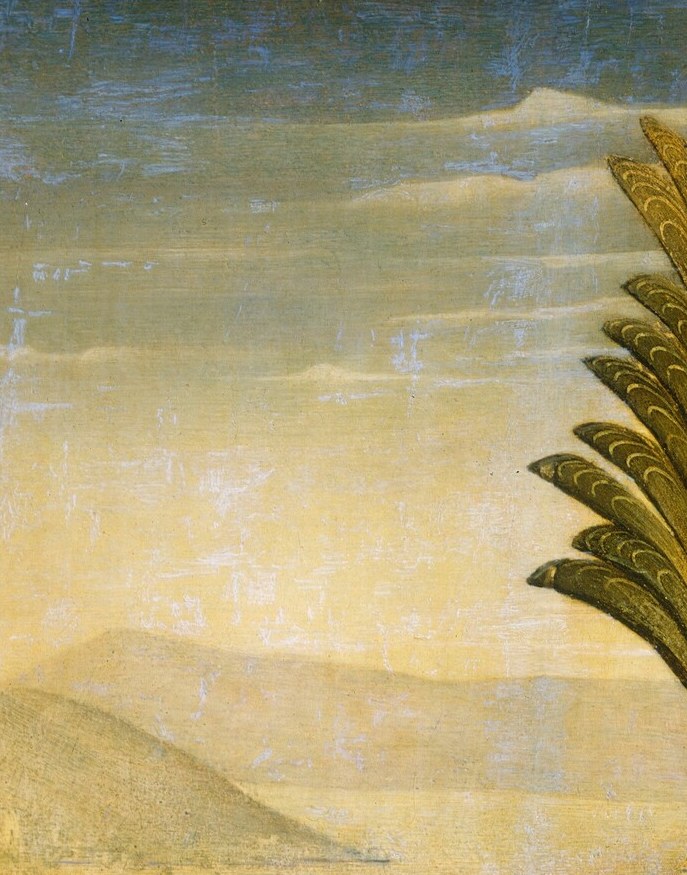
The painting emerged from a extraordinary moment. Fra Angelico was also working on his great fresco cycles at San Marco under the patronage of Cosimo de' Medici, pioneering the linear perspective and sculptural form that would define the Renaissance. Yet here, on a portable poplar panel, he preserved older conventions too, the overlapping gold halos, the palm tree signifying martyrdom, the three bare crosses receding into soft Tuscan hills. Tempera, made from egg yolk and pigment, gave him the luminous ultramarine blues that still glow against the pale stone.
Fra Angelico was beatified in 1982 and declared the patron of Catholic artists two years later. This panel survived over five centuries, and it still asks the viewer to pause in the quiet interval where nothing has yet been resolved.
Details
Transcript
Around 1450, a Dominican friar painted this burial. His name in the convent was Fra Angelico. Look at the hands lowering Christ's body. Every set of fingers carries a share of the weight. The only true darkness is the mouth of the tomb. On the hill behind, three empty crosses still stand. He painted this for his fellow Dominicans at San Marco. They would have seen it every day, and known what comes next.