Ia Orana Maria by Paul Gauguin

Paul Gauguin's 'Ia Orana Maria' (Hail Mary), painted in 1891 and now in the Metropolitan Museum of Art, is the artist's first major attempt to fuse Christian iconography with Tahitian life. He had just arrived on the island, chasing a dream of an untouched paradise, and this canvas became the blueprint for his entire Pacific period.

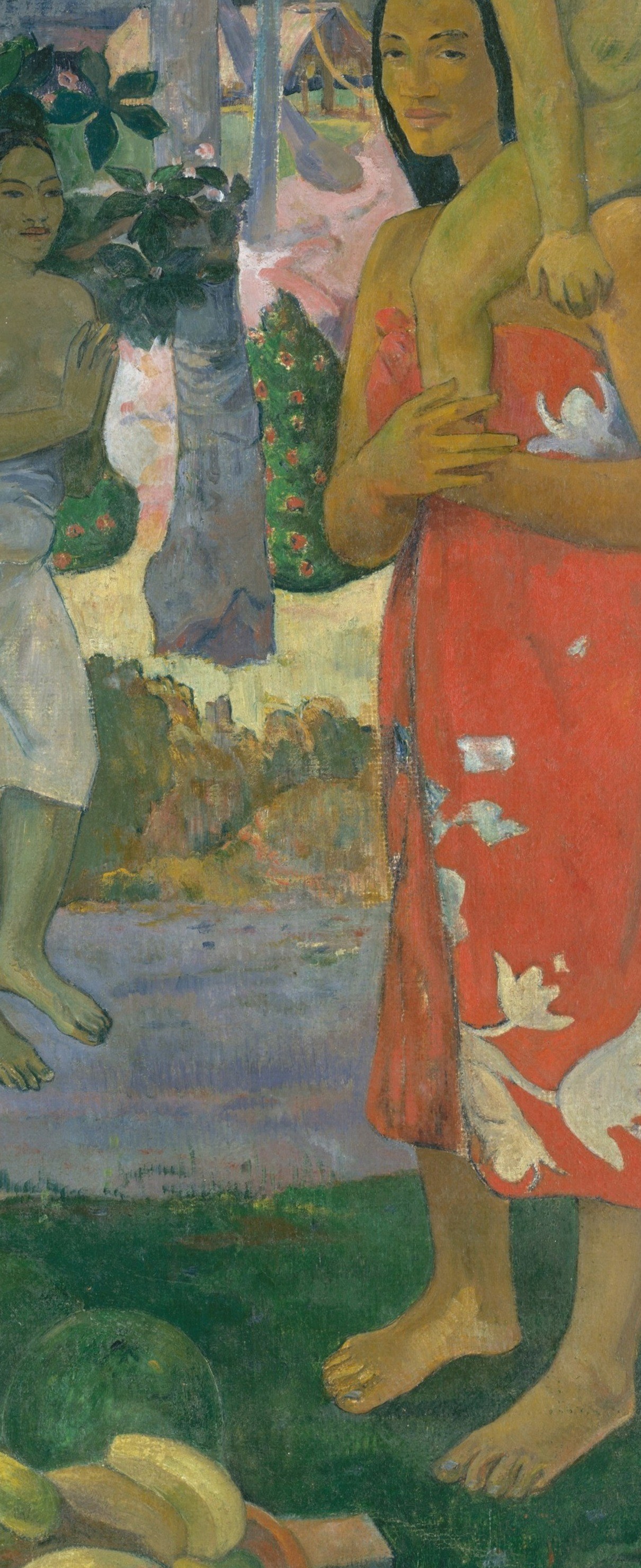
The painting shows a Tahitian mother and child, both with thin golden halos, greeted by two local women. An angel with yellow wings hovers nearby. The mother's folded hands are a direct quotation from European Annunciation scenes, but the red pareu she wears and the tropical fruit at her feet root the sacred moment firmly in the South Pacific.

Gauguin arrived in Papeete in June 1891. The unspoiled Eden he sought was already largely transformed by colonialism, but he painted it into existence anyway, blending the spiritual qualities he imagined in Tahitian culture with the religious art of the West. The Met acquired the painting in 1951 from collector Sam A. Lewisohn.

The painting is a beautiful contradiction: a sincere devotional image built on a fantasy the painter himself was already beginning to doubt. What do you make of the halos?

#arthistory #postimpressionism #gauguin

Details
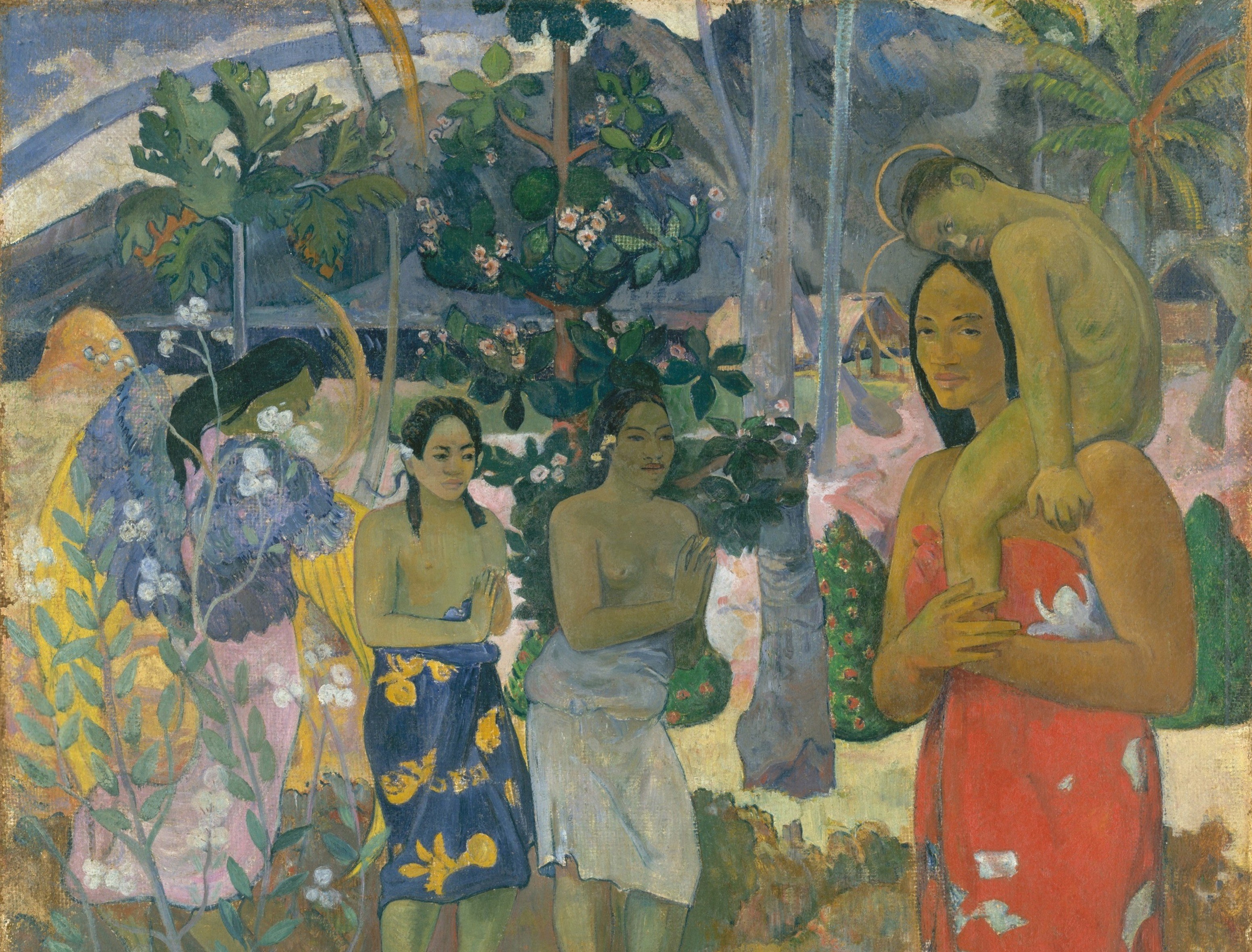
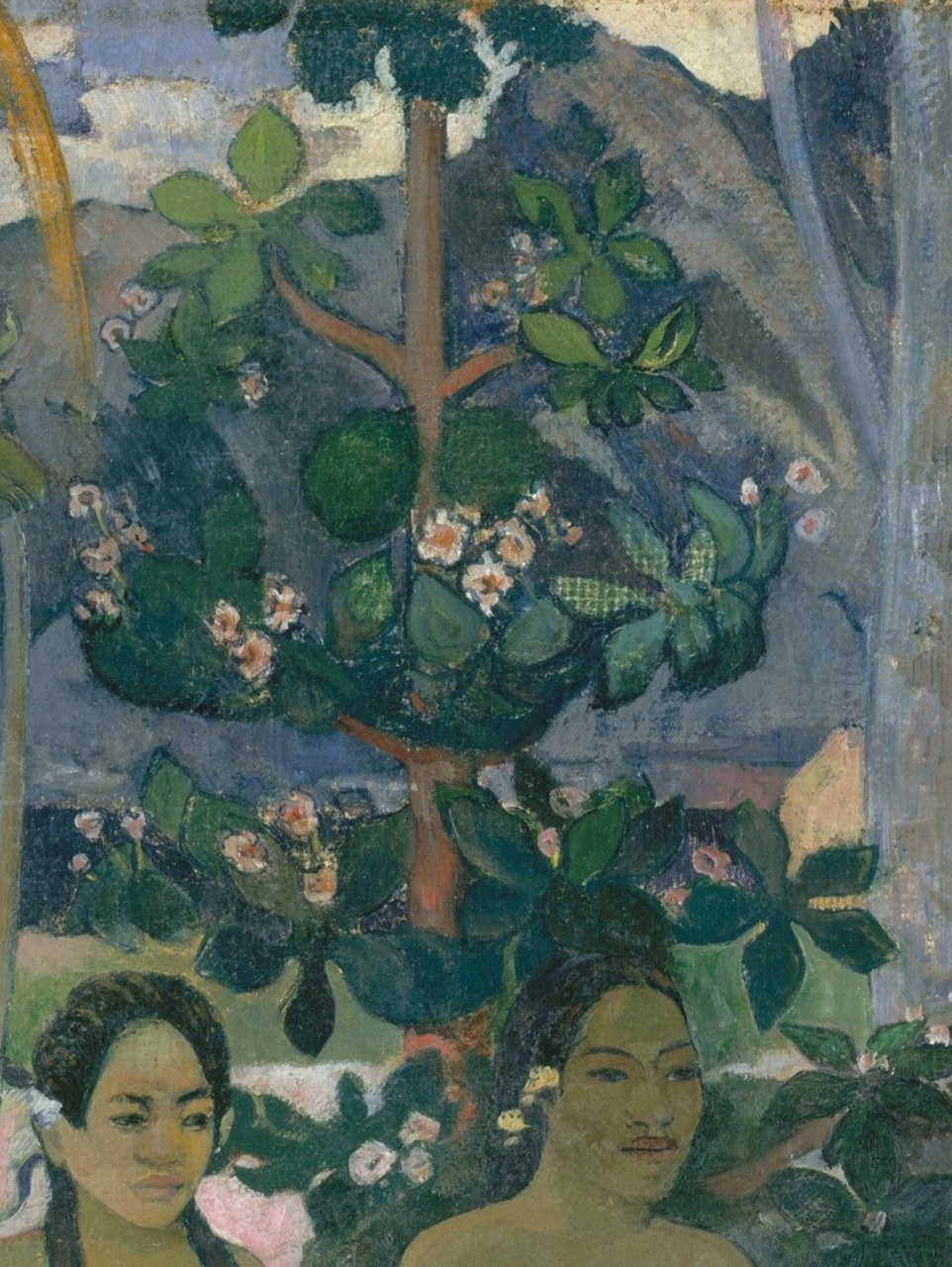
The green wall of foliage flattens depth entirely, eliminating Western perspectival recession and forcing all figures onto a single decorative plane , a technique Gauguin borrowed from Japanese woodblock prints.
The most saturated figure in the composition , her crimson garment pulls the eye and her prayer gesture is the emotional anchor, communicating reverence across any cultural frame.
The Tahitian reimagining of the Christ child elevated above all figures signals divinity through height rather than Western iconography , Gauguin's syncretism in a single compositional choice.
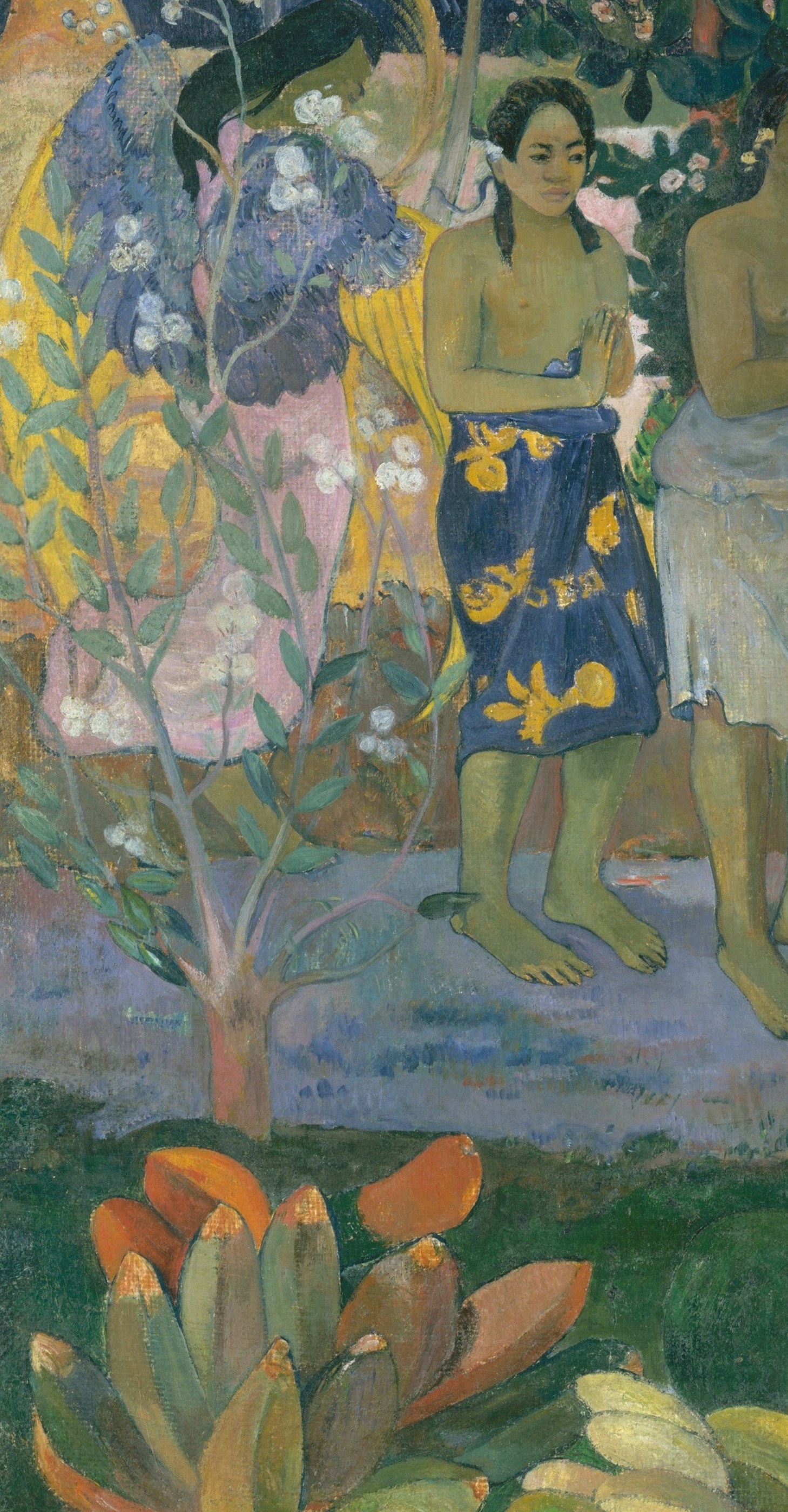
Her blue printed pareo creates the painting's cool counterweight to the reds and greens; the floral pattern speaks to Gauguin's admiration for Javanese batik and textile flatness.
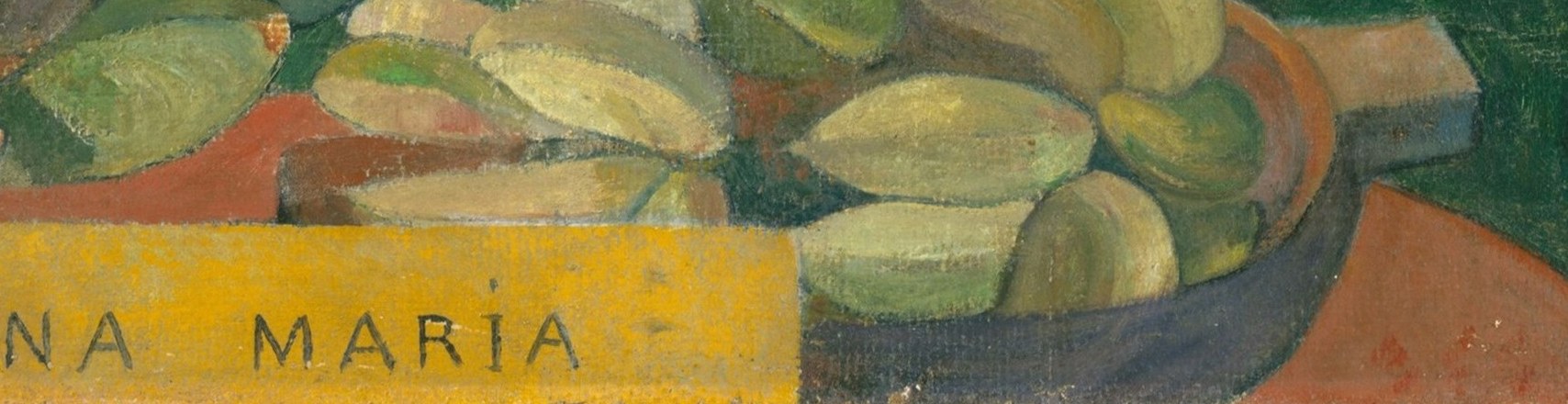
Gauguin inscribed the Tahitian greeting-prayer directly onto the canvas, making the title part of the artwork , a refusal to let Western viewers impose their own interpretive frame without linguistic friction.
Transcript

This is the first major painting Gauguin made in Tahiti. He arrived in 1891, chasing an unspoiled paradise. Look at the woman's hands. She prays like a European Madonna, but wears a Tahitian pareu. He gave both mother and child painted halos. The title means 'Hail Mary.'