Breakfast with a Crab by Willem Claesz Heda
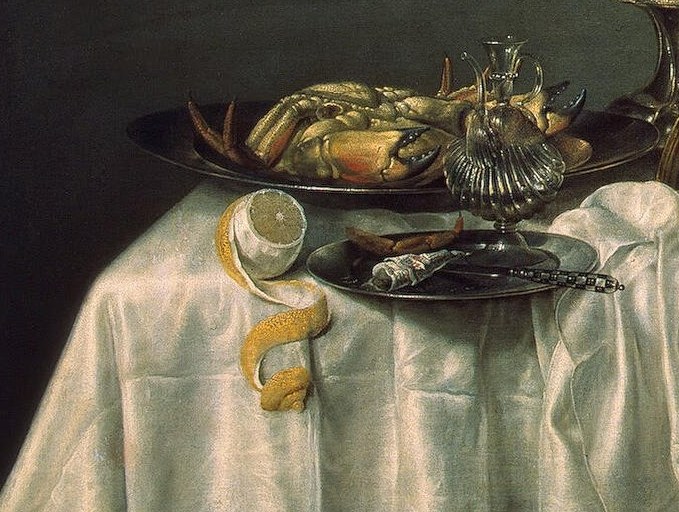
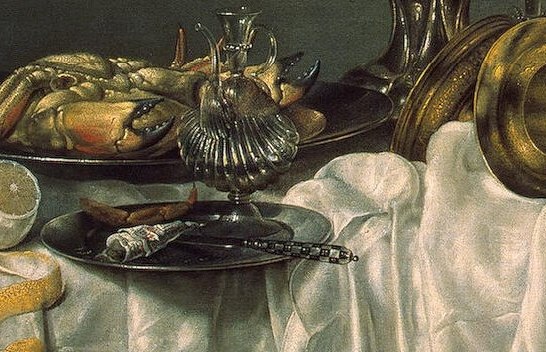
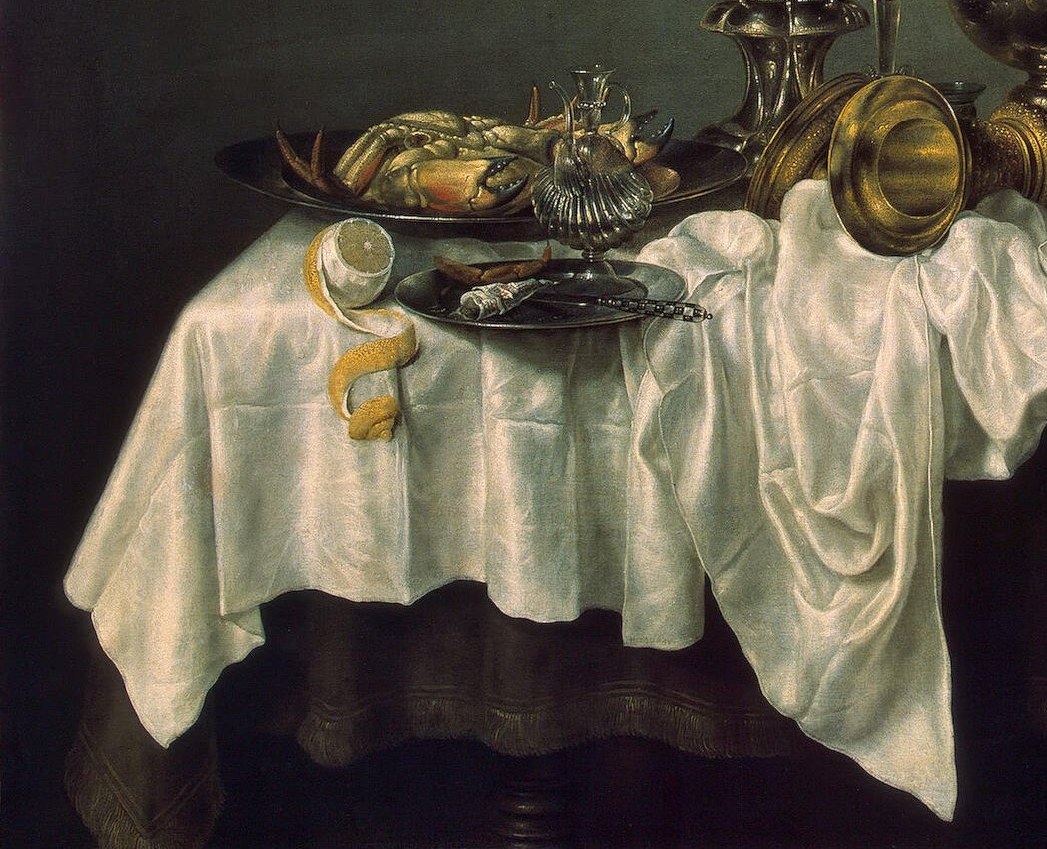
Willem Claesz Heda painted Breakfast with a Crab in 1648, the same year the Peace of Westphalia ended the Thirty Years' War. The timing matters. The painting hangs in the State Hermitage Museum, and it is a document of a world cracking open.
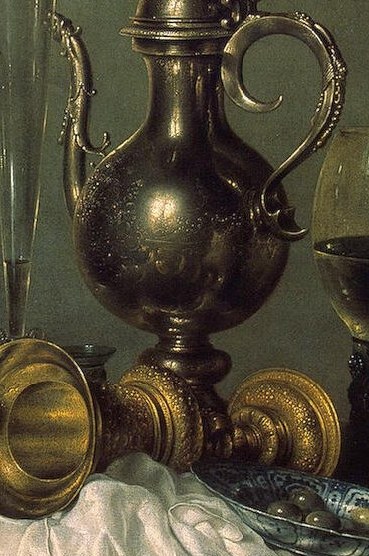
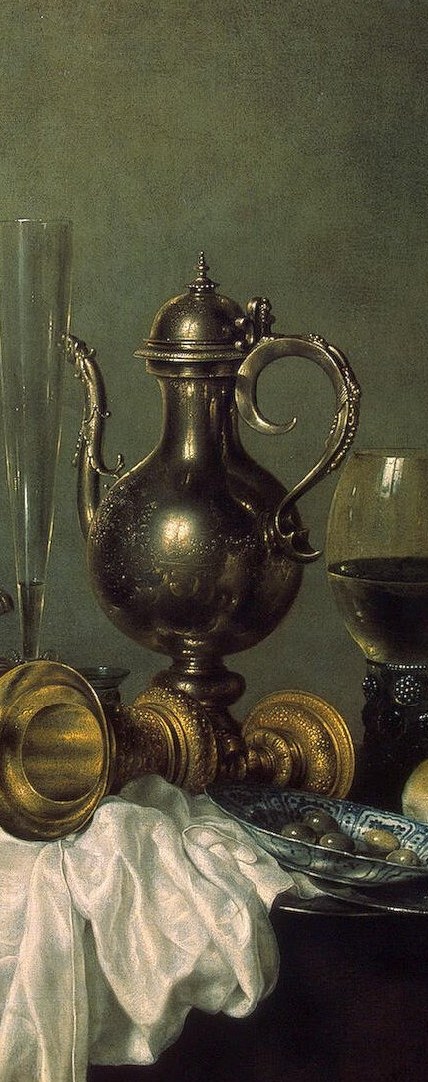
Look at what is on this table. A boiled red crab sits on a blue-and-white Kraak porcelain dish, Chinese export ware that reached Dutch tables through VOC shipping routes. Bread rolls sit beside it. A peeled lemon dangles its rind off the edge. And scattered across the white linen cloth are loose black peppercorns. Pepper was a genuine luxury in 17th-century Holland, sold by the grain, not the shaker. Leaving it scattered like salt was an advertisement of wealth.
Heda was a Haarlem specialist who painted only still lifes, and he spent his career refining one particular trick: making curved metal and glass tell you what is in the room. The tall pewter ewer at the center carries a distorted reflection of the entire table setting on its belly. It is a painting inside a painting, rendered with an understanding of spherical reflection that feels almost photographic.
The crab is the color climax, the only warm red-orange in a palette of silver, ochre, and grey. But the pepper is the real flex. War ended, trade routes opened, and a breakfast table in Haarlem could suddenly hold the Pacific, the Indian Ocean, and the North Sea all at once.
Details
Transcript
1648. Europe's bloodiest war finally ends. In Haarlem, a painter sets a table that could not have existed a generation earlier. A red crab on Chinese porcelain. The porcelain came from one direction, the crab from another. Look closely at the white cloth: those are peppercorns. Pepper was sold by the grain. Scattering it like salt was a quiet flex. The curved pewter ewer carries a reflection of the entire table. Heda painted a whole second painting into the belly of a jug. War ended, trade opened, and a Dutch breakfast became a map of the world.