Maxime Dethomas by Toulouse-Lautrec, Henri de
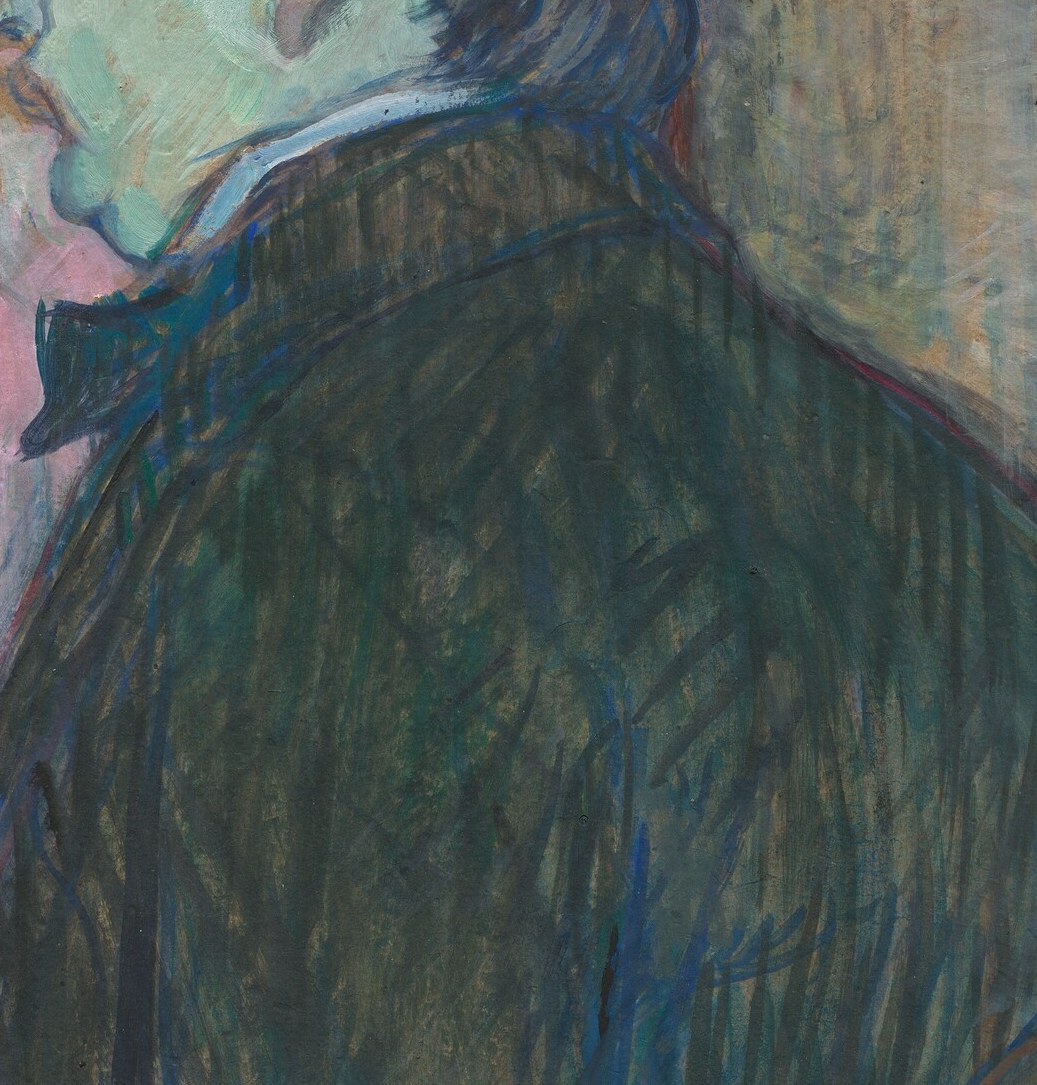
This is Henri de Toulouse-Lautrec's portrait of Maxime Dethomas, painted in 1896 in oil on cardboard, now in the collection of the National Gallery of Art in Washington. Dethomas was a fellow artist, an illustrator and a friend of Lautrec's, and this portrait is among the most restrained the painter ever made.
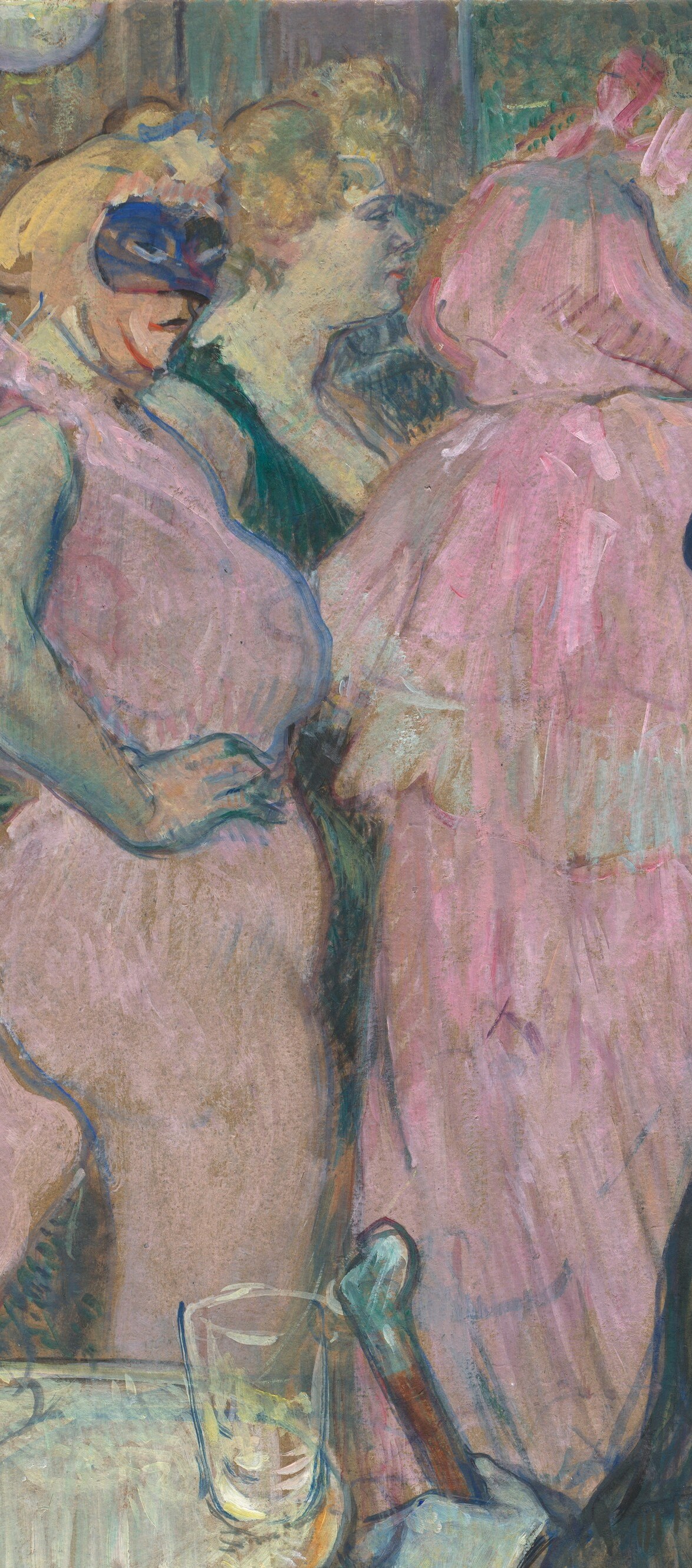
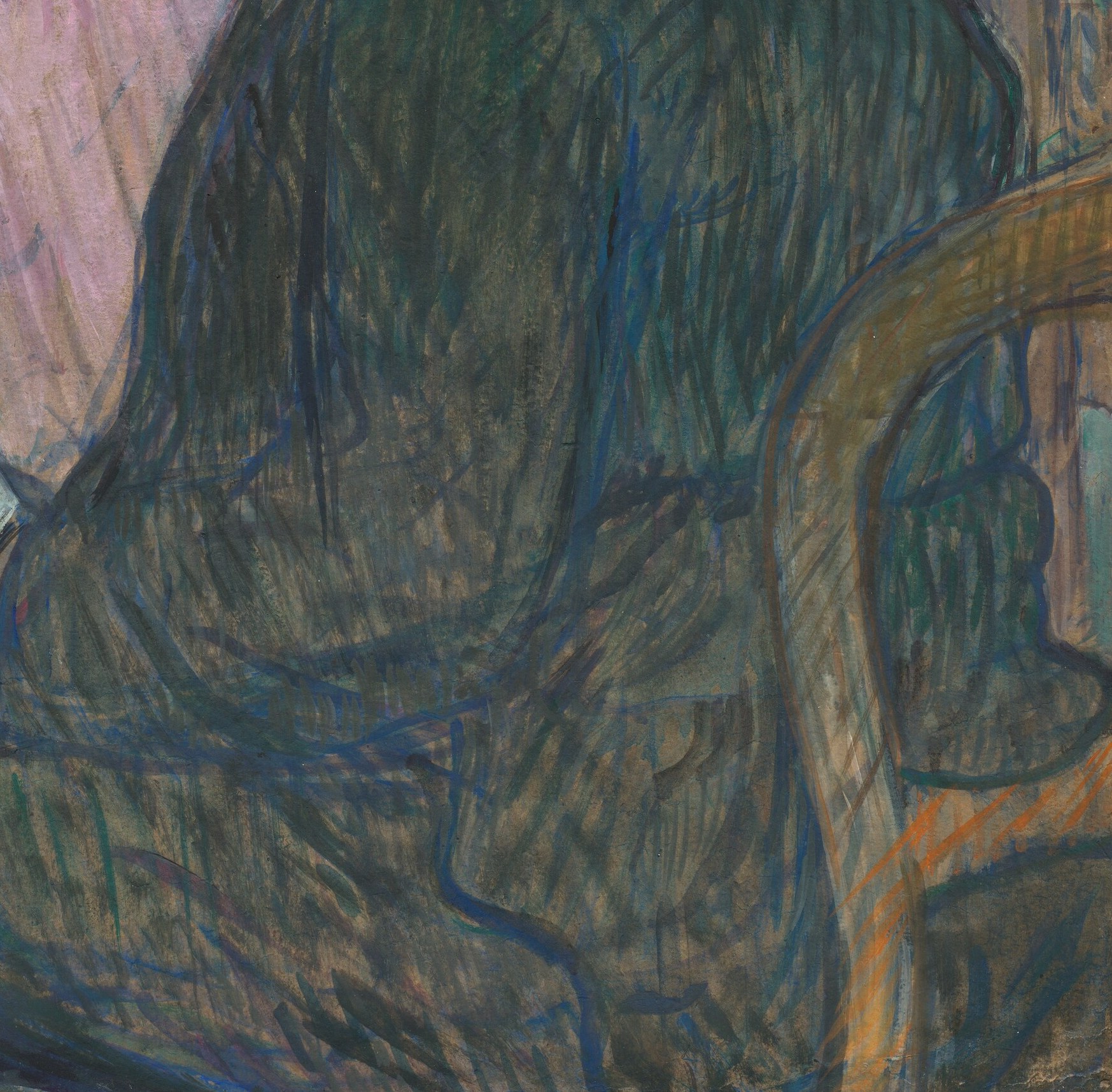
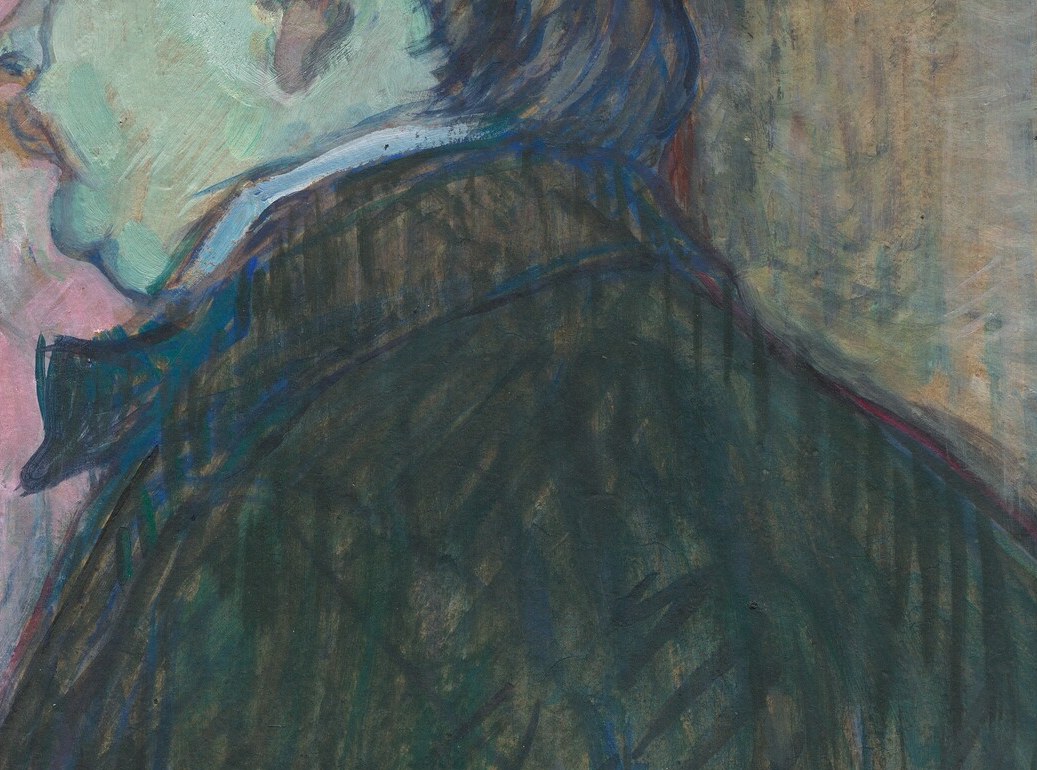
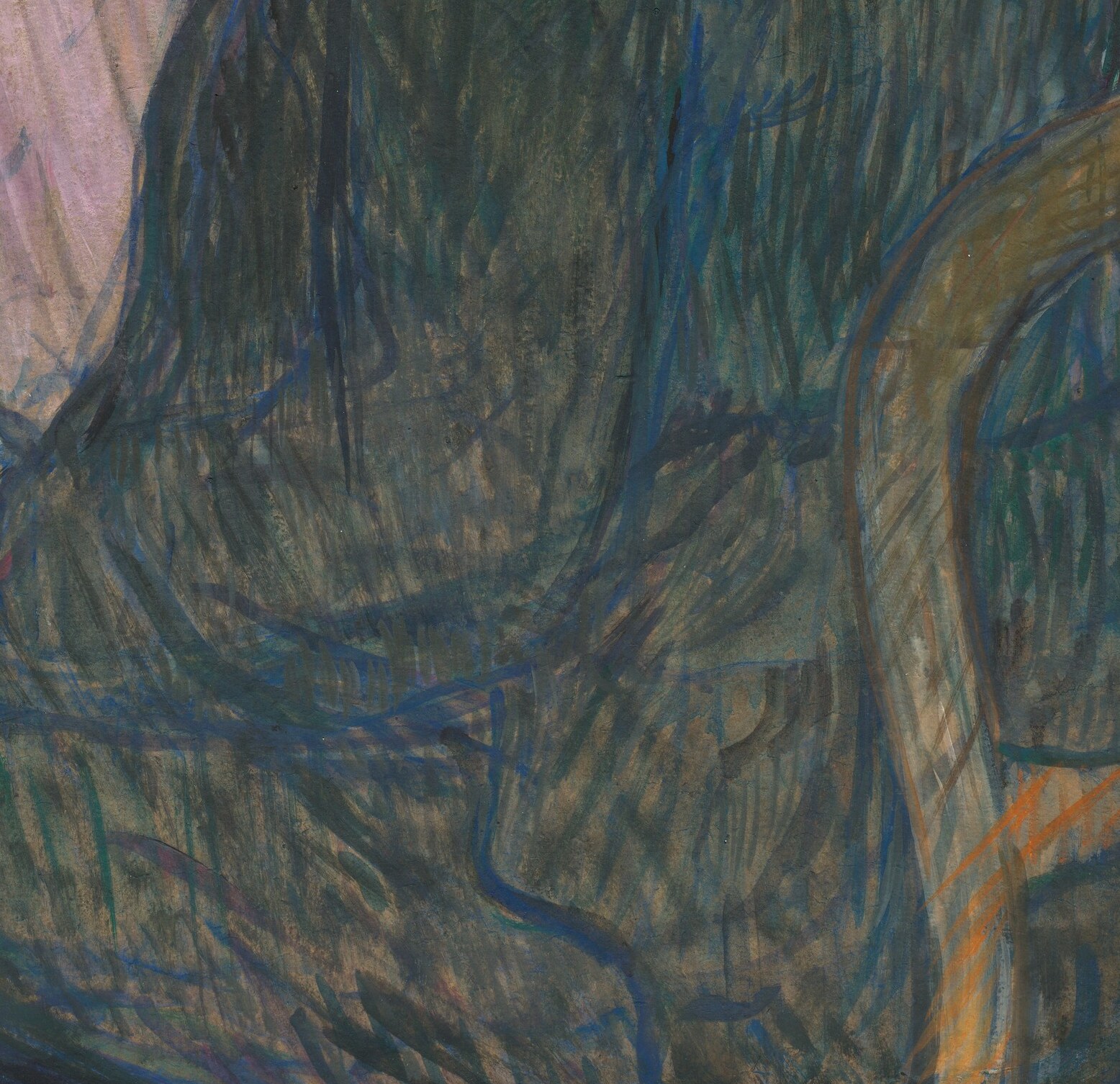
Look at the composition. Dethomas sits in the foreground, his dark coat filling nearly half the canvas, a still mass against the looser pink strokes of women behind him. His eyes are heavy-lidded, inward. He looks like a man who asked not to be depicted as part of the party. The café swirls on without him.
Lautrec was born into the French aristocracy in 1864. Both his legs were broken in adolescence and never healed properly, leaving him with a stunted body and a lifelong physical pain that drove him deeper into the Parisian night. He spent his short adult life drawing the cabarets, brothels, and theatres of Montmartre, often from a table at the edge of the room. He knew what it was to be inside the party and apart from it at the same time.
Dethomas reportedly asked to be painted with his back turned to the rest of the café. Lautrec, who understood the request intimately, gave him a portrait not of gaiety but of self-containment: a man present but removed. Sometimes the truest portrait of someone is not what they face but what they refuse.
Details
Transcript
His name was Maxime Dethomas. He was an artist, like the man who painted him. Look at his eyes. Heavy-lidded, sealed inward. Now look behind him. Women in pink. The café alive with motion. He asked to be painted with his back to the room. Lautrec gave him the stillness he wanted.