Untitled by Sesson Shūkei
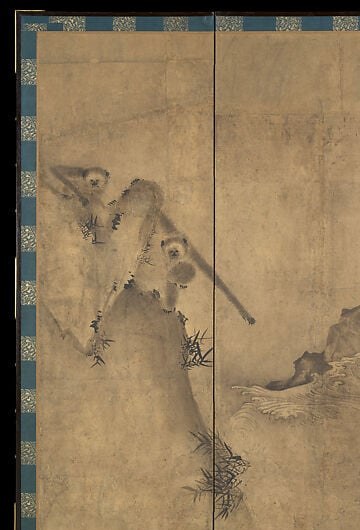
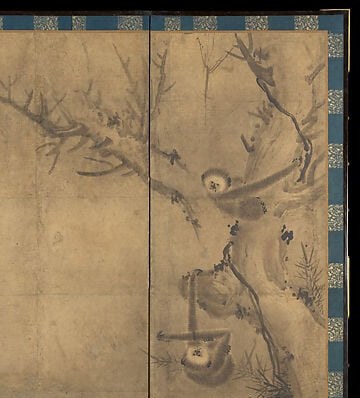
A solitary gibbon hangs in a void of empty paper. This is the work of Sesson Shūkei, a 16th-century Japanese painter who claimed artistic descent from the great Sesshū Tōyō, though he was likely self-taught. The painting, a pair of six-panel screens in ink on paper from around 1570, lives at the Metropolitan Museum of Art.
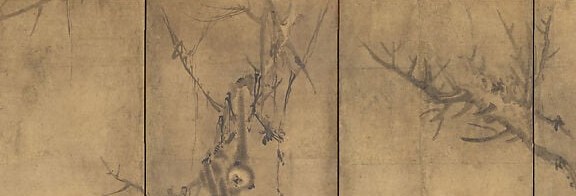
Look at the fur. Sesson built it with meticulous, tiny cross-hatching and soft tonal washes, giving the animal a surprising physical weight. Then look at the pine needles, the brushwork switches completely to sharp, staccato strokes that bristle against the unpainted paper. Two entirely different grammars of ink coexist in the same visual breath.
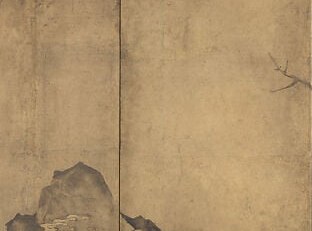
The gibbon's downward gaze is a convention that elevates the creature beyond mere wildlife and into a Zen emblem of quiet introspection. The deliberate emptiness of the left side, the Japanese concept of ma, makes the animal's suspended pose feel genuinely precarious and silent.
Sesson was nicknamed 'the eccentric' in his own time. His dry-brush bark and pooled dark washes show a controlled wildness, an artist willing to let rough marks sit next to refined lines. Where do you feel the silence most, in the empty space, or in the gibbon's face?
Details

Transcript
Start at the branch. One sustained diagonal stroke organizes the entire screen. Now look at the needles. Bristling, staccato marks, sharp and spiky against the sky. The painter used fine cross-hatching to build the fur. Soft, layered washes create a real sense of weight and warmth. Two completely different brush grammars in a single glance.