Arab Warrior by Horace Vernet
Horace Vernet's Arab Warrior, painted in 1817, was one of the very first artworks acquired by The Metropolitan Museum of Art in 1872, establishing its early collection. This significant oil painting exemplifies the Orientalist movement, a trend in early 19th-century European art that depicted scenes and figures from North Africa and the Middle East.
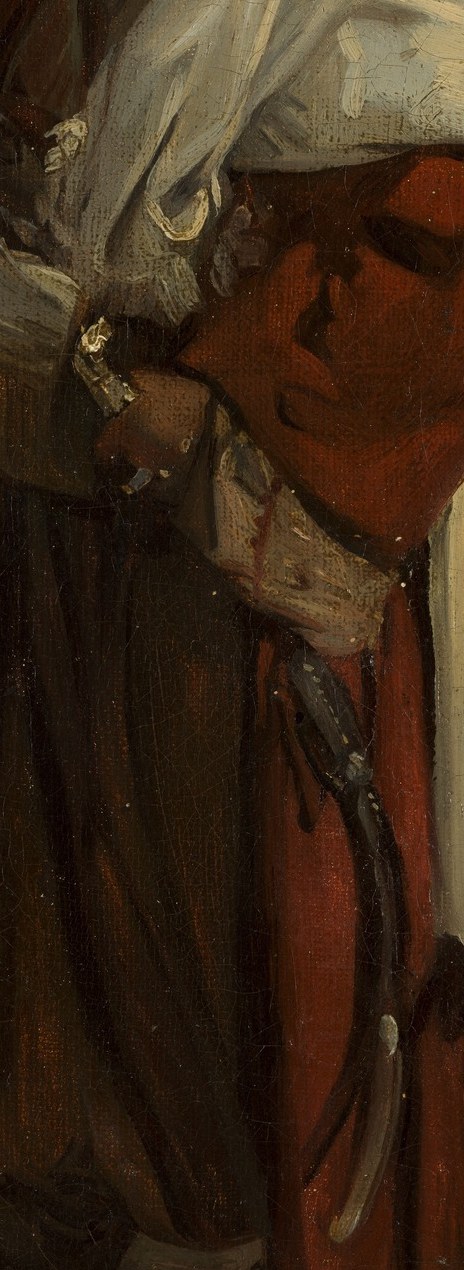
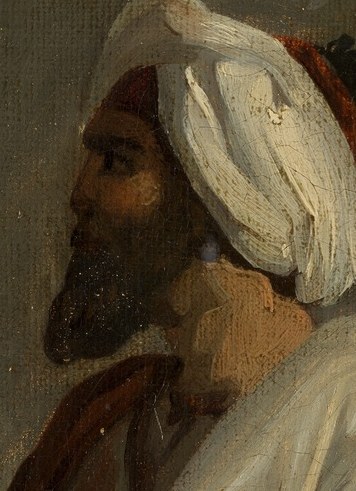
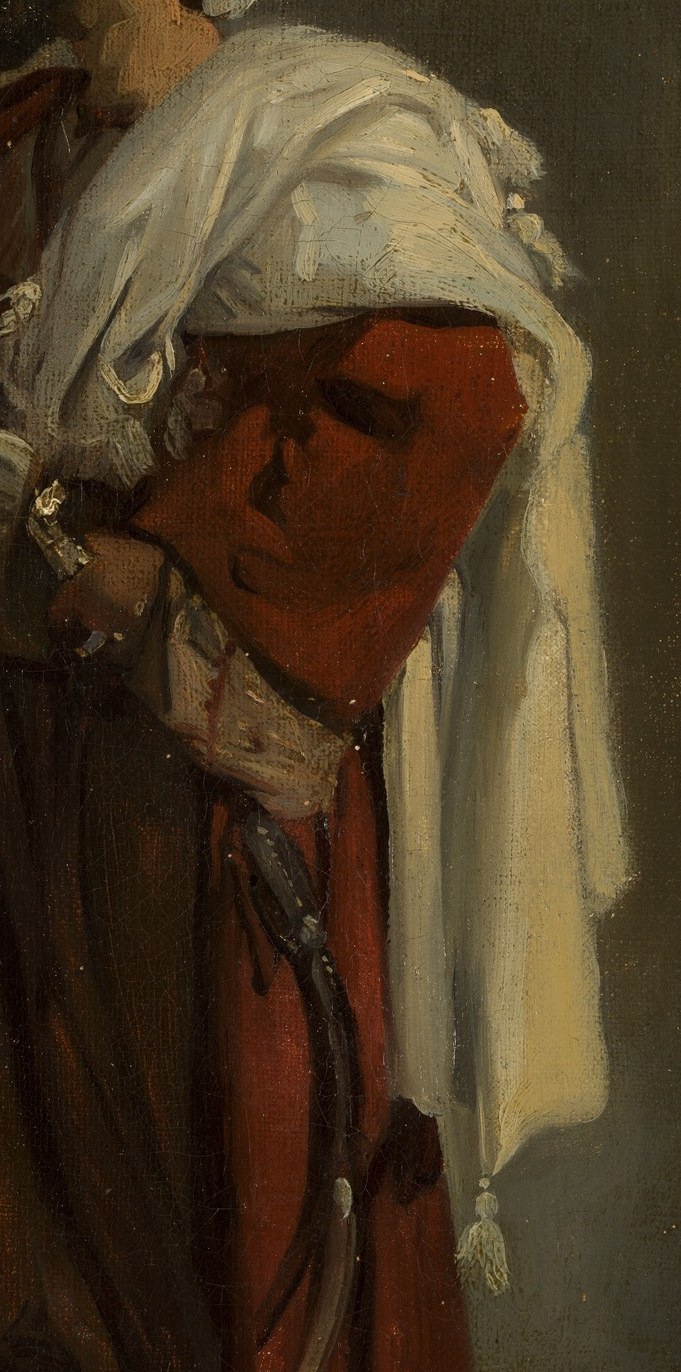
Observe the rich details in the warrior's attire, from the voluminous white turban to the vibrant red robe and the curved sword at his hip. Vernet's technique, characterized by thick, visible brushstrokes, gives the fabrics a remarkable textured quality, making the colors appear substantial and lifelike. The muted background ensures all focus remains on the imposing figure.
Vernet, a French painter renowned for his dramatic battle scenes and portraits, sold this work for an impressive $2500 in 1817, a considerable sum at the time. Its acquisition by The Met highlights the museum's early efforts to build a diverse and impactful collection that captured the artistic fascinations of the era.
What details in the warrior's depiction draw your eye the most?
Details
Transcript
This painter was famous for his dramatic battle scenes. Here he depicts an Arab Warrior in rich, textured robes. His brushstrokes are thick, especially in the white turban. This painting sold for $2500 in 1817, a huge sum then. It was acquired by The Met in 1872, one of its first paintings. A powerful image that defined The Met's early collection.