Baron Graham by Copley, John Singleton
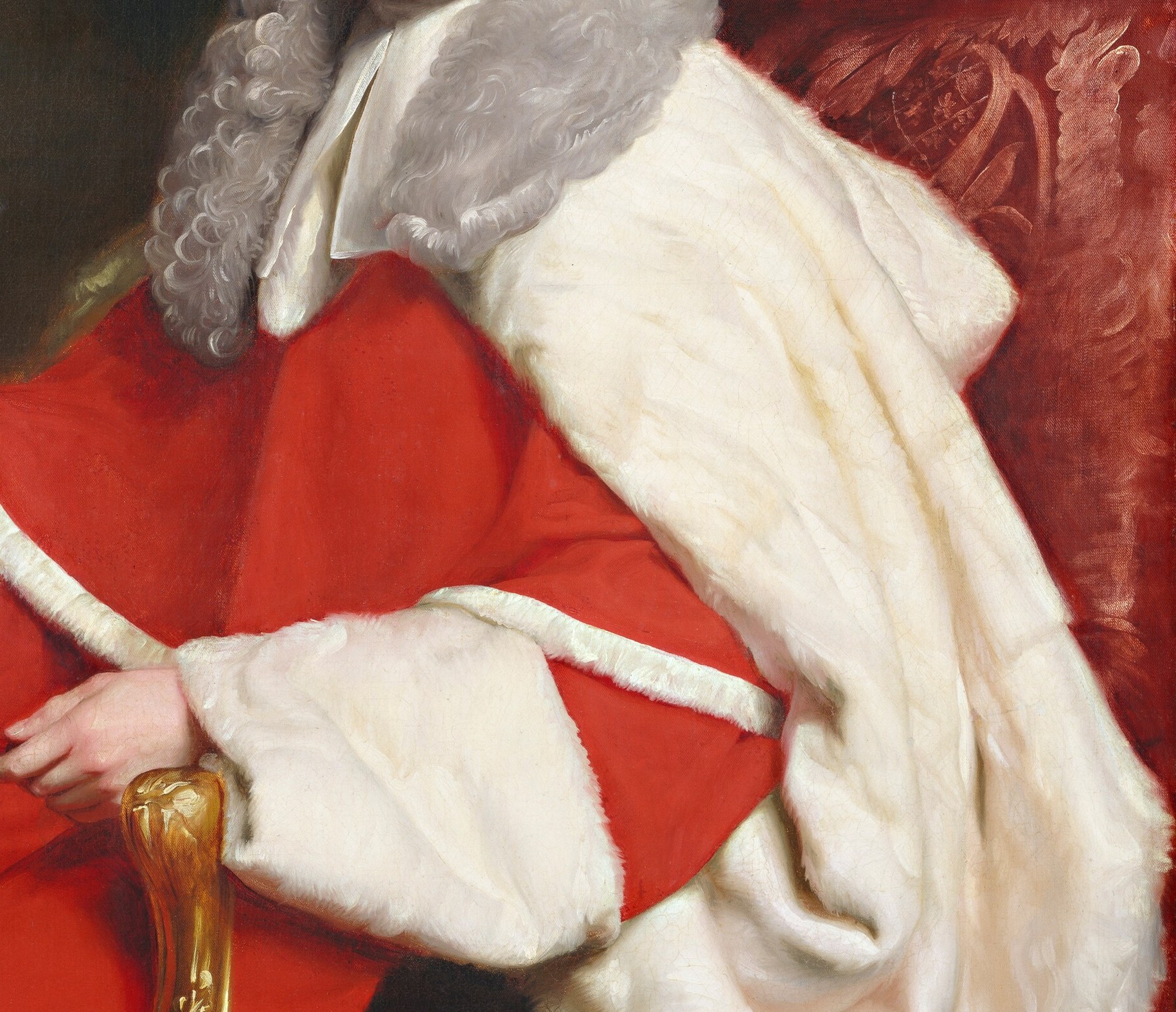
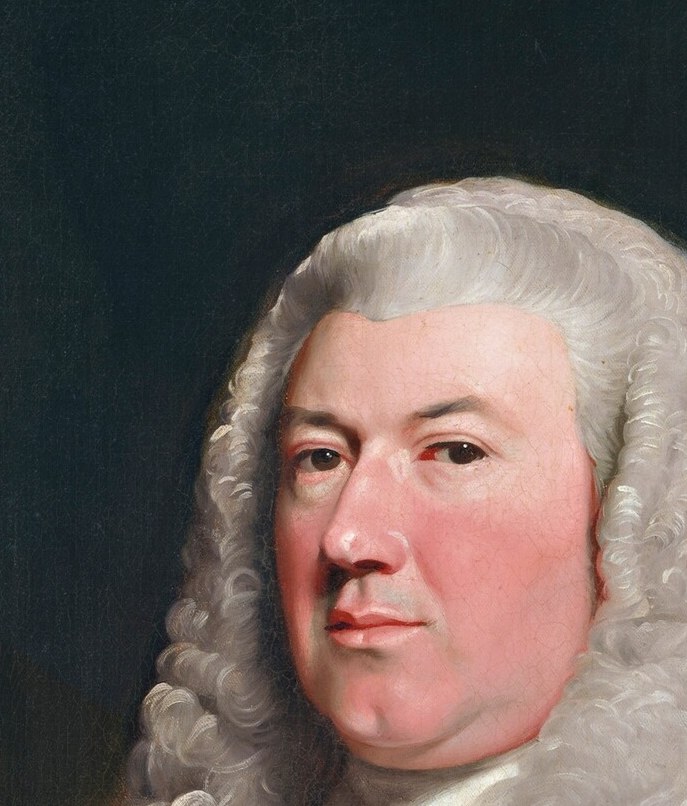
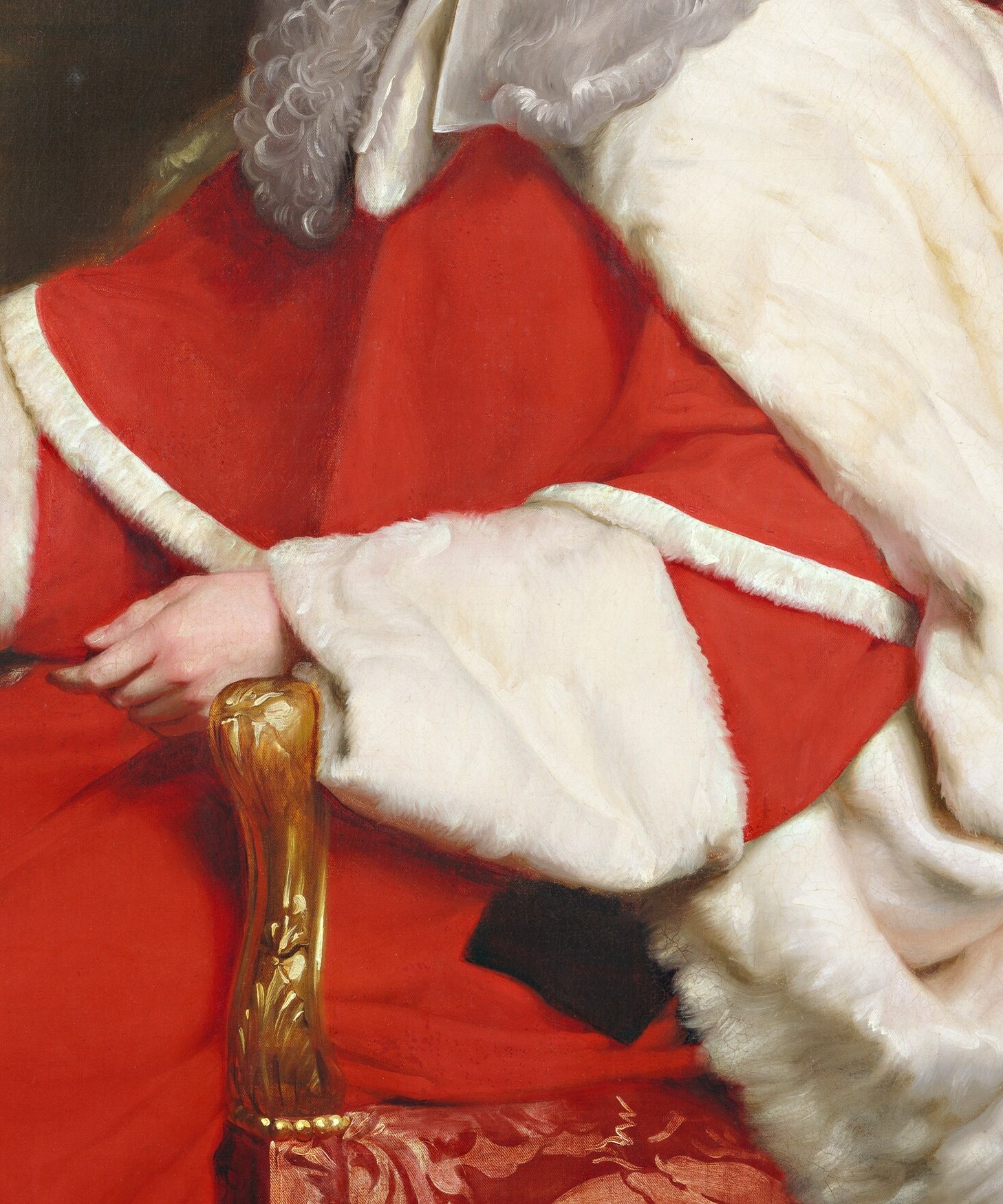
John Singleton Copley's 1804 oil on canvas, "Baron Graham," depicts Robert Graham, a prominent figure, in his ceremonial red robe and powdered wig. Copley, an American artist who relocated to England, was celebrated for his meticulous attention to detail and ability to capture the textures of fabrics and the character of his sitters.
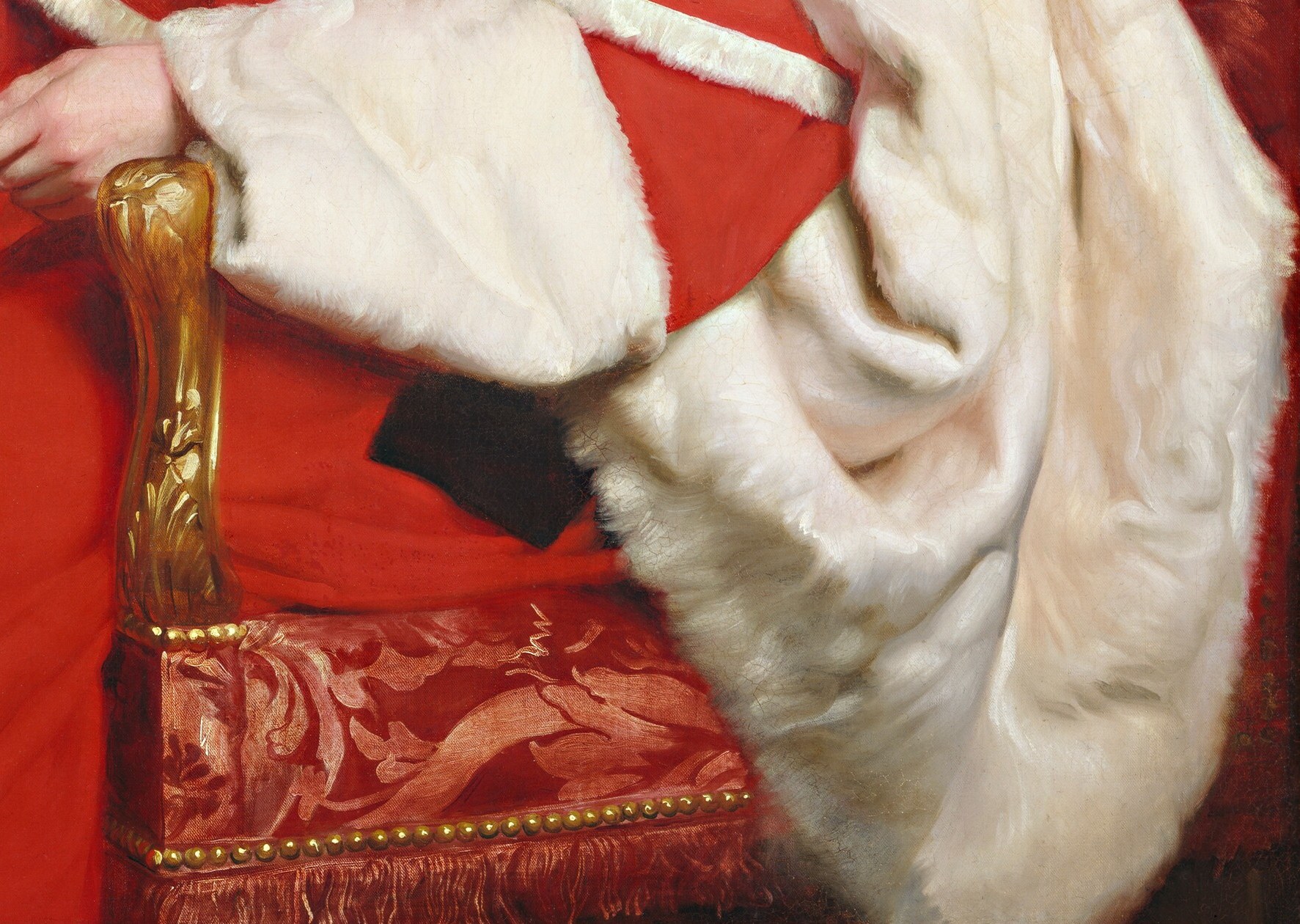
Notice the luxurious white fur trim on his robe and the gilded details of his ornate chair. These elements, along with the document held in his hand, emphasize his status and professional duties, likely in a judicial or governmental role.
This portrait is a prime example of Copley's later work in England, reflecting the conventions of British portraiture at the turn of the 19th century. Copley's use of dramatic lighting, or chiaroscuro, focuses attention on Graham's face and attire, underscoring his dignity.
What details in this portrait strike you the most about the Baron's character?
Details
Transcript
This man of authority sits in a vibrant red robe. It was painted by American artist John Singleton Copley. Copley was known for his realistic details and rich textures. Look at the texture of the white fur trim, almost touchable. His left hand holds a document, hinting at his official duties. The ornate chair and powdered wig complete his stately presence. This portrait of Robert Graham, Baron Graham, was painted in 1804.