Untitled by Bhadrabahu
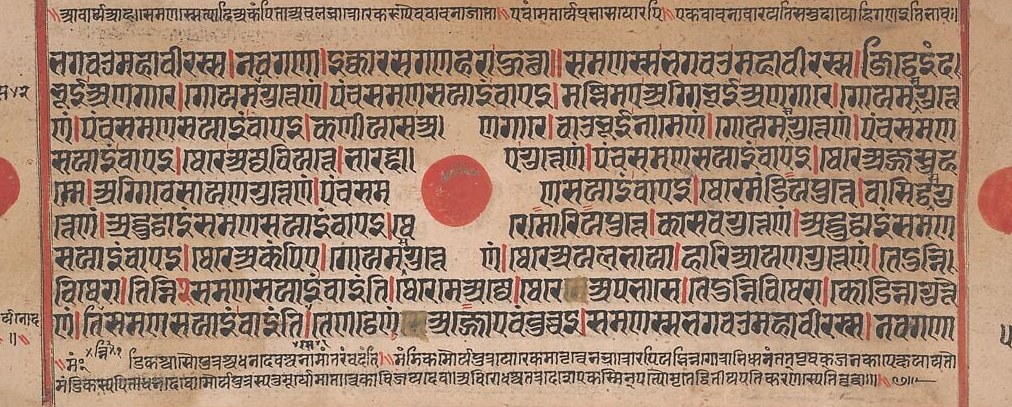
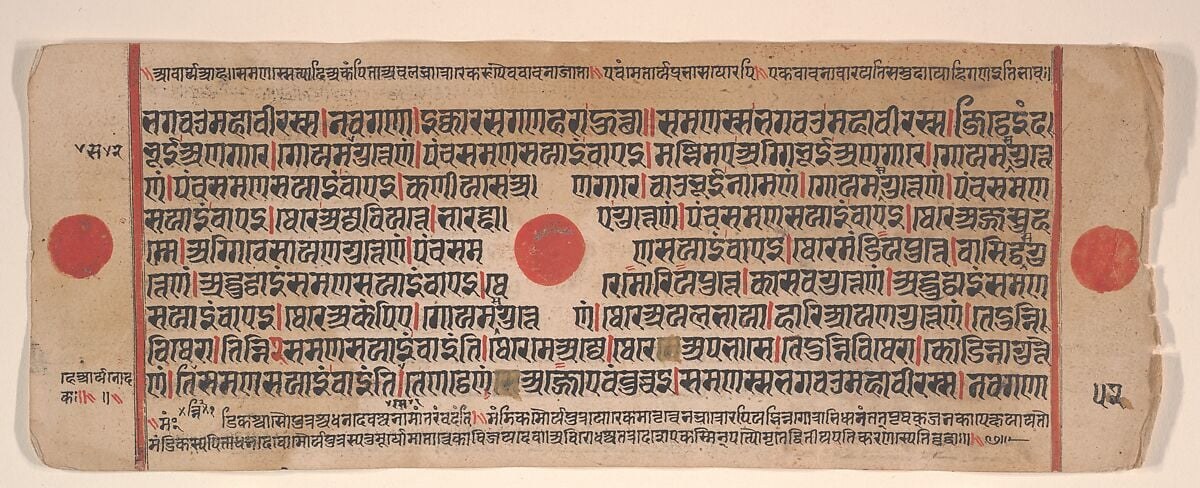
This untitled Jain manuscript painting by Bhadrabahu, circa 1449, exemplifies the meticulous artistry of 15th-century Indian illumination. The most striking element is the deliberate use of gold dots, meant to symbolize divine light and spiritual enlightenment.
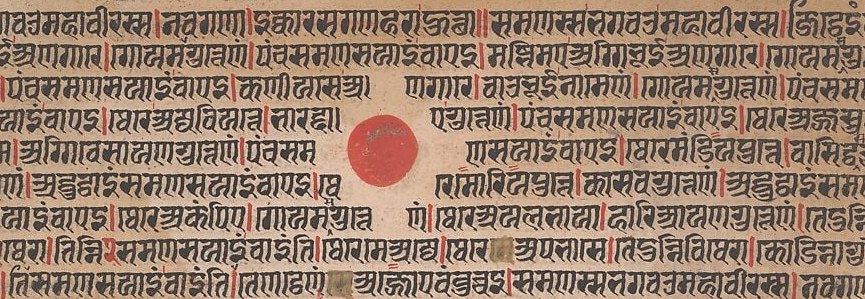
Observe the dense inscriptions, rendered with precise ink, and the vibrant opaque watercolors that define the figures and motifs. Then, focus on the scattered gold dots; their application creates a shimmering effect that makes the artwork appear alive with sacred energy.
Created in Gujarat, a region renowned for its Jain art, this piece was likely intended for private contemplation. Bhadrabahu's materials themselves reflect Jain principles, with inks prepared to adhere to the practice of ahimsa, or non-violence, even in artistic production.
This painting invites us to consider how artists use humble materials to evoke the divine.
Details
Transcript
This painting is by Bhadrabahu, 1449. Look at these fine inscriptions. Ink and opaque watercolor on paper. Gold dots catch the light like divine energy. The artist made ink without harming animals. Gold shimmering: the sacred aura of enlightenment.