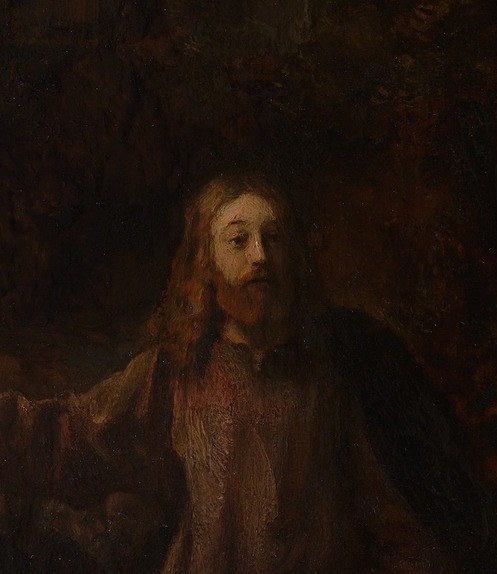
Christ and the Woman of Samaria by Rembrandt
Rembrandt painted Christ and the Woman of Samaria in 1655, and within a year he was bankrupt. The man who had been Amsterdam's most sought-after portraitist lost his house on the Breestraat, his printing press, his art collection, and his reputation. Today the painting hangs in the Metropolitan Museum of Art.
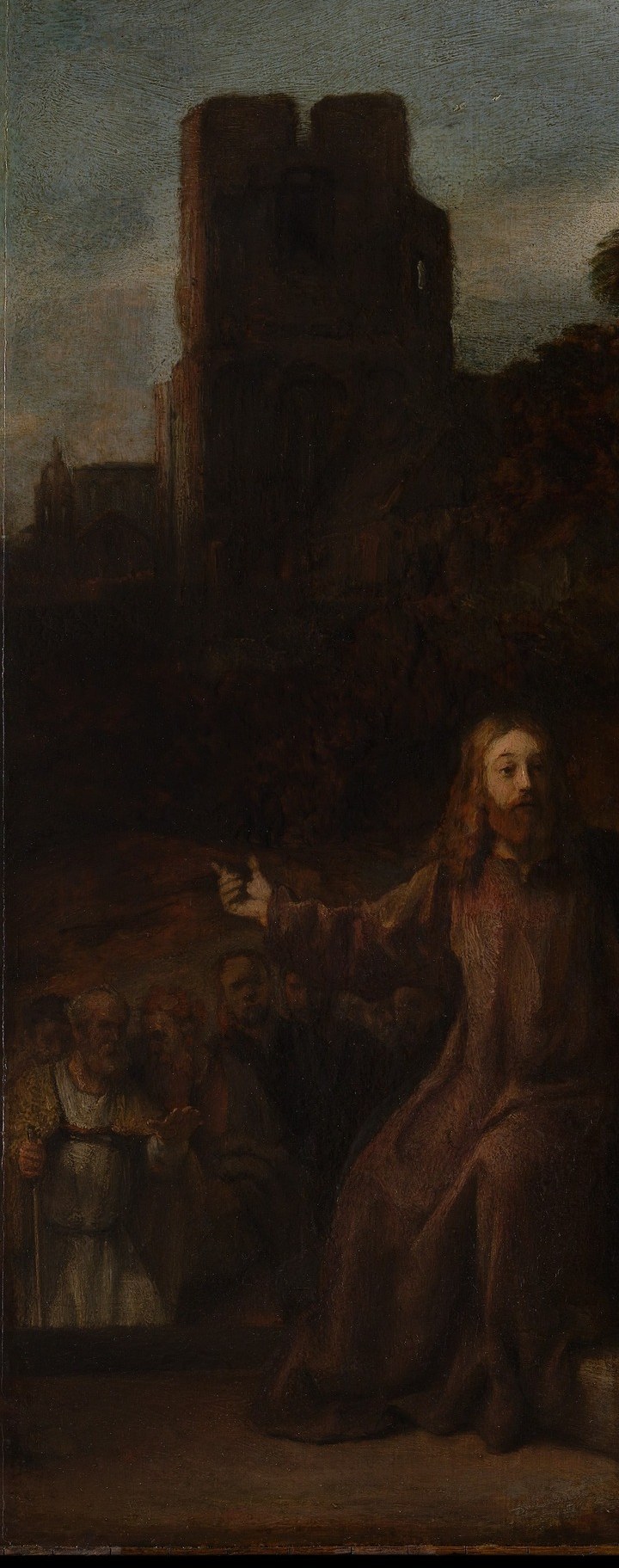
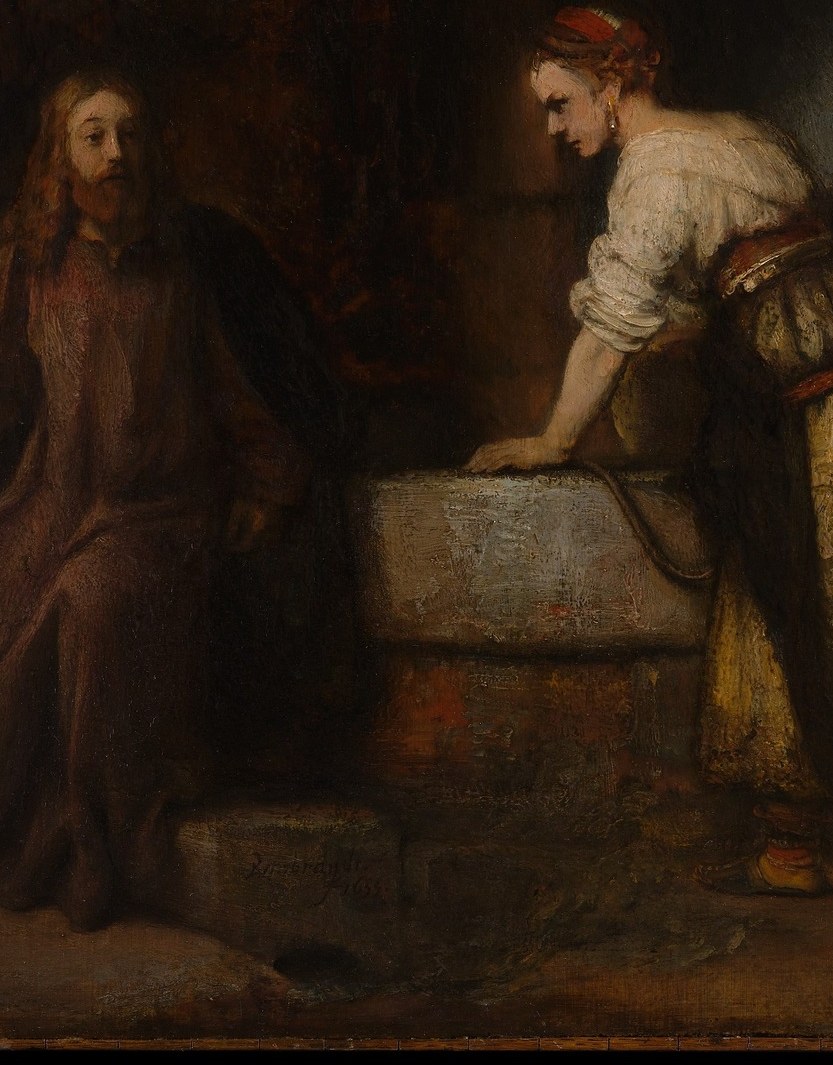
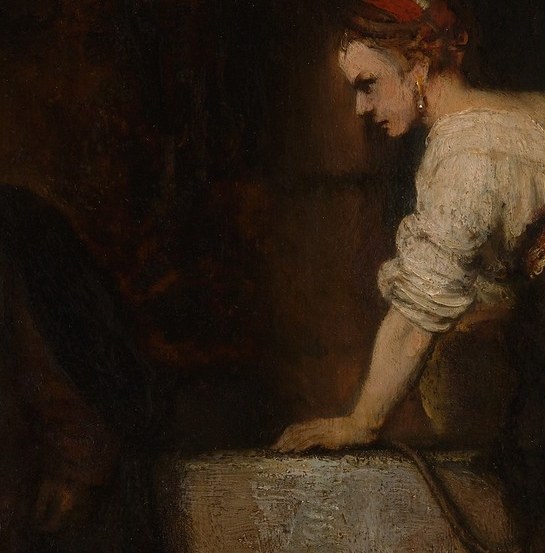
Look first at the woman's hands, resting on the stone rim of Jacob's Well. They have stopped moving. The physical work of drawing water is paused, suspended by the encounter. Then look at Christ's raised right hand, the gesture that accompanies his words about living water. Rembrandt uses a narrow band of pale sky between the figures to backlight Christ's head, creating a quiet halo without overt religious iconography.
The painting came from a man in freefall. Rembrandt's spending had outpaced his earnings for years, and by 1656 he was forced into a cessio bonorum, a voluntary surrender of goods. His possessions were inventoried and auctioned. His relationship with the church had become complicated, his first wife Saskia was dead, and his religious pictures grew quieter and stranger.
Yet he painted this small, solemn encounter at a well. A woman stops what she is doing because someone has offered her something she cannot draw up from the stone. It is hard not to see in that suspended moment a man reckoning with what he had, what he lost, and what might still be given.
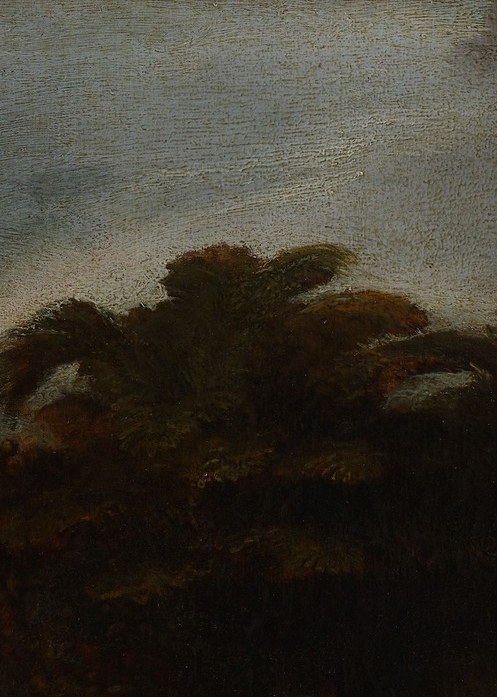
Details
Transcript
Rembrandt painted this in 1655. One year later, he declared bankruptcy. His house, his press, his collection were all sold. Look at the woman's hands. She has stopped drawing water. Christ offers her living water. A man with nothing left paints a promise that thirst ends.