The Lacemaker by Nicolaes Maes
View the artwork: The Lacemaker →
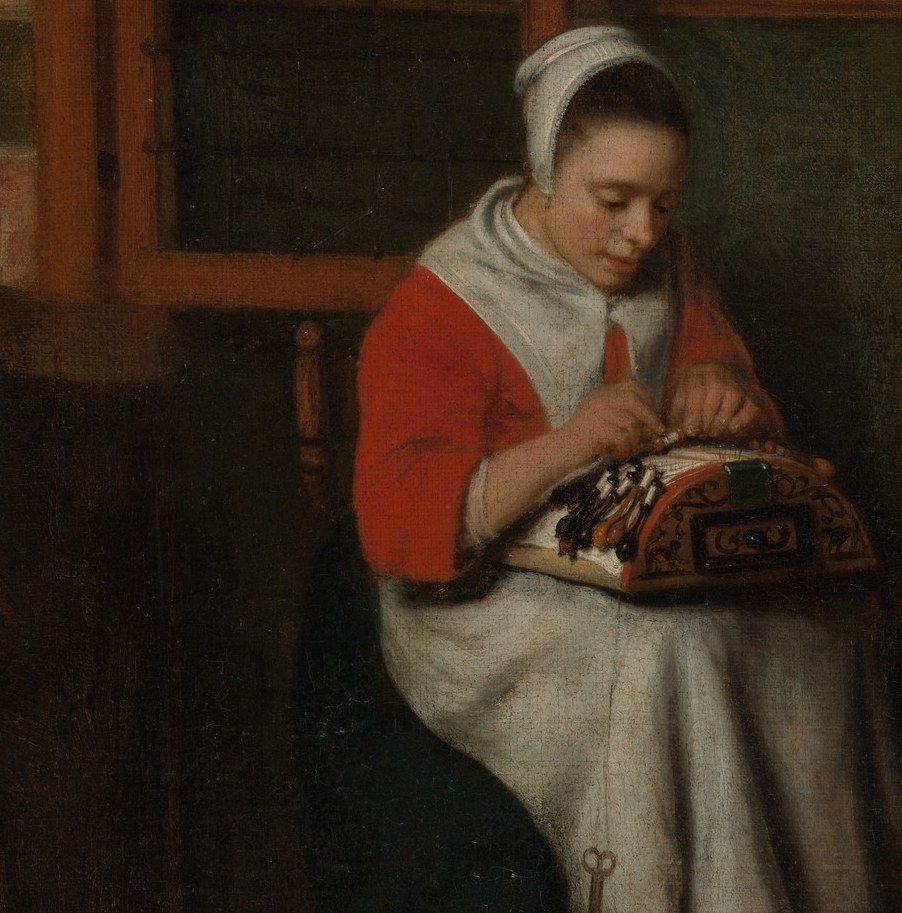
Nicolaes Maes painted 'The Lacemaker' around 1656, and it now lives at the Metropolitan Museum of Art in New York. The scene looks still at first, but the floor tells a different story.
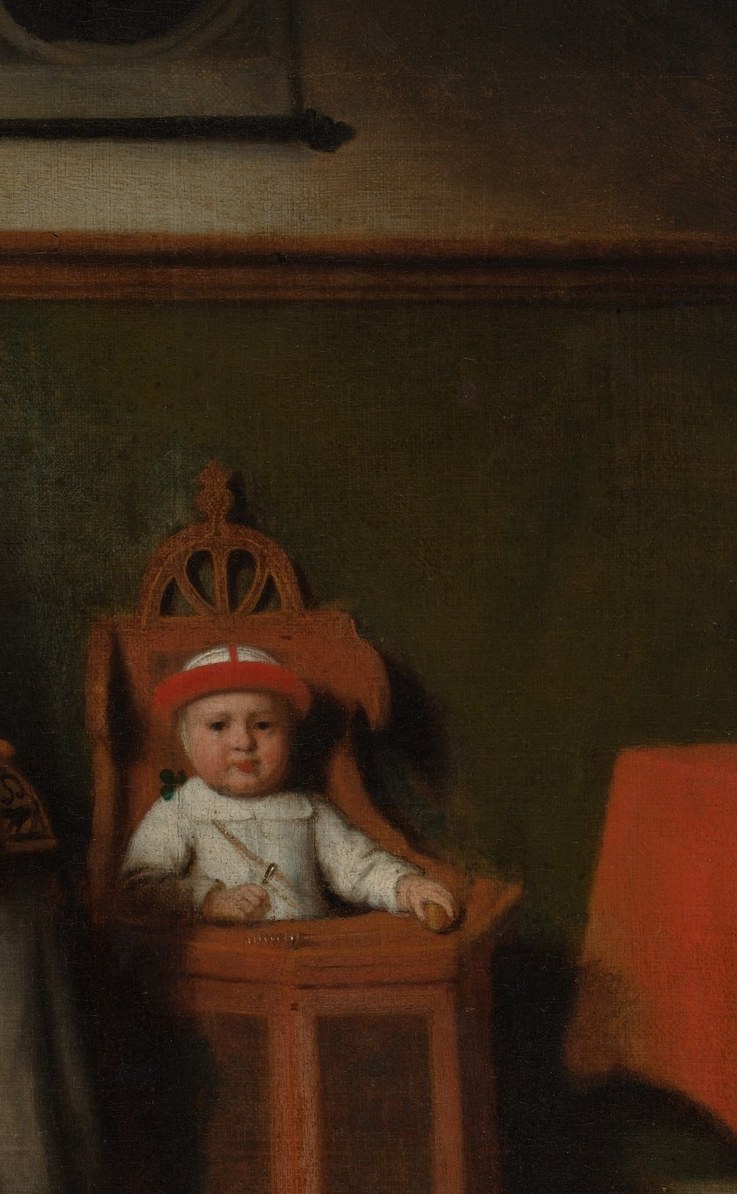
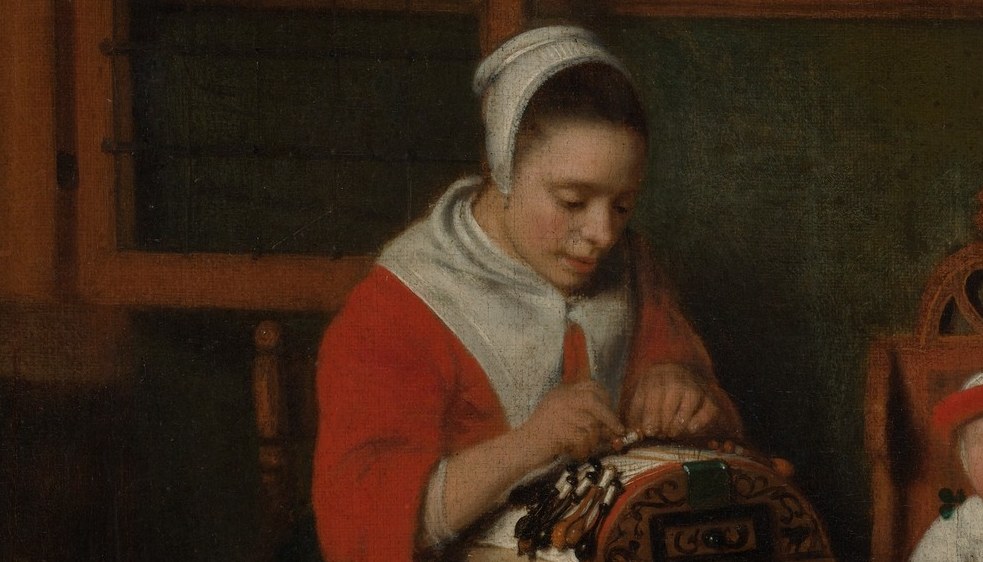
The woman's focus never breaks, bobbin lace was a commercially valuable domestic skill, and her steady hands matter. Beside her, the toddler wears a red valhoed, the padded helmet Dutch parents used to protect children who were still learning to walk. It's a sign of care, not neglect.
The highchair was both a feeding station and a safe cage. The empty porridge bowl and the scattered objects beneath it map a whole morning: the child ate, grew bored, and began dropping whatever he could reach. Maes hid that miniature narrative in the bottom third of the canvas, rewarding anyone who pauses long enough to look.
Maes trained in Rembrandt's Amsterdam studio before returning to Dordrecht, where he painted these hushed domestic scenes in the 1650s. The Friedsam bequest brought this one to the Met in 1931. Next time you see a quiet-looking Dutch interior, check the floor, that's often where the real story is.
#arthistory #dutchgoldenage #nicolaesmaes
Details
Transcript
A 17th-century Dutch mother works at her lace. She cannot pause. Bobbin lace meant income. Her child is in a highchair. He was a popular subject for Dutch painters. That red cap is a padded helmet. Falling was dangerous. The empty bowl tells you he has already eaten. And then he started dropping things. The floor maps his restlessness. Nicolaes Maes studied under Rembrandt before mastering these quiet interiors.