Artwork
The Lacemaker
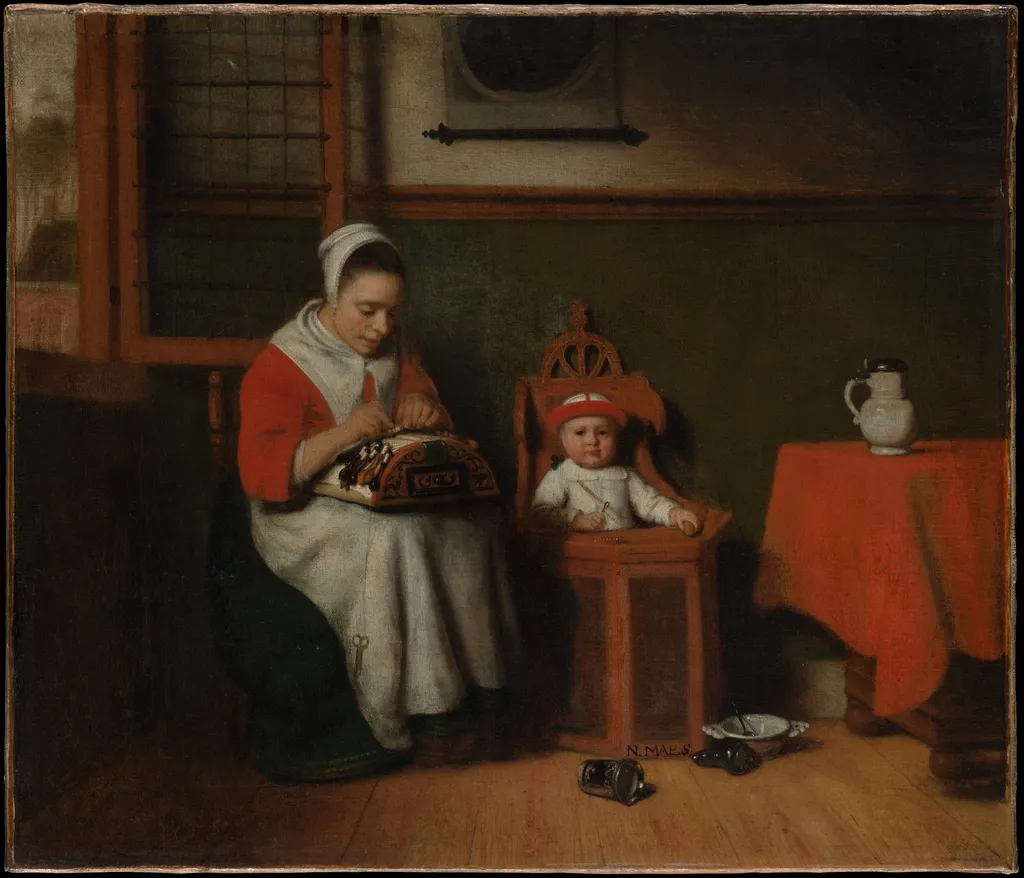
The Lacemaker is an oil painting by the Dutch Golden Age artist Nicolaes Maes. It dates from 1656 and is held in the collection of the Metropolitan Museum of Art.
About this work
A young mother bends over her lace pillow near a window while her toddler watches from a high chair in a red cap. Nicolaes Maes painted this modest Dutch interior around 1656, tying it together with flashes of red in the mother's bodice, the child's cap, and the tablecloth. An empty porridge bowl on the floor hints at the disorder of working parenthood.
Subject & Meaning
The lace pillow, scissors, and other objects further evoke the theme of household economy and virtuous feminine labor in the Dutch Golden Age.
The painting depicts a woman seated at a window, making bobbin lace on a lace pillow, while a small child sits in a high chair wearing a red "valhoed" or falling cap. On the floor lie an empty bowl and a toy rattle the child has dropped. This scene, typical of Nicolaes Maes’s domestic interiors, symbolizes the virtues of industry and maternal diligence.
The child’s confinement in the chair underscores the tension between childcare and productive work, suggesting that the high chair is necessary to allow the lacemaking to continue. The lace pillow, scissors, and other objects further evoke the theme of household economy and virtuous feminine labor in the Dutch Golden Age.
Technique & Style
The Lacemaker is an oil painting on canvas, measuring 45 by 53 cm. Maes employed a domestic interior setting illuminated by a window, a common device in his genre scenes. The composition features the lacemaker seated at left, with a table covered in red cloth to the right. The brushwork is detailed yet fluid, capturing the textures of lace, fabric, and the child's cap.
The palette is dominated by the woman's red dress and white apron, set against a muted background. The painting is signed in full in large antique letters, typical of Maes's works of the 1650s. The condition appears stable, as it resides in the Metropolitan Museum of Art collection.
History & Provenance
Nicolaes Maes painted The Lacemaker around 1656, an oil-on-canvas genre scene depicting a woman making bobbin lace while a child sits in a highchair. The work is signed and was recorded by Hofstede de Groot in 1914. By 1842 it belonged to H. Labouchere in London, and it was exhibited in Manchester in 1857.
In 1916, Labouchere’s heir sold the painting for $25,000 to F. Kleinberger, who shortly thereafter sold it for $27,500 to American collector Michael Friedsam. Friedsam bequeathed the painting to the Metropolitan Museum of Art in 1931, where it remains part of the collection.
The Lacemaker is held in the collection of the Metropolitan Museum of Art in New York. It was exhibited in Manchester in 1857 (catalogue number 1050). The painting entered the museum's collection in 1931, bequeathed by Michael Friedsam. No inventory or accession number is recorded in the available sources.
Context
The Lacemaker is a representative work of Nicolaes Maes's domestic interior scenes from the 1650s, firmly situating it within Dutch Golden Age genre painting. The painting depicts a woman making bobbin lace while a child plays in a highchair, a popular subject among contemporary Dutch genre painters that highlighted domestic life. Critical reception began with Hofstede de Groot's 1914 catalog entry, which records its provenance through the collection of H. Labouchere and subsequent sale to Michael Friedsam.
The work entered the Metropolitan Museum of Art in 1931 via Friedsam's bequest, ensuring its continued scholarly attention. Maes's focus on women in everyday interiors, as seen here, contributed to the genre's emphasis on household virtue and quiet domesticity, a key theme in Dutch Golden Age art.
Overview
Nicolaes Maes's painting, The Lacemaker, created around 1656, depicts a domestic scene characteristic of the Dutch Golden Age. Executed in oil on canvas, the work focuses on a young woman engaged in lacemaking, accompanied by a toddler secured in a high chair. This intimate interior scene, reflecting everyday life, is a notable example of Maes's genre painting and is held in the collection of the Metropolitan Museum of Art.
Own this work as a print
Artist & collection
Artist
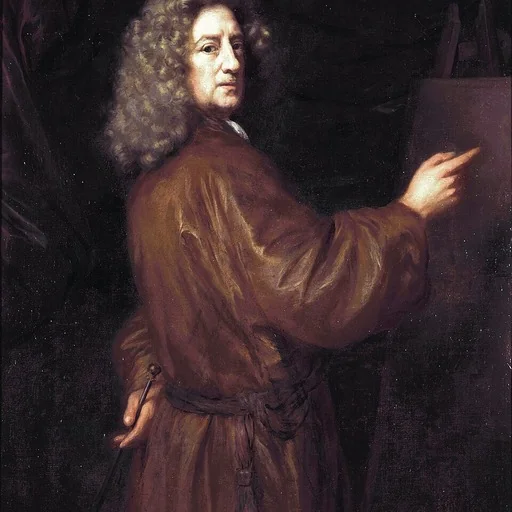
Nicolaes Maes (January 1634 – December 1693; buried 24 December 1693) was a Dutch painter known for his genre scenes, portraits, religious compositions and the occasional still life.

 A Mother Feeding her Child (The Happy Mother)
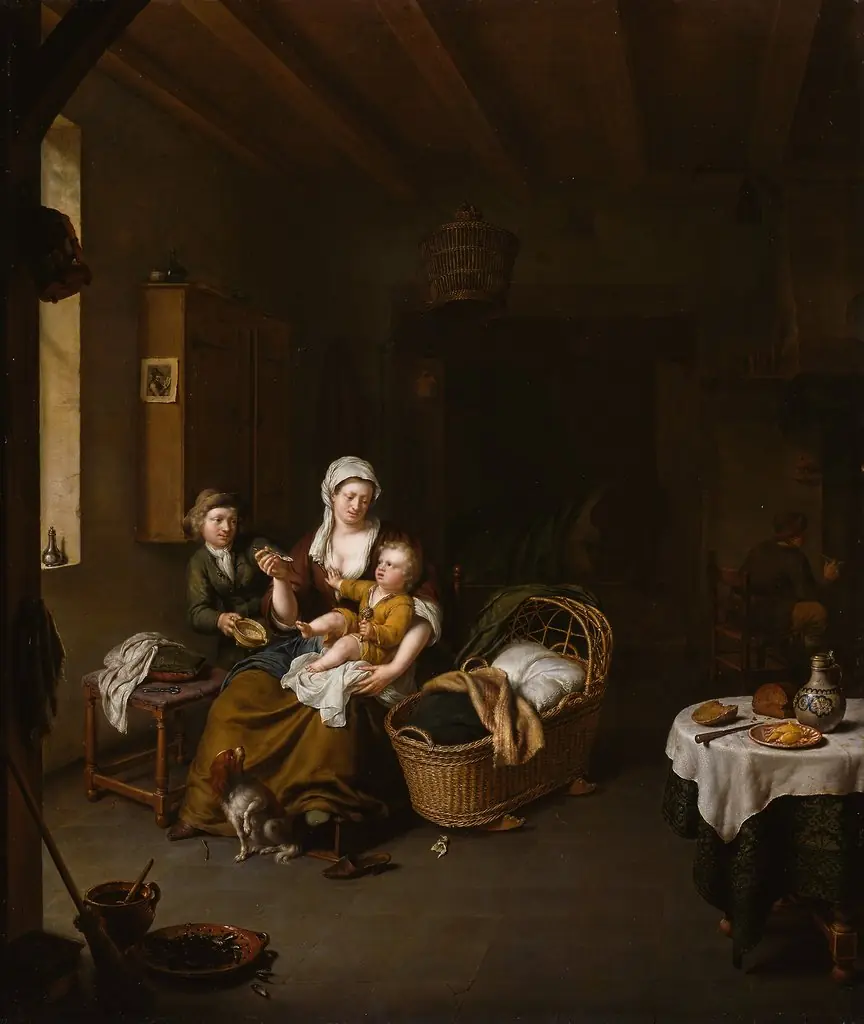 A Mother Feeding her Child (The Happy Mother)
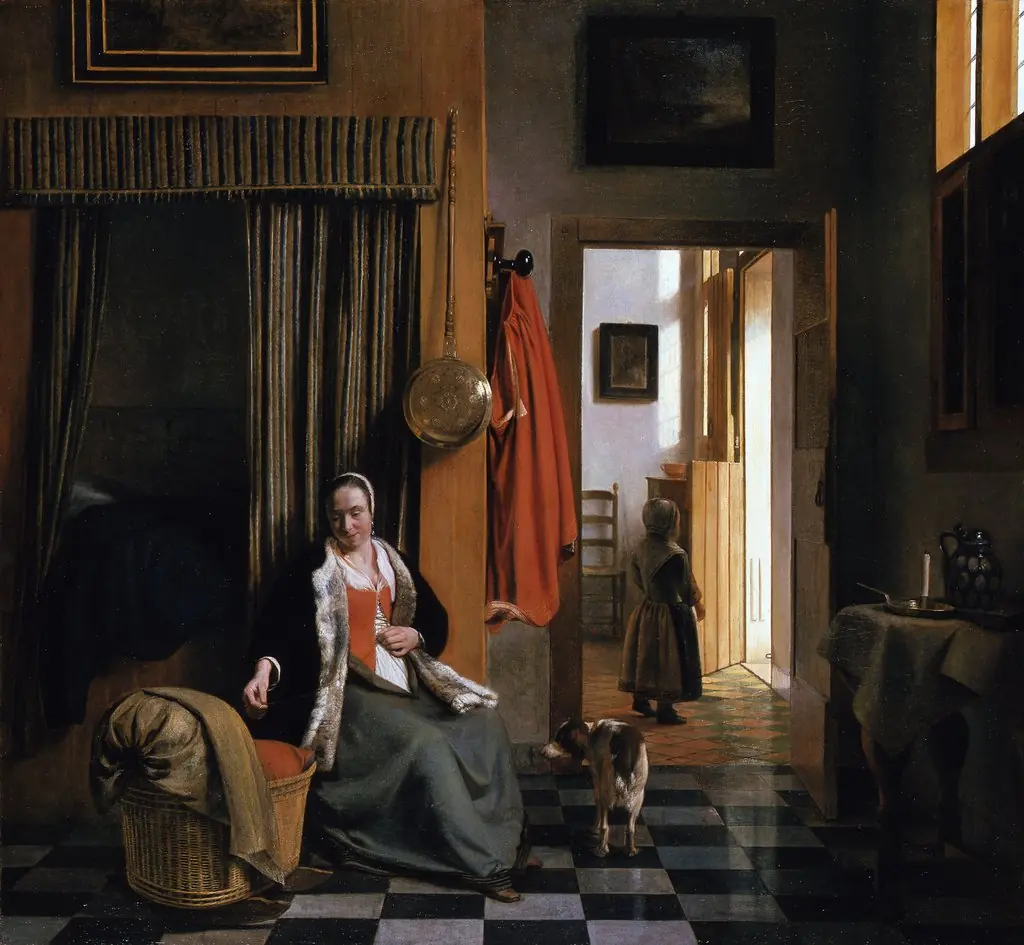 Mother Lacing Her Bodice beside a Cradle
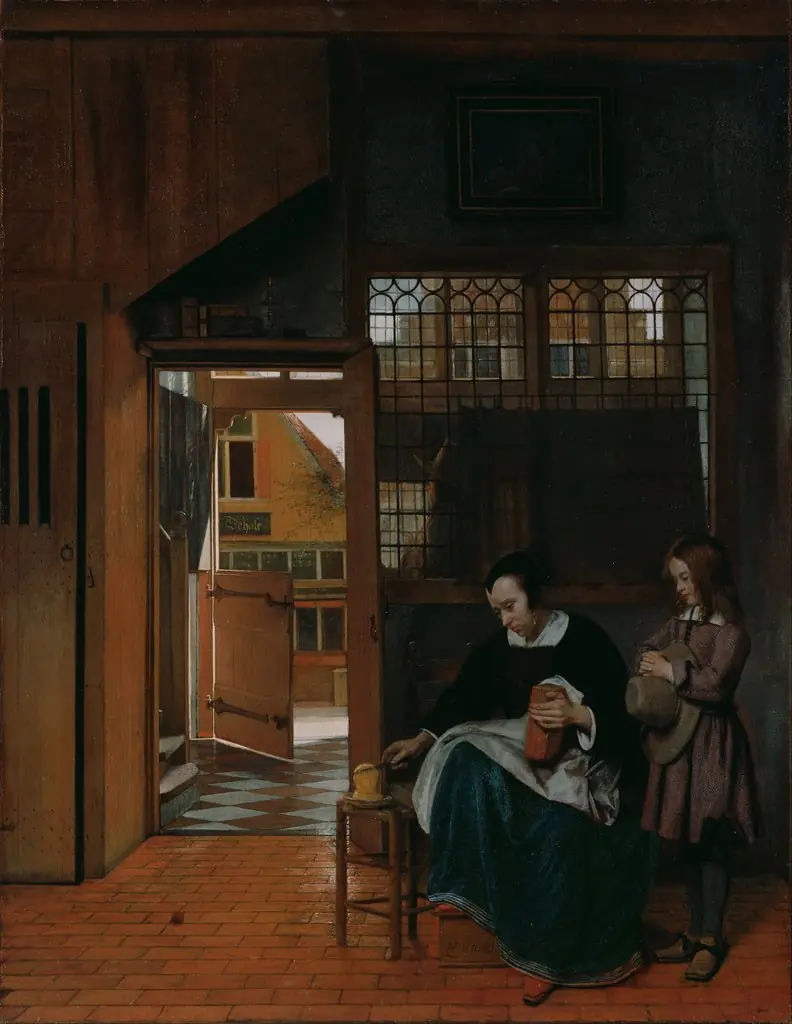 A Woman Preparing Bread and Butter for a Boy
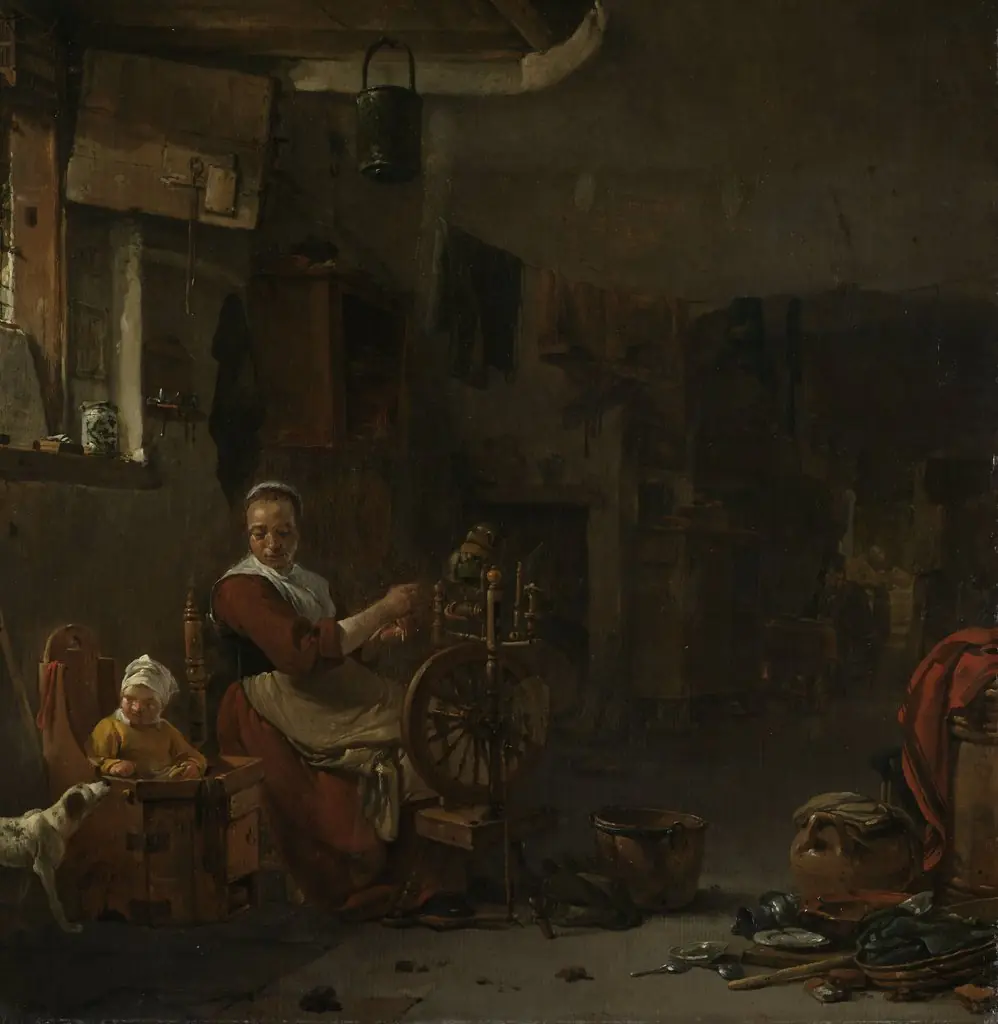 Peasant woman spinning
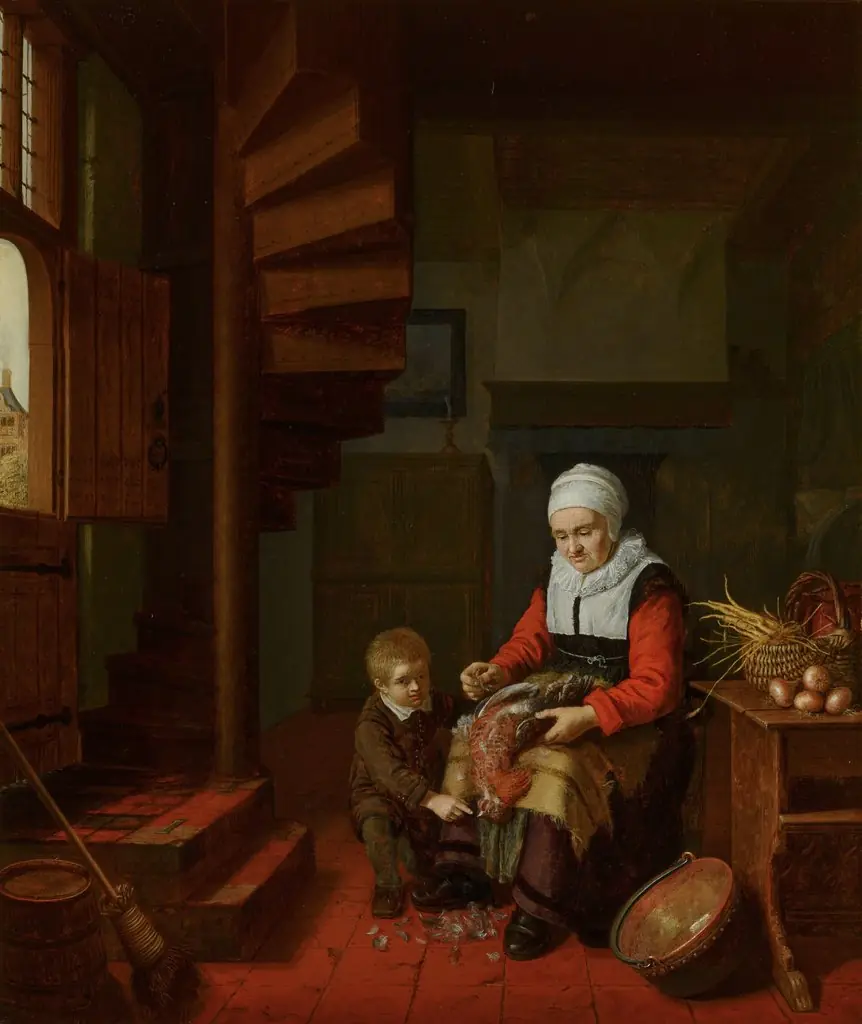 Old Woman Plucking a Cock
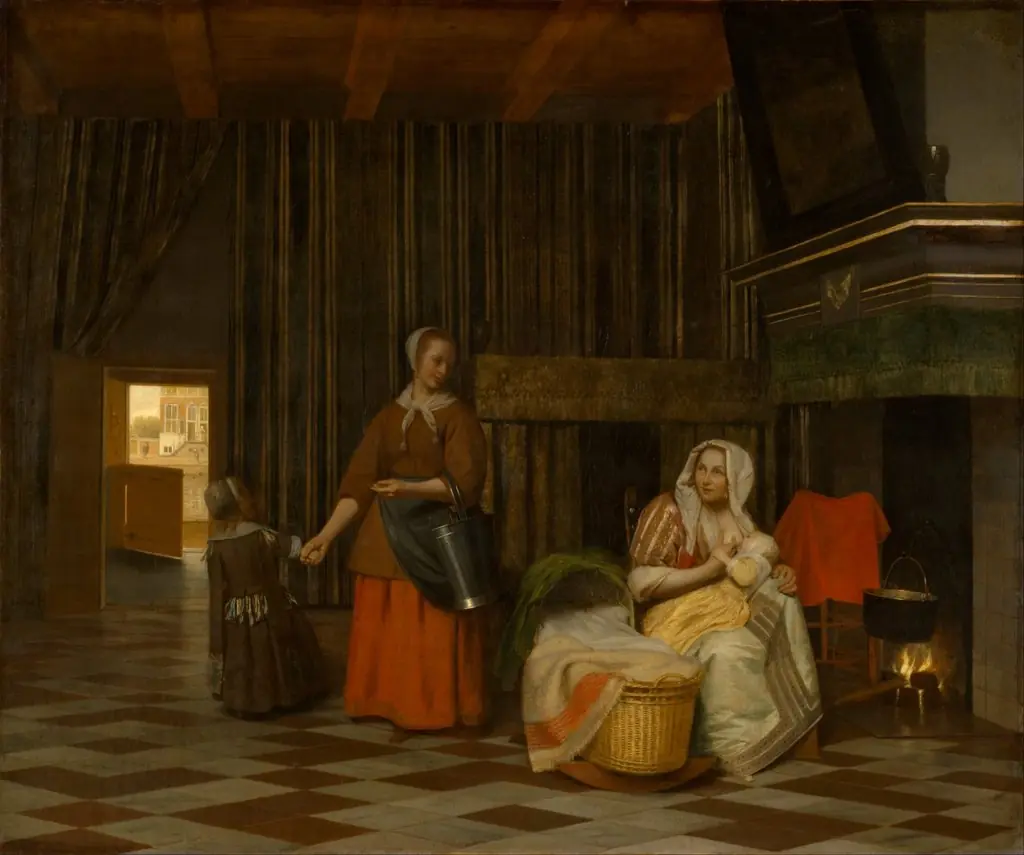 Nursing Mother, and Child with Serving Maid
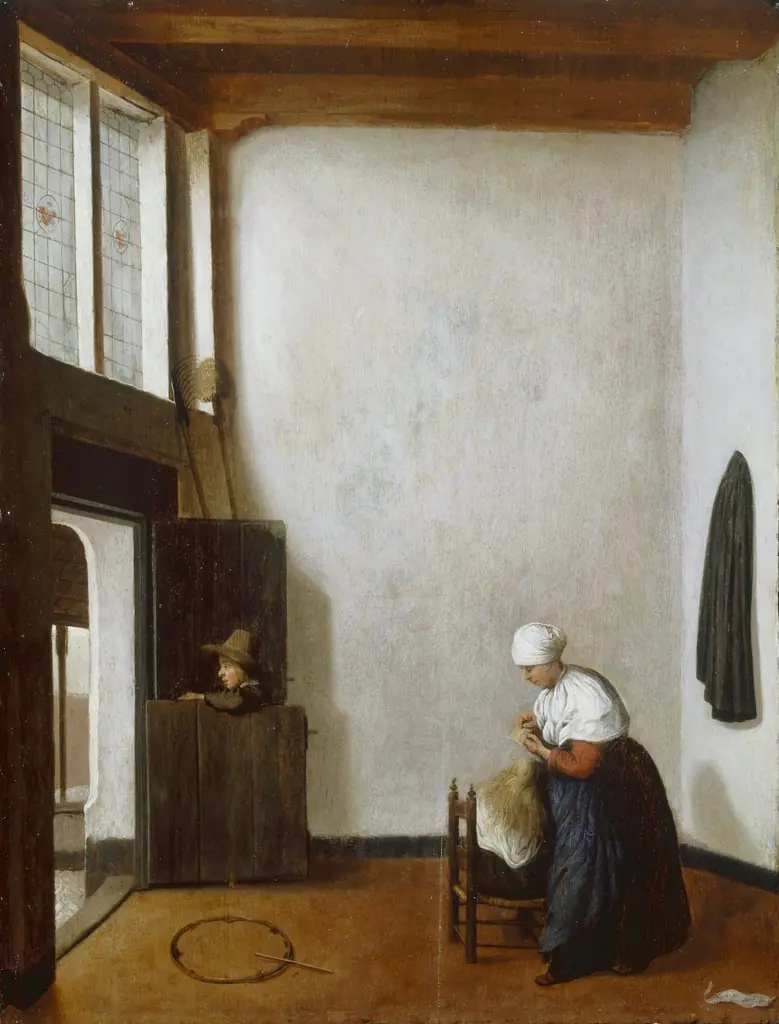 Interior with a Woman Combing a Little Girl's Hair
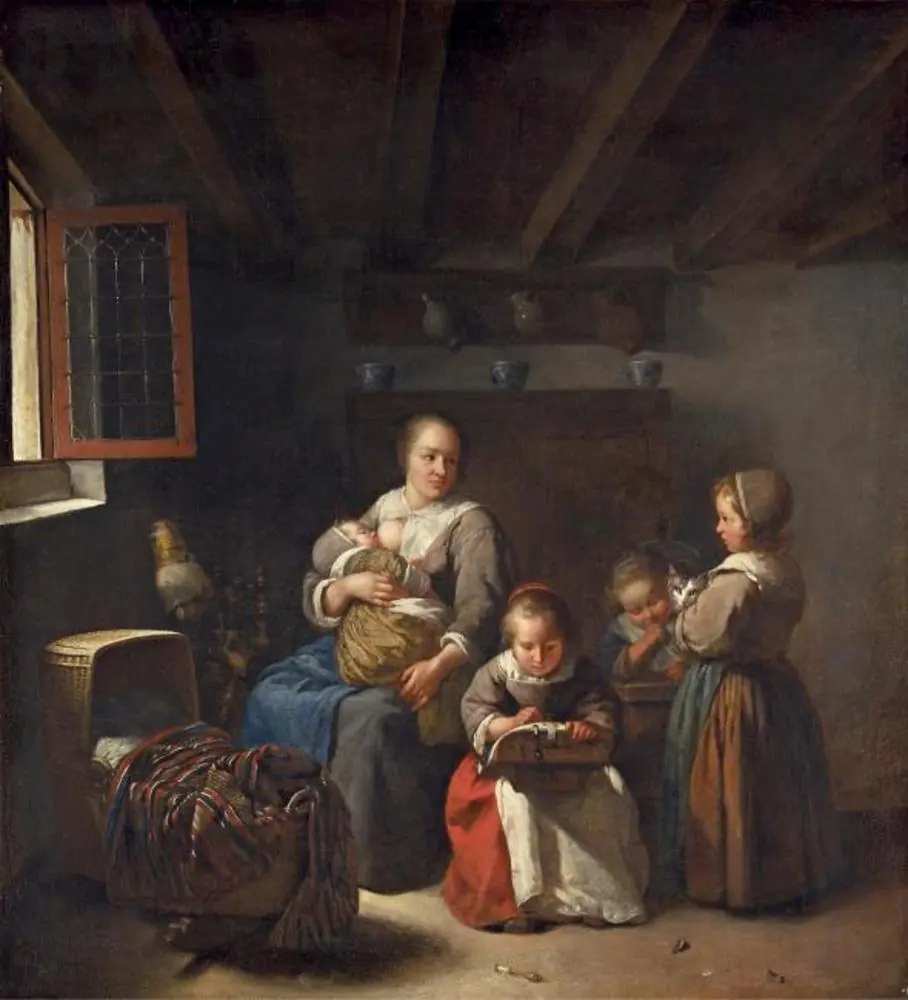 Nursing mother with three girls
 The Bedroom
 Peasant Family
- The Lacemaker
 Studied in the Dutch Golden Age course