Portrait of the Three Regentesses of the Leprozenhuis, Amsterdam by Ferdinand Bol
This intriguing painting, "Portrait of the Three Regentesses of the Leprozenhuis, Amsterdam" by Ferdinand Bol, painted around 1668 and now at the Rijksmuseum, offers a rare glimpse into the lives of female civic administrators in the Dutch Golden Age.
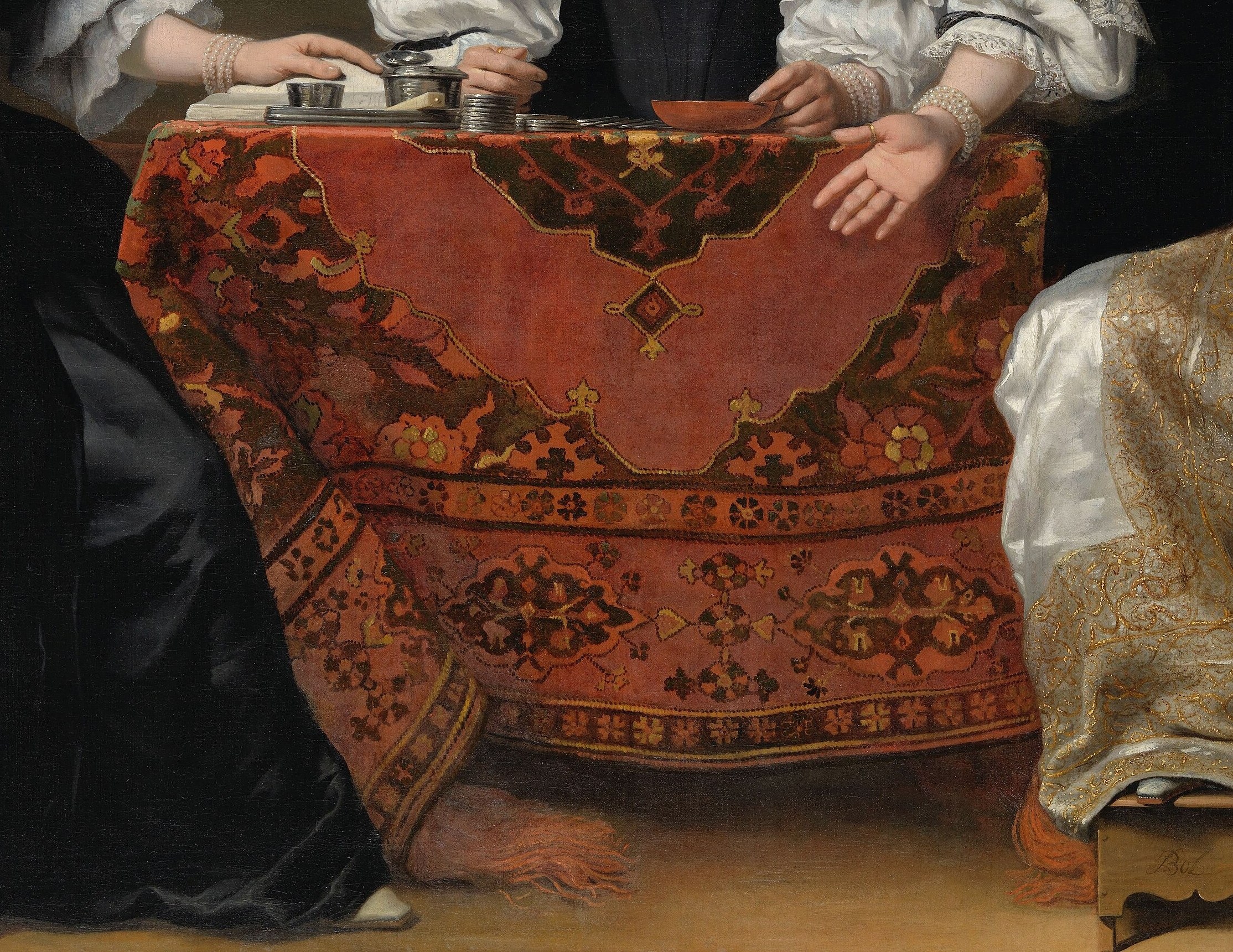
Look closely at the details: the ornate carpet, the jeweled brooches, and especially the stacks of coins. These elements are not just decorative; they subtly convey the wealth of the leper hospital and the significant financial responsibilities these regentesses bore.
Bol, a pupil of Rembrandt, used a restrained style that emphasized the figures' authority and the textures of their clothing, rather than overt ornamentation. This painting served as both an institutional record and a public affirmation of the regentesses' civic virtue and philanthropic spirit.
It’s a powerful testament to the role of women in municipal welfare and a fascinating window into 17th-century Dutch society. What details do you find most striking?
Details

Transcript
These women governed Amsterdam's leper hospital in 1668. Their poses are dignified, reflecting their charitable responsibilities. The ornate carpet on the table signals the institution's wealth. Her jeweled brooch also displays their status. These stacks of coins highlight their financial management roles. The painting itself records their civic virtue and influence.