Hevajra Mandala by http://www.wikidata.org/.well-known/genid/99efdc9ecff5845e02e590f8874b5c1f
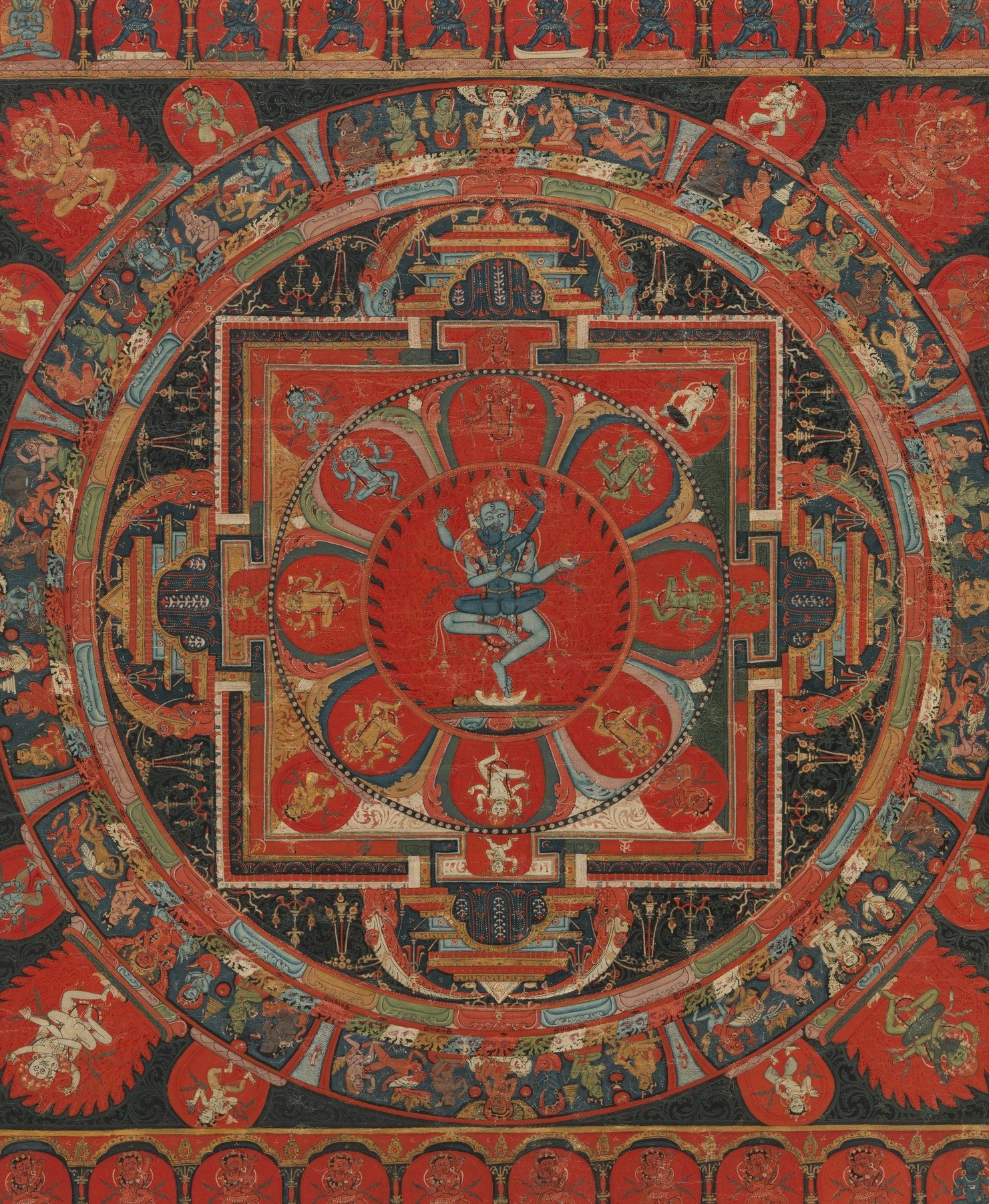
This isn't just a beautiful painting, it's a meticulously crafted map for a spiritual journey. The Hevajra Mandala, created around 1449 in Tibet, is far more than decorative art; it serves as a visual guide for meditation and spiritual practice.
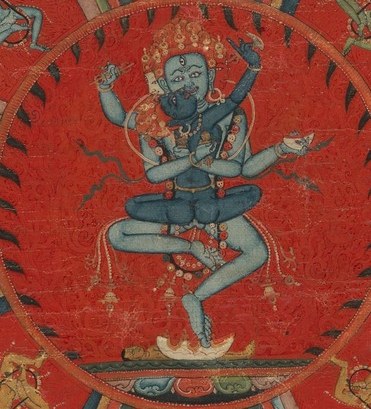
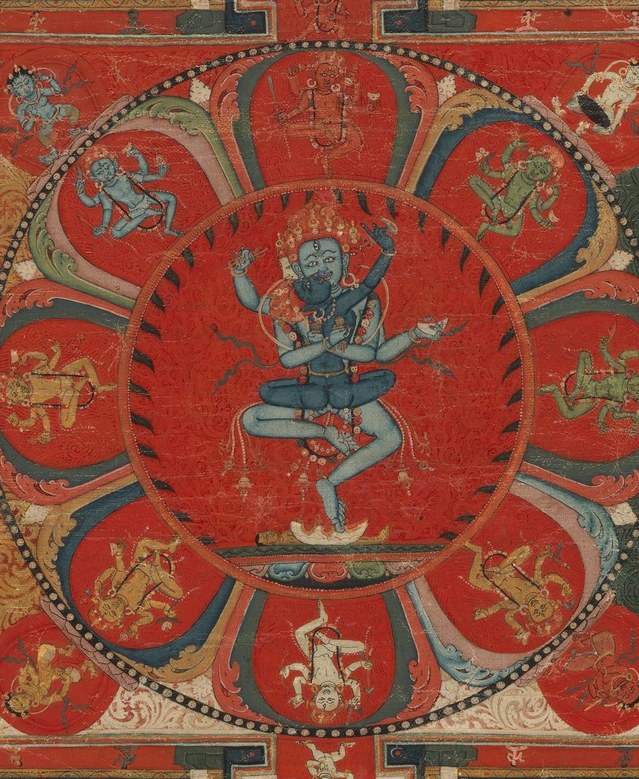
Look closely at the vibrant details. The central blue deity, with its four arms, represents immense power and spiritual significance. Surrounding it, concentric circles and numerous smaller figures each hold meaning, guiding the meditator through various stages of spiritual realization.
Each line and color in this intricate work, now housed in a museum, is designed to represent a step or concept in the Buddhist path. It's a complete cosmic diagram, revealing a complex pantheon and a sacred landscape intended to aid profound contemplation.
What hidden depths do you find in its layers?
Details


Transcript
This isn't just a painting, it's a map. This Hevajra Mandala guides spiritual journeys. The blue central figure is a deity with immense power. Notice the many smaller figures that surround him. Every element represents a step on a spiritual path. It's a complete cosmic diagram, meant for meditation.