Self-Portrait (?) by El Greco
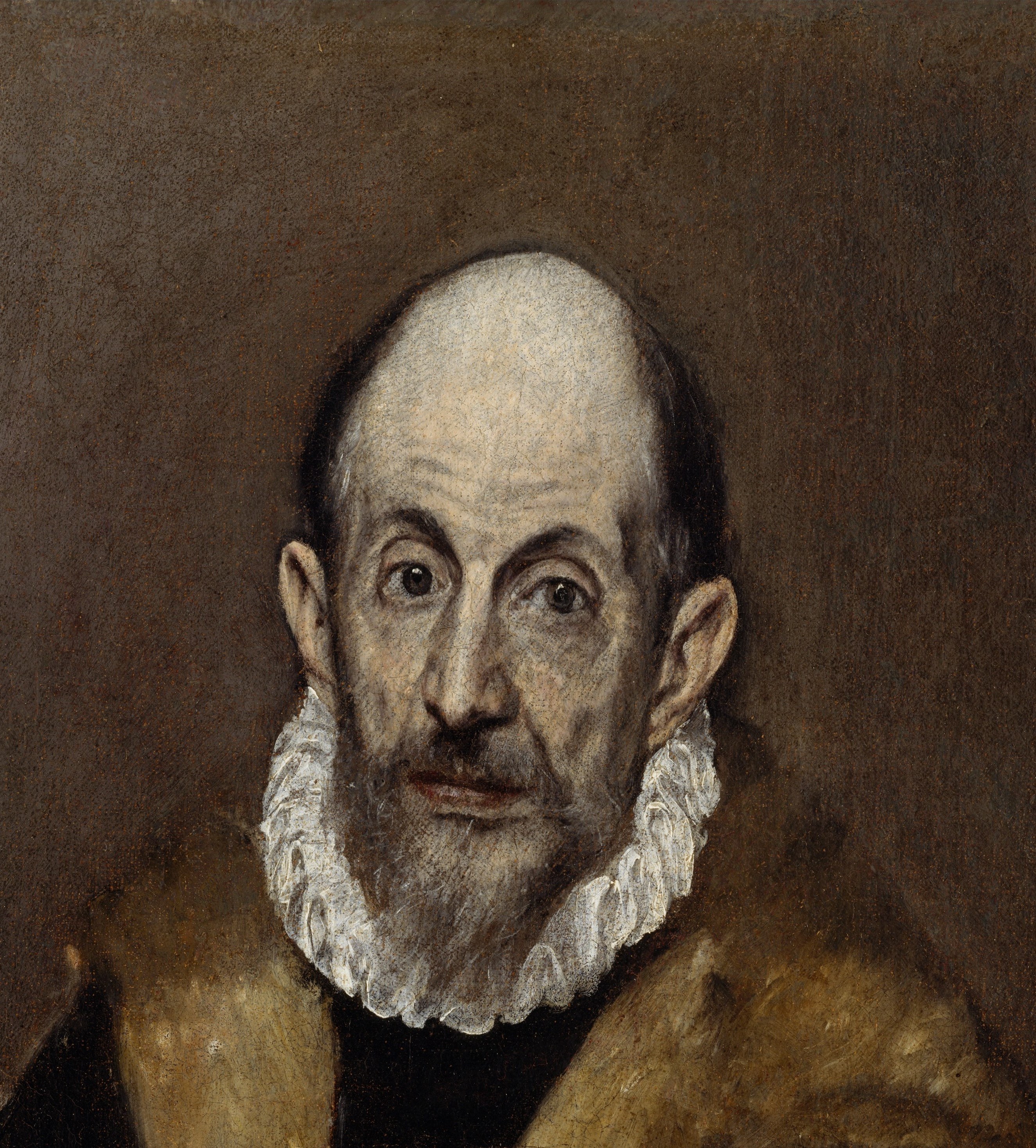
This is El Greco's Self-Portrait (?), an oil on canvas likely painted between 1595 and 1600, now at the Metropolitan Museum of Art in New York. The question mark in the title is not editorial whimsy: it is the museum's honest admission that, after more than a century of scholarly debate, no one has definitively proven who this man is.
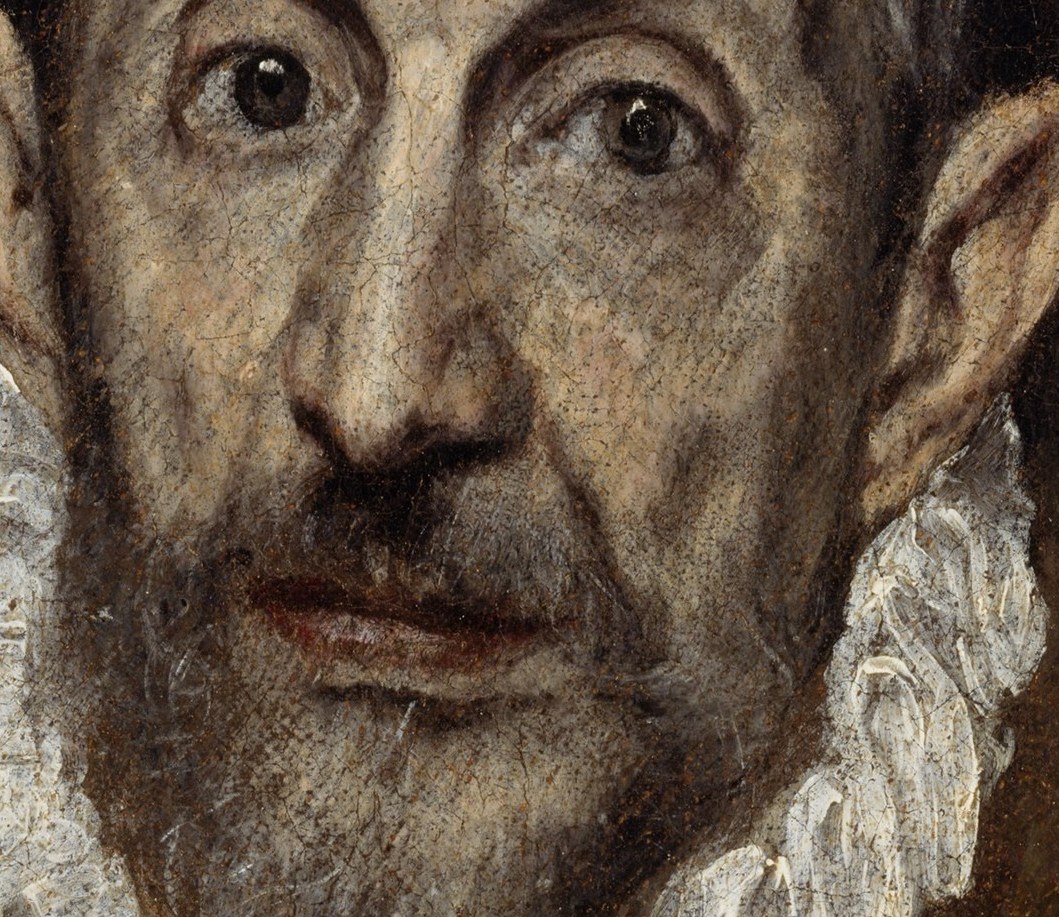
Look at the face itself. The deep-set eyes with their single catch-light, the long aquiline nose, the closely trimmed silver beard, all of it rendered with the loose, assured brushwork El Greco learned in Venice under Titian and Tintoretto. The elaborate white ruff and dark fur-trimmed coat mark him as a member of Toledo's intellectual class, a man with hard-won status.
The argument for a self-portrait rests on morphology. This same face, the nose, the beard, the high forehead, appears in El Greco's crowd scenes as a recurring witness figure, aging across the decades at a pace that matches the artist's own life. If true, it is one of art history's quiet acts of self-insertion, a painter placing himself inside his own biblical dramas.
The argument against: no inventory from El Greco's lifetime, no letter, no son's note identifies any surviving canvas as a self-portrait. So the question mark stays. What do you think, is he watching himself, or someone else entirely?
Details

Transcript
He appears in El Greco's paintings again and again. A witness in crowd scenes, aging as the painter aged. This is the nose scholars look for. The beard, too. Same silver, same precision, across decades of work. But no document says who he is. The Met calls the painting: Self-Portrait, with a question mark.