Christ Carrying the Cross by El Greco
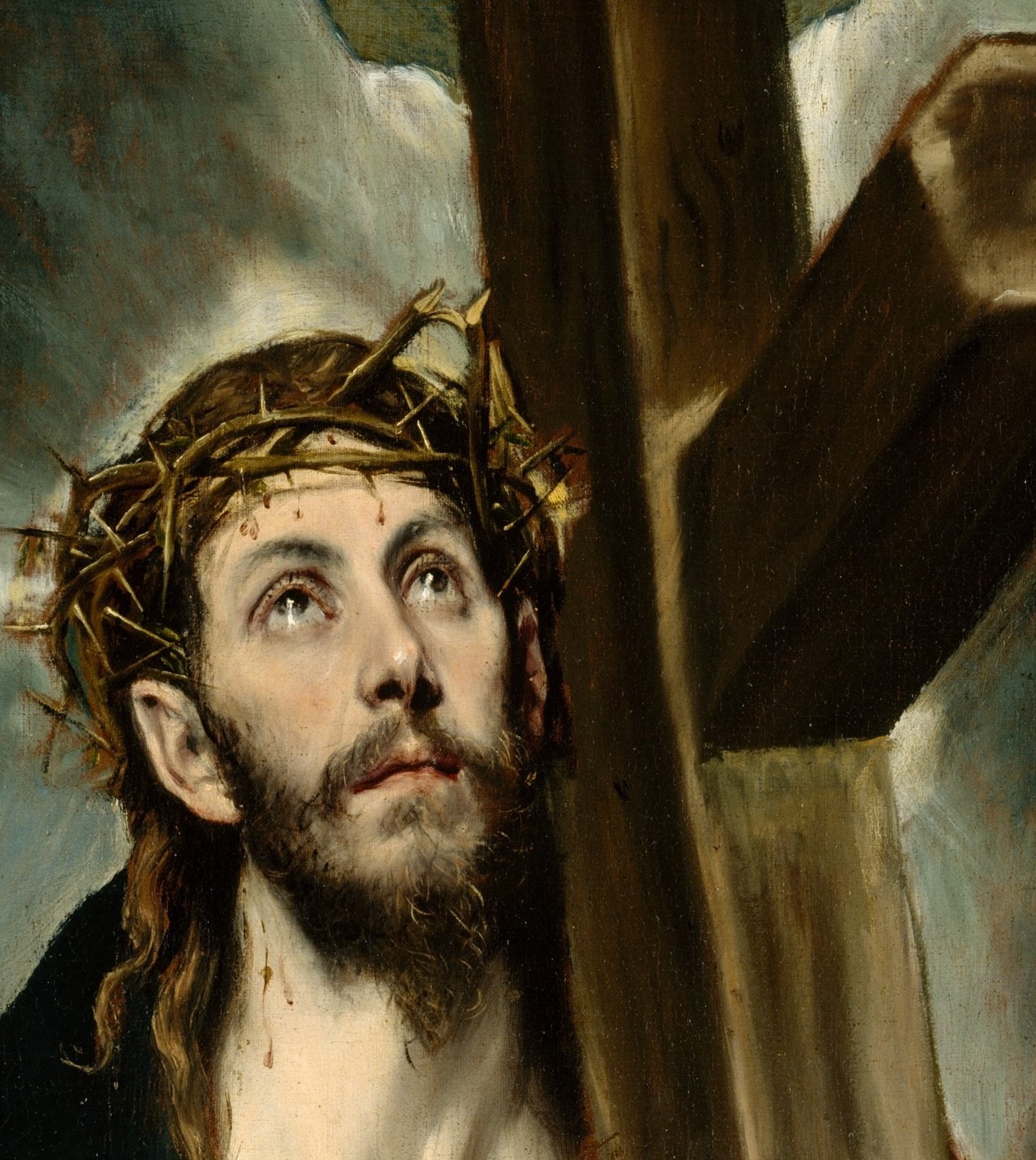
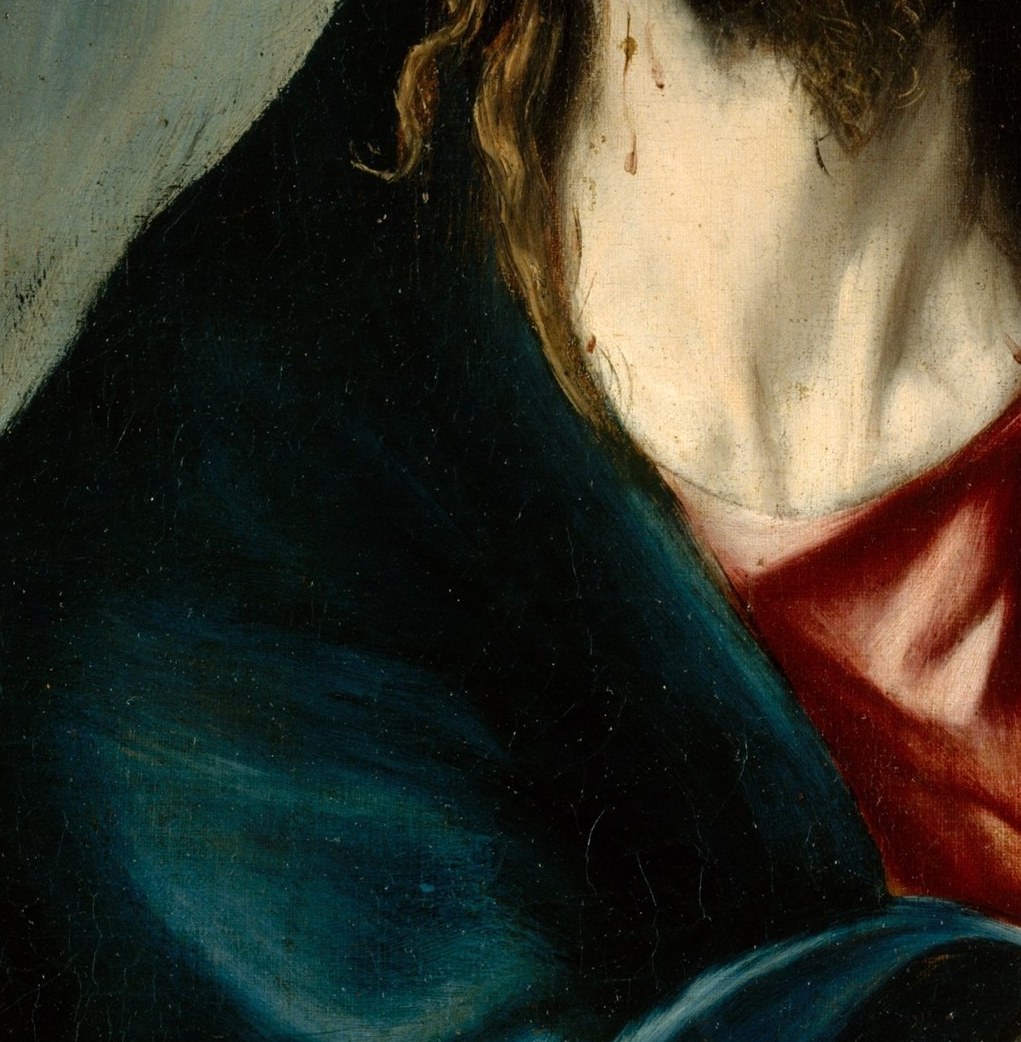
This is El Greco's Christ Carrying the Cross, painted around 1580 and now in the Metropolitan Museum of Art. It is a small, intense canvas, just over a meter tall, showing a solitary Christ embracing the cross on his way to Golgotha.
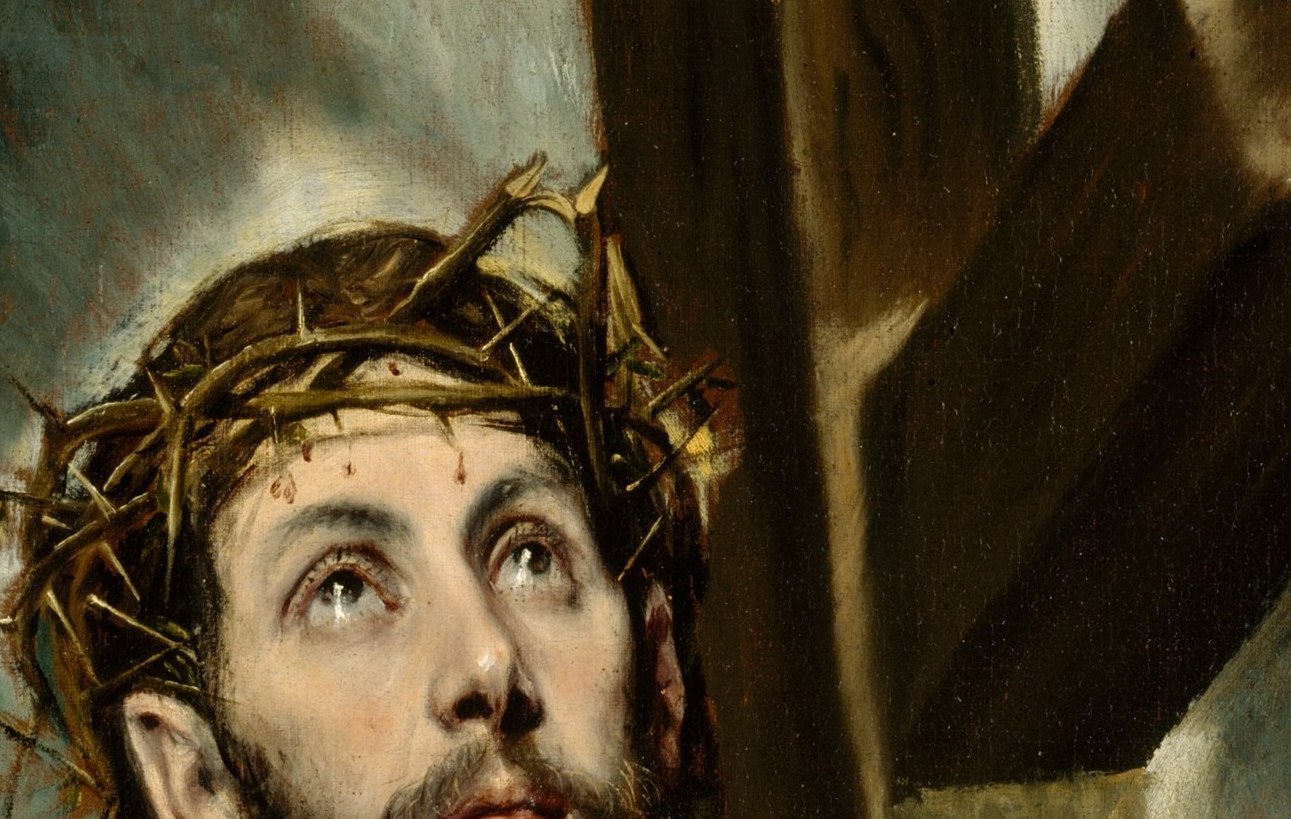
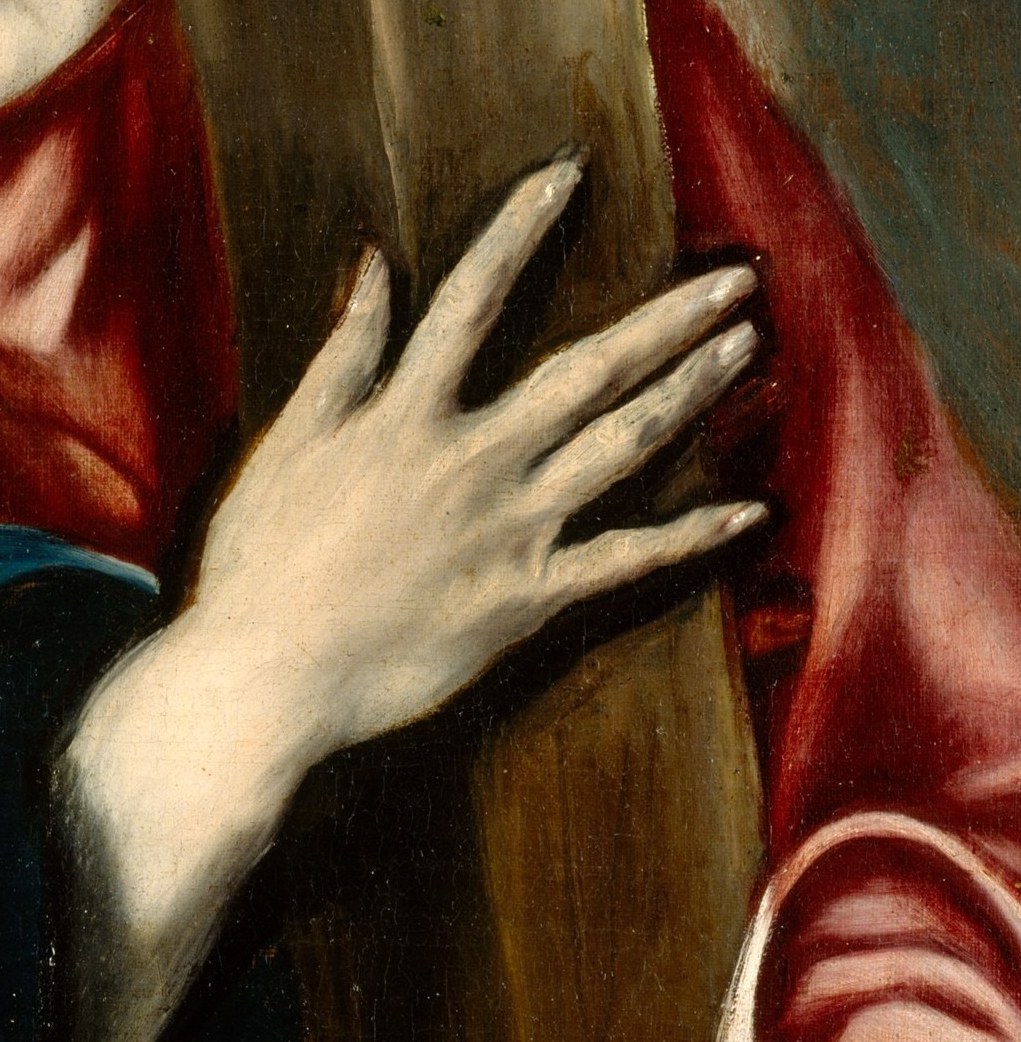
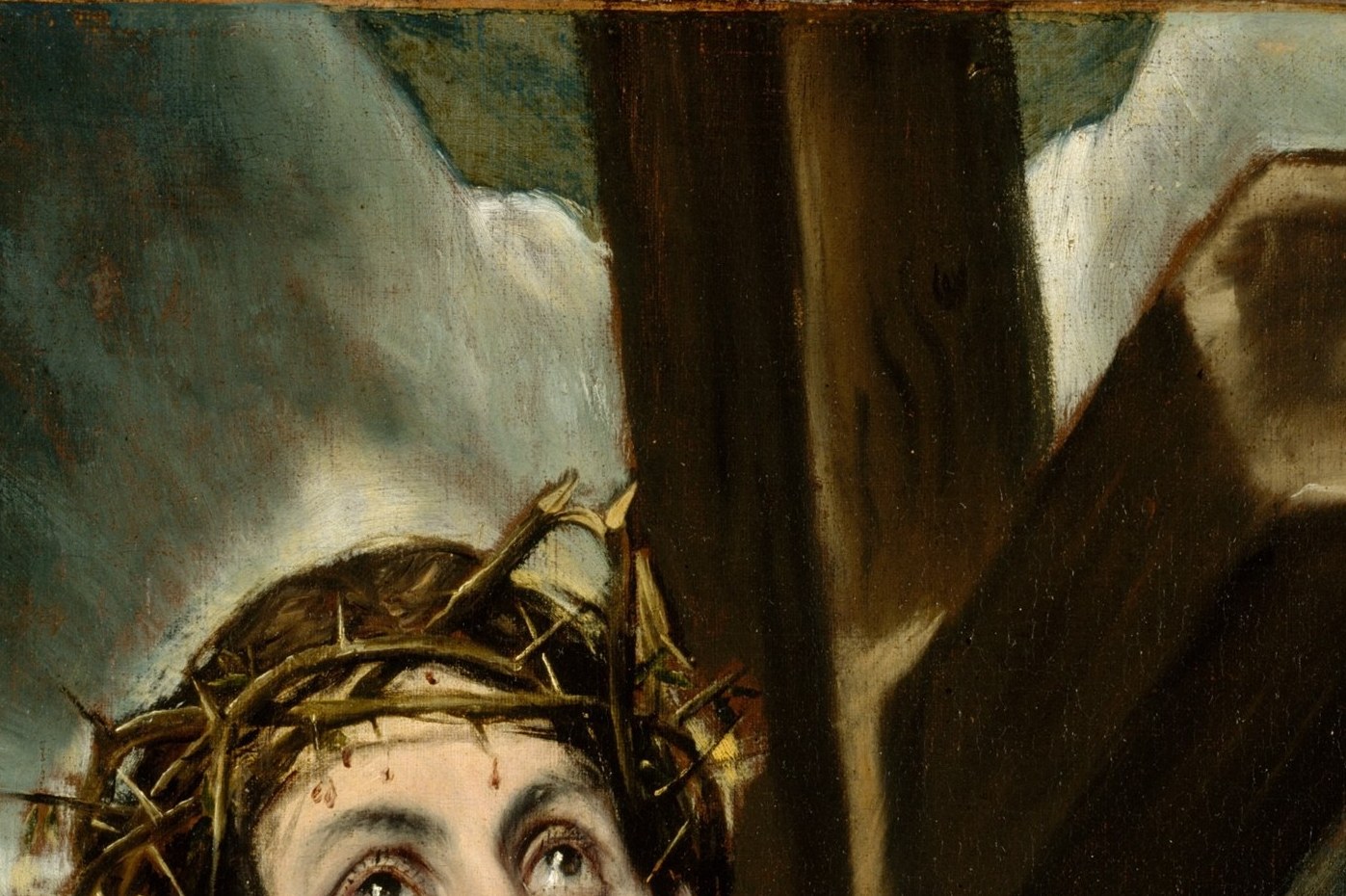
What to look at: the hands. They do not grip in desperation; the fingers curl tenderly around the wood as if the cross itself were a comfort. The eyes lift out of frame to a light source only El Greco supplies. Behind him, a bruised, greenish-black sky closes in, making the crimson and blue of his robe burn.
At his death in 1660, Diego Velázquez owned only one work by El Greco. It was this one. It hung in his private rooms, not in the public halls of the Alcázar. Velázquez's own teacher, Francisco Pacheco, had trained under El Greco's disciples, naming El Greco as the root of the new Spanish painting. The greatest court painter of the Spanish Golden Age was keeping a piece of his artistic lineage close by his bed.
A man who had everything he wanted in paint kept one picture by its originator. Sometimes influence is not declared in manifestos; it is held in a bedroom.
Details
Transcript
A man and a cross. Nothing else. But Diego Velázquez, painter to the king of Spain, kept this in his bedroom. His eyes are lifted toward something we cannot see. Look at his hands. He is not carrying the cross; he is holding it. El Greco painted this around 1580, alone in Toledo. So why did Spain's greatest painter treasure this one small canvas? Because Velázquez's teacher had studied under El Greco. This was the grandfather of Spanish painting, held in a private room by its heir.