A Vase with Flowers by Jacob Vosmaer
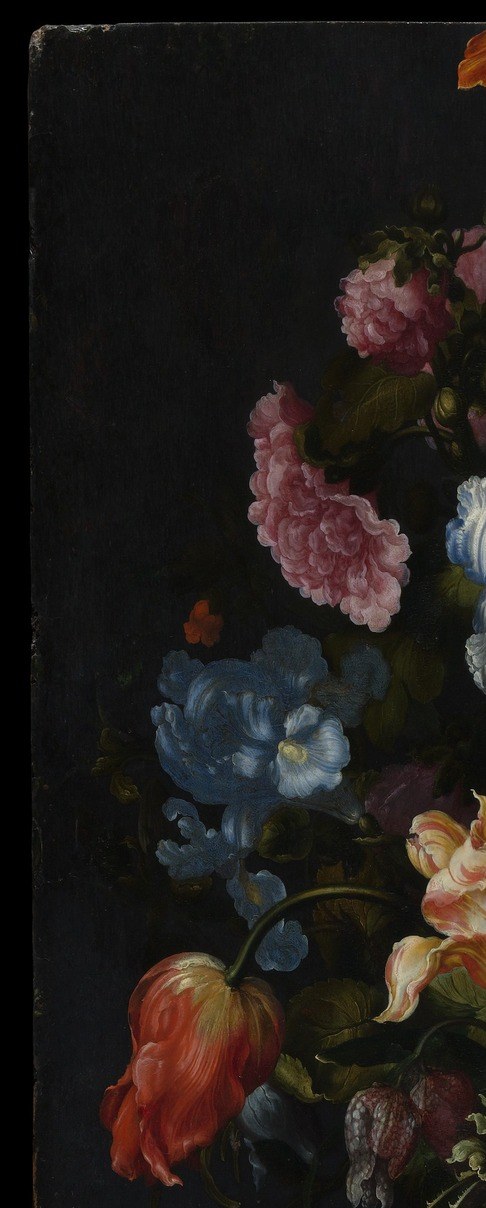
This is A Vase with Flowers, painted by Jacob Vosmaer in 1613, now at The Metropolitan Museum of Art. It is one of the earliest Dutch still-life paintings to assemble an impossible bouquet: flowers that bloom in different seasons, painted together as if they all existed at once.
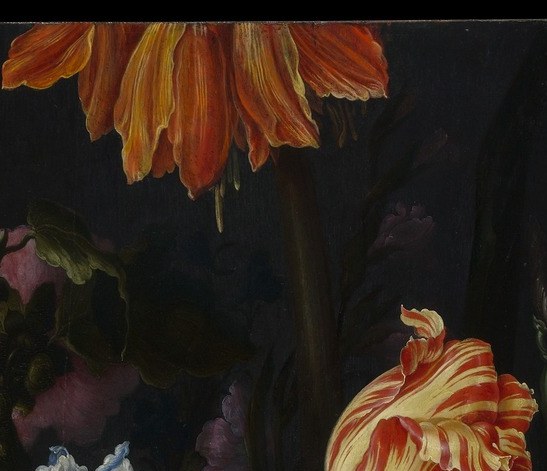
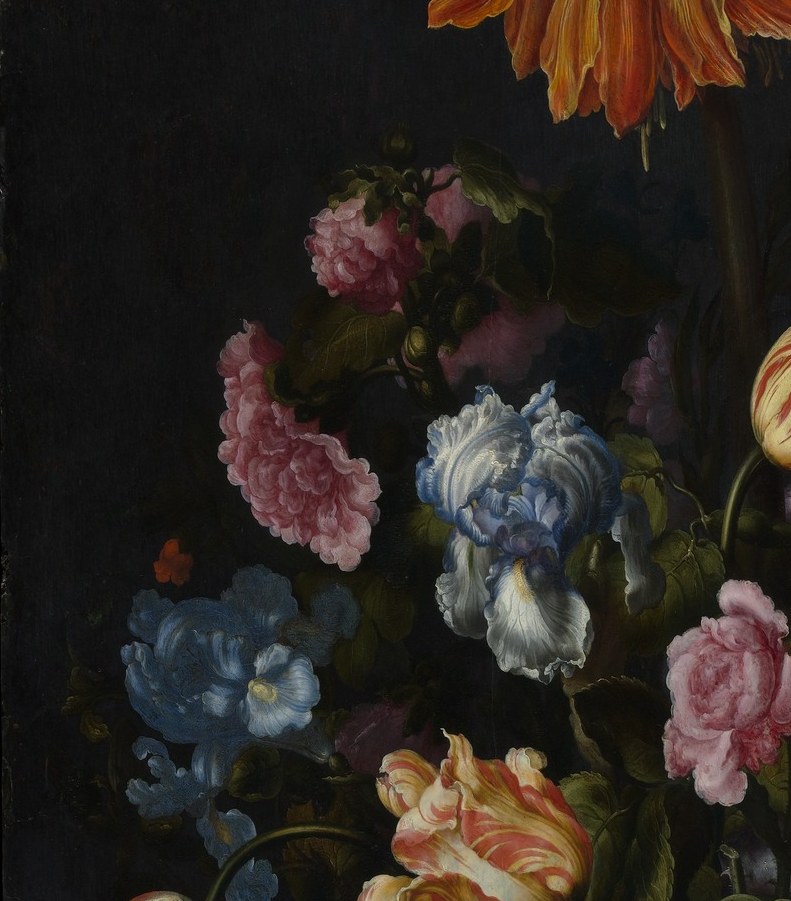
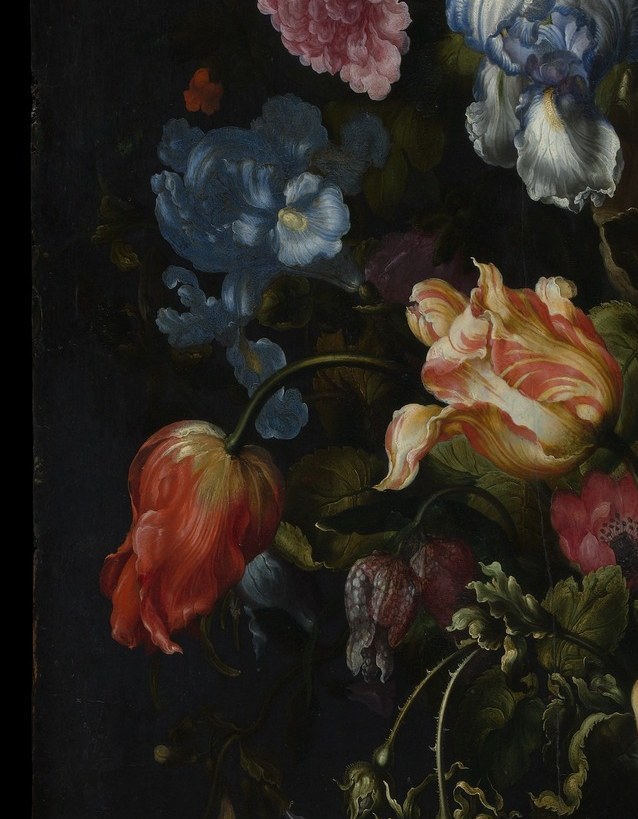
Look at the tulip at the crown, the blue iris on the left, and the huge open peony. Tulips are spring. Irises are late spring. Peonies are high summer. No living arrangement could hold them simultaneously. Every bloom in this painting was studied from a separate drawing, made when that flower was actually in season in Vosmaer's Delft studio.
This was a new way of painting in 1613. Instead of working from life in one sitting, Vosmaer built a library of botanical studies across months and then composed the final picture in oil, bloom by bloom, against a void-black background. The result is a constructed reality: optical truth stitched together from separate moments in time.
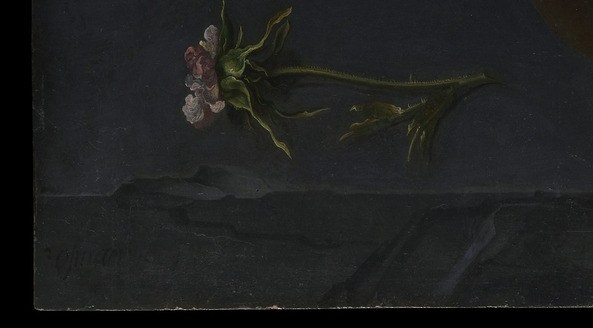
The fallen petals on the ledge drive it home. Even the decay is a studio fiction, invented from sketches rather than observed in real wilt. Every detail is a deliberate choice made at the easel, not a record of a single morning.
Details
Transcript
A tulip, an iris, a summer peony. All in flawless bloom. This bouquet never existed in a single vase. Tulips bloom for weeks in spring. Peonies peak in June. Vosmaer painted each flower separately, studying studio drawings across seasons. Then he assembled them here, in a fiction floating against pure black. Look at the dropped petals. Even the decay was invented in a sketchbook.