Paschal Candlestick by http://www.wikidata.org/.well-known/genid/99f057999a2d90be4a46bfc384c4d8c9
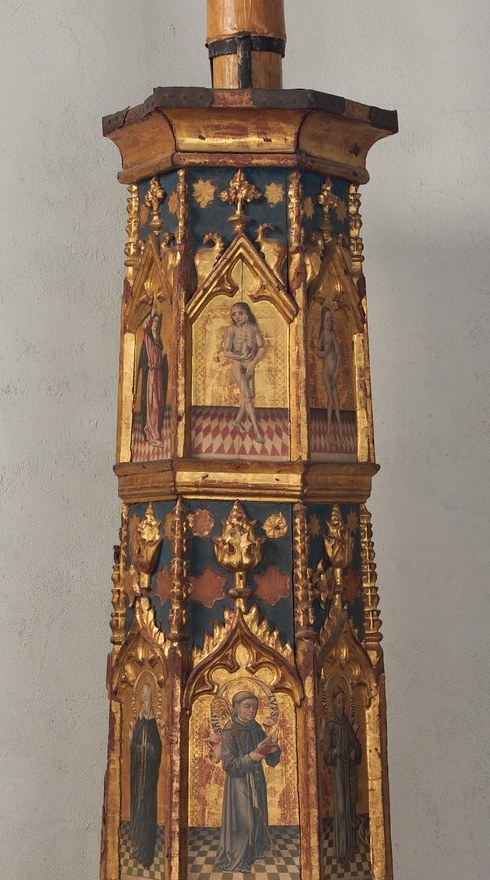
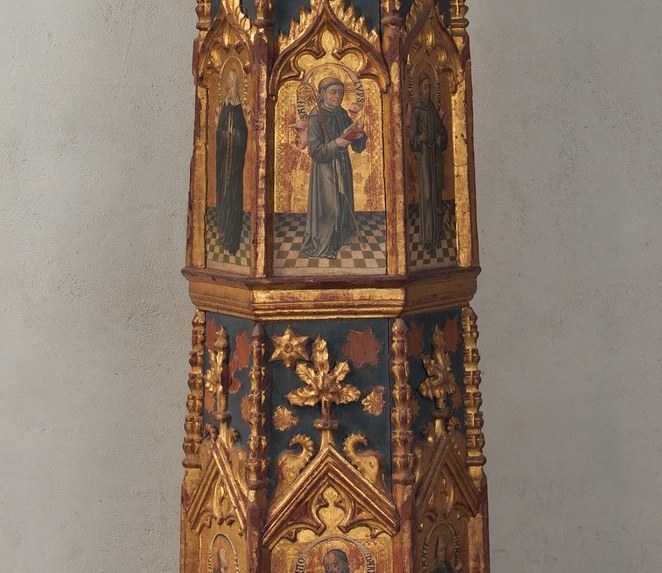
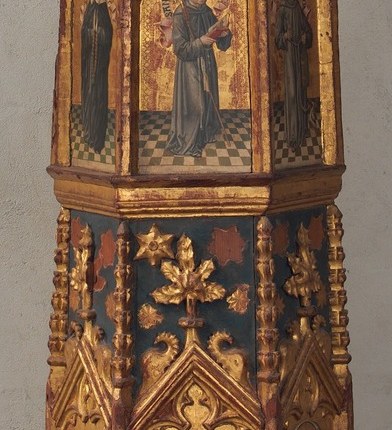
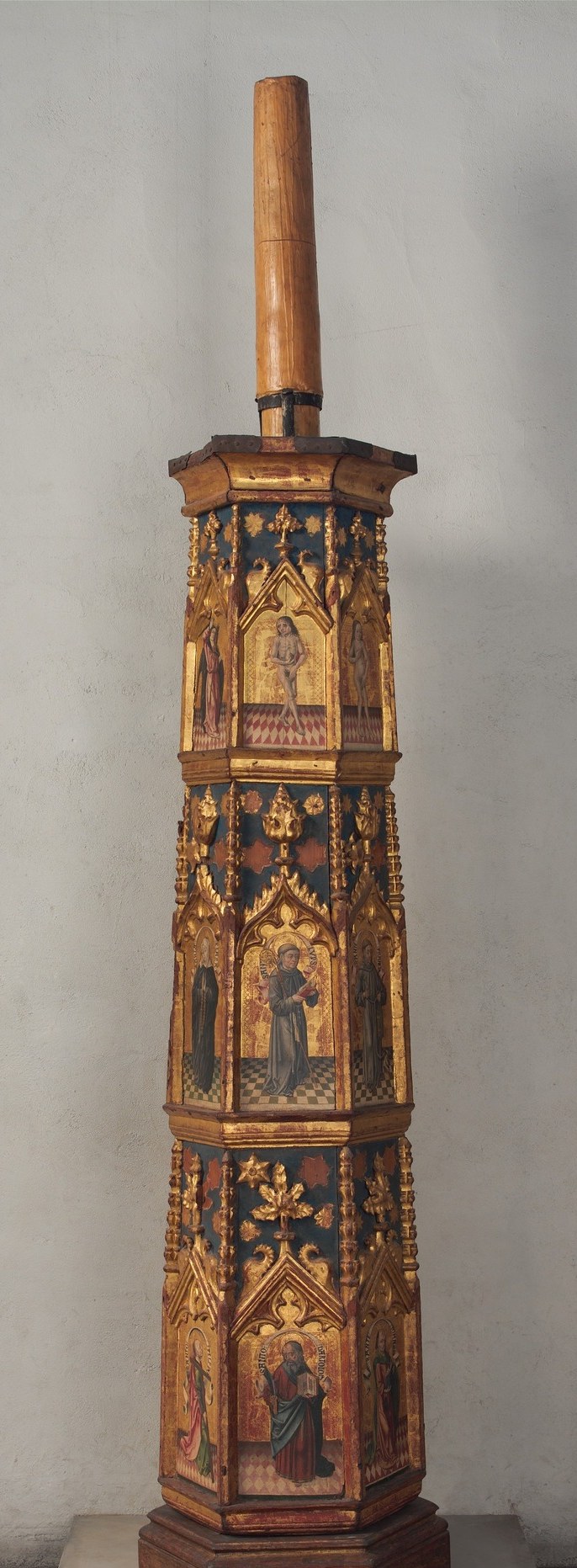
This is a Paschal Candlestick, made around 1450 in Southern Germany. It lives in the Victoria and Albert Museum. Its whole purpose was to hold the tall Easter candle during the most important liturgy of the year, so the carver turned a functional object into a miniature Gothic cathedral, complete with pinnacles, tracery, and three painted saints.
Look closely at the painted panels tucked inside the arches. The backgrounds alternate red and blue, a visual code borrowed directly from illuminated manuscripts, where blue often signaled heavenly or Marian subjects. The figures are rendered in bright pigments that have survived intact for nearly six centuries. Above them, gold leaf applied by brush catches the light exactly as it would have in a candlelit church in the 1450s.
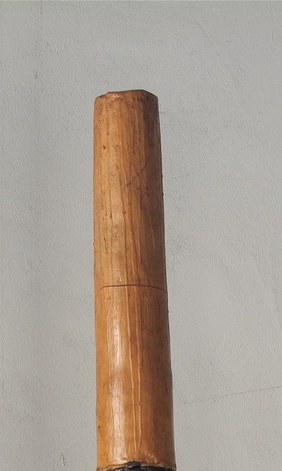
The unadorned wooden spike at the top is the most important part. On Easter night it held the Paschal candle, the symbol of the risen Christ entering the darkened church. Everything below it, all that carving and gilding, was built to lift a single flame high enough for a whole congregation to see. It is an object designed not to be looked at, but to look up to.
What liturgy would sound right in a room lit only by this candlestick and its flame?
Details
Transcript
It looks like a church tower. Built not from stone, but from carved wood and gold leaf. Hidden inside the arches: three tiny painted panels. Red and blue grounds alternate. That color logic came straight from illuminated manuscripts. At the crown, a bare wooden spike. It held the Paschal candle, the literal light of Christ, raised high above the congregation. Every Easter for 575 years, this object lifted a flame into the darkness of a stone church.