Triumph of Ceres by Suzanne de Court
Suzanne de Court is the only identifiable woman known to have signed Limoges enamel pieces, and the Met's *Triumph of Ceres* (1605) is one of her finest surviving works. She likely ran a busy workshop in a dynasty of Limoges painters, producing highly sophisticated mythological vessels for courtly patrons.
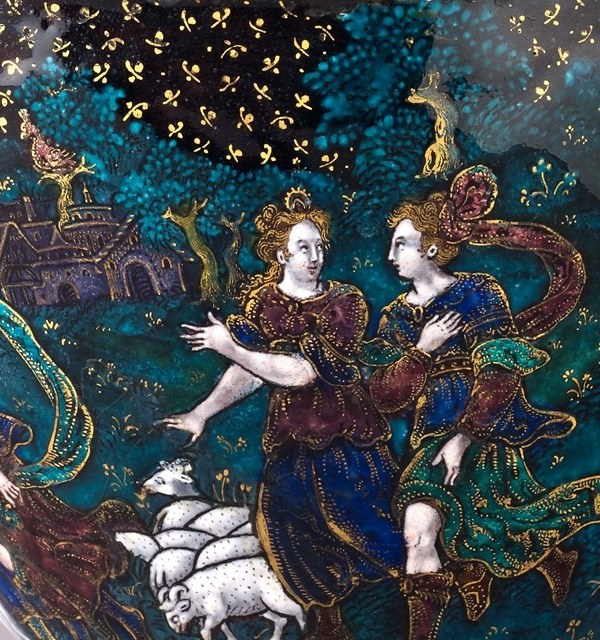
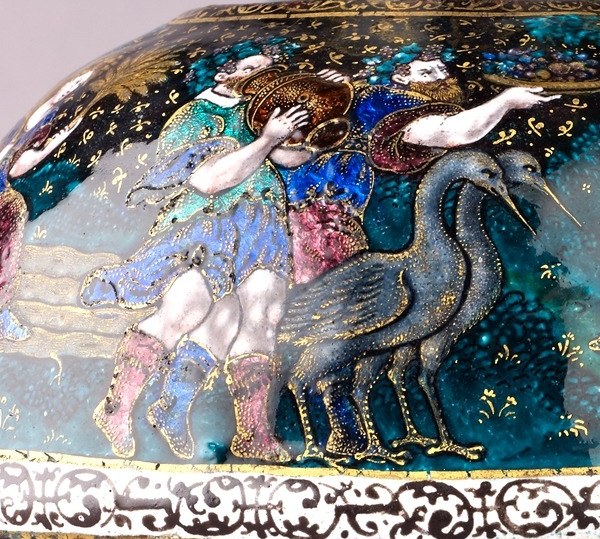
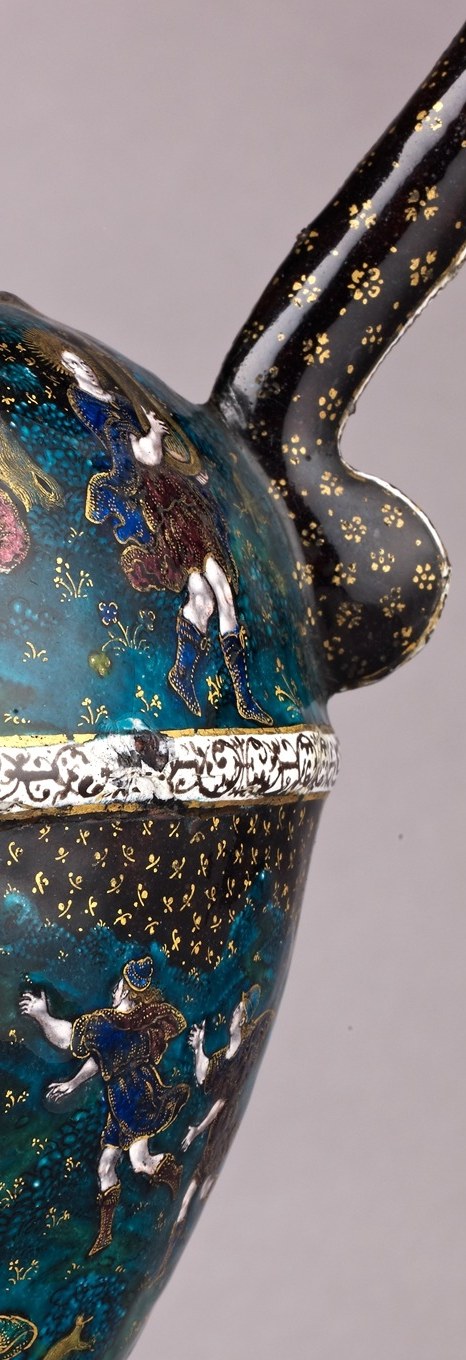
To a Renaissance viewer, this ewer was a legible text. Ceres herself is the easy part, but every animal and attribute is a word in a familiar mythological language. The cranes above her head meant vigilance, the white goat was a sacrificial pledge of harvest plenty, and the tiny enamel stars scattered across the teal ground declared this was a heavenly, not merely earthly, abundance. Even the lapis-blue mantle on her companion was a costly signal of divine rank.
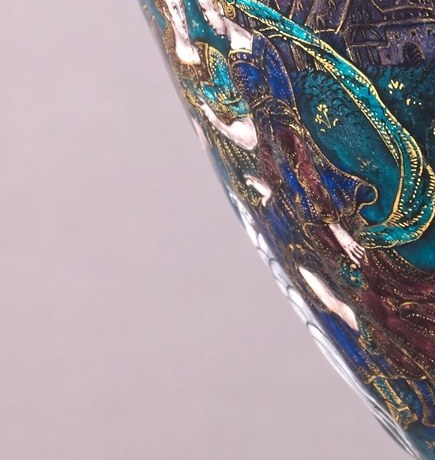
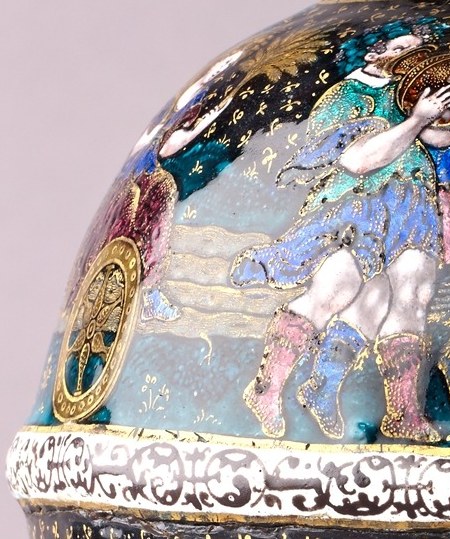
De Court's control of the medium is clearest at miniature scale: the figures in the neck panels are barely a millimeter across, yet they carry gold-outlined faces and gestures. The raised white dot borders separating the narrative zones mimic jeweled goldsmith techniques, reminding the owner that this was meant to be held, turned, and read like a storybook.
Not one piece of Suzanne de Court's work is dated, and the only document that ever mentioned her disappeared in the nineteenth century. Everything we know about her comes from the objects themselves, and a signature, S.C., that she insisted on leaving behind.
Details
Transcript
She is Ceres, goddess of the harvest. The white goat: ritual sacrifice, a promise of agricultural plenty. Cranes, sacred to Ceres, meant vigilance and a watchful eye over the fields. The lapis-blue mantle on her companion signals divine or noble rank. The scattered star-field elevates the entire scene to the heavens. The code adds up to abundance, earned through sacrifice and watchful care.