Ferry near Gorinchem by Salomon van Ruysdael
This is Salomon van Ruysdael's Ferry near Gorinchem, painted in 1646 and now at the Metropolitan Museum of Art. What looks at first like a generic Dutch landscape is actually a topographic document, a portrait of a specific town at the height of the Golden Age.
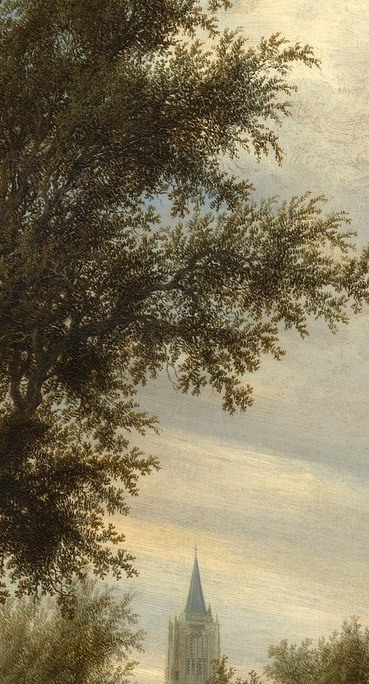
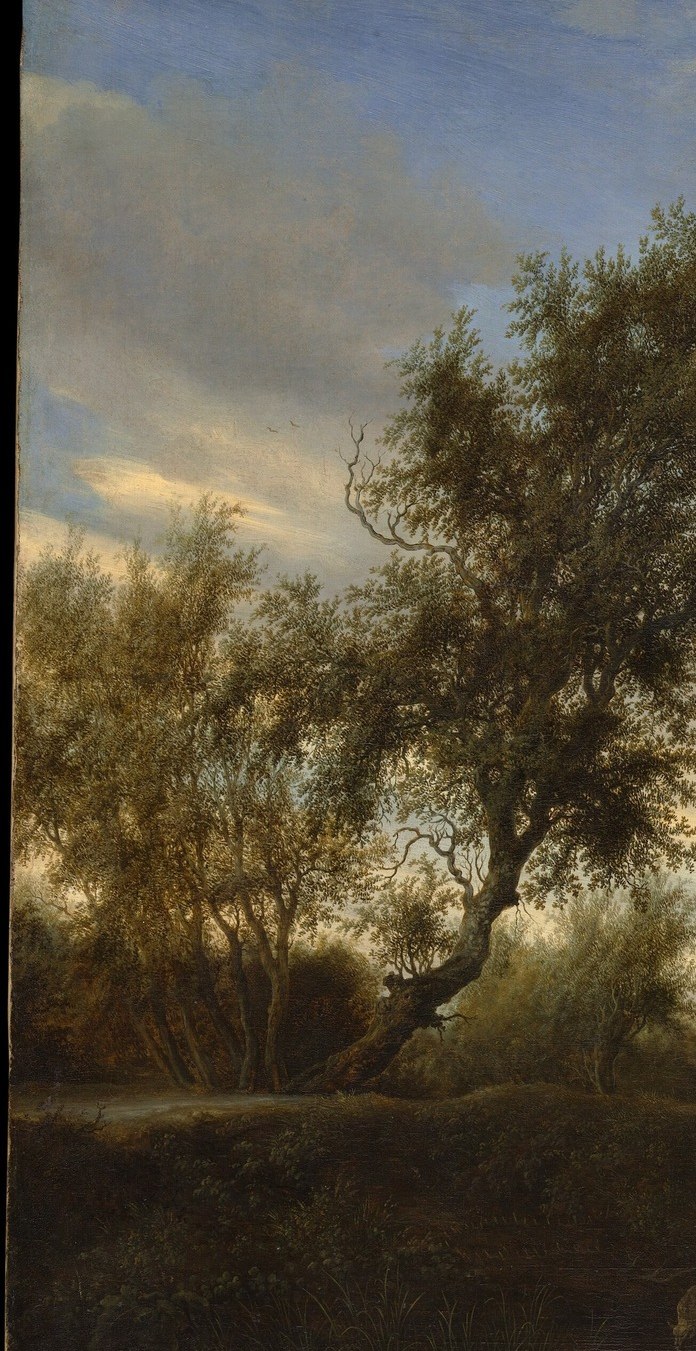
The proof is the church tower. St Jan's Tower of the Grote Kerk rises from the treeline at left, identifying the town as Gorinchem, a fortified trading settlement on the Merwede river. Below it, the river fills with working craft: a flat-bottomed ferry boarding passengers and livestock at the left bank, a small sailing vessel cutting the midground. These are not decorative touches. They are the economic bloodstream of the Republic, where inland waterways moved goods faster than any road.
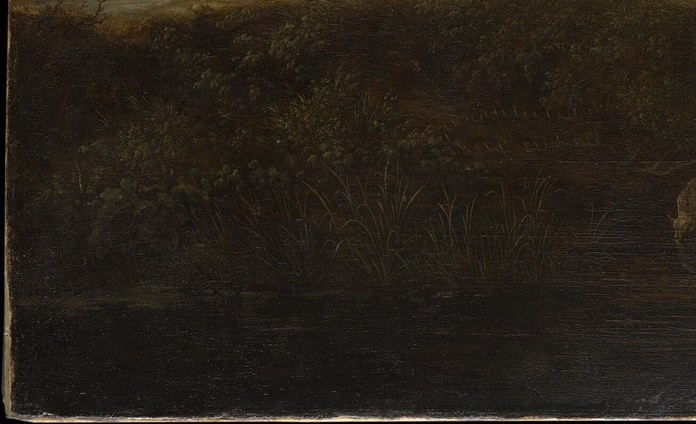
Ruysdael knew this stretch of river personally. He owned a mill on it. The painting's authority comes from that intimacy, the way the ochre mud of the foreground gives way to glassy reflected sky, the felt weight of the ferryman's punt pole against the shallow current. He painted the river he worked on.
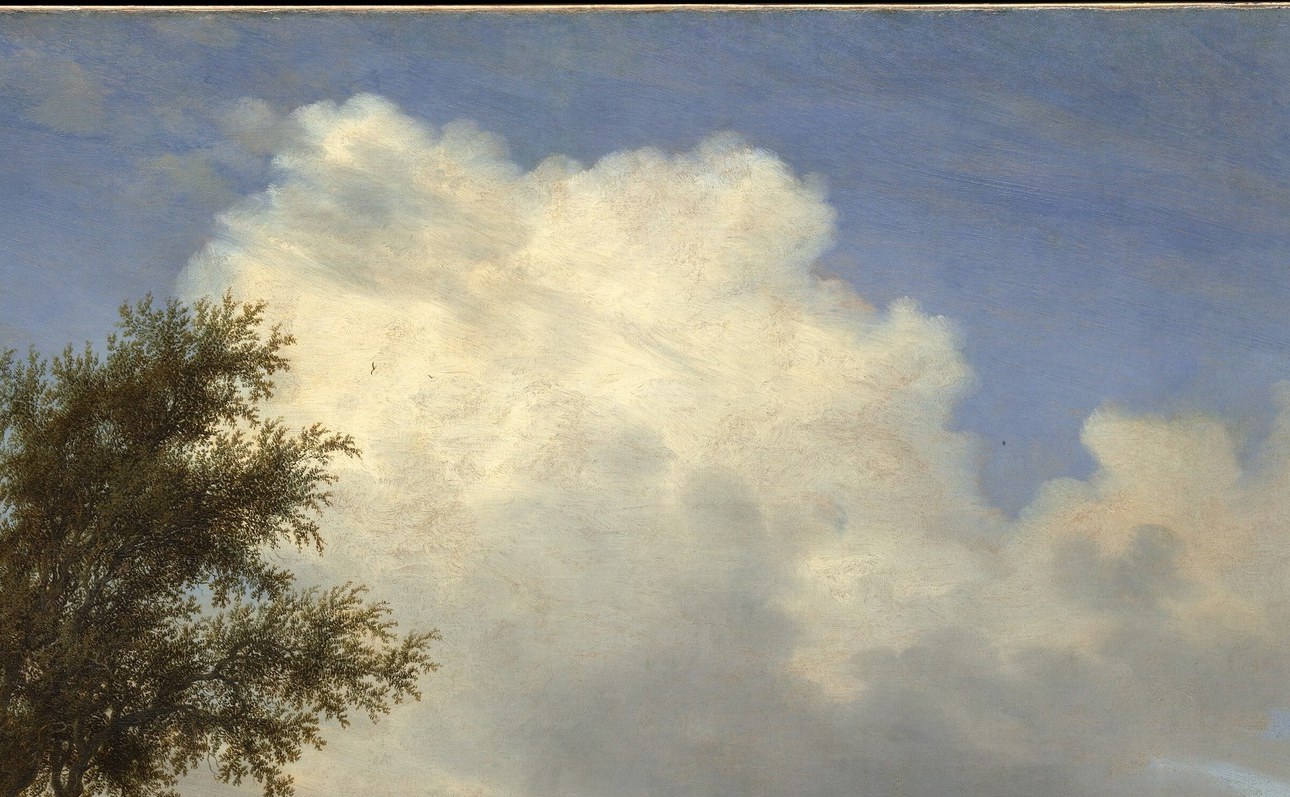
The cloud mass is the real subject of the painting, occupying more than half the canvas in a display of tonal bravura. But the story is at the waterline, where a man with a pole makes the crossing happen. Empire, one river crossing at a time.
Details
Transcript
1646. The Dutch Republic is the richest nation on earth. Its wealth moves on flat-bottomed boats like this one. The tower names the town: Gorinchem. The painter owned a mill on this same river. He knew this water, this light, this exact crossing. A ferryman poles the shallows. His labor is the pulse beneath the empire.