Colonel Guy Johnson and Karonghyontye (Captain David Hill) by West, Benjamin
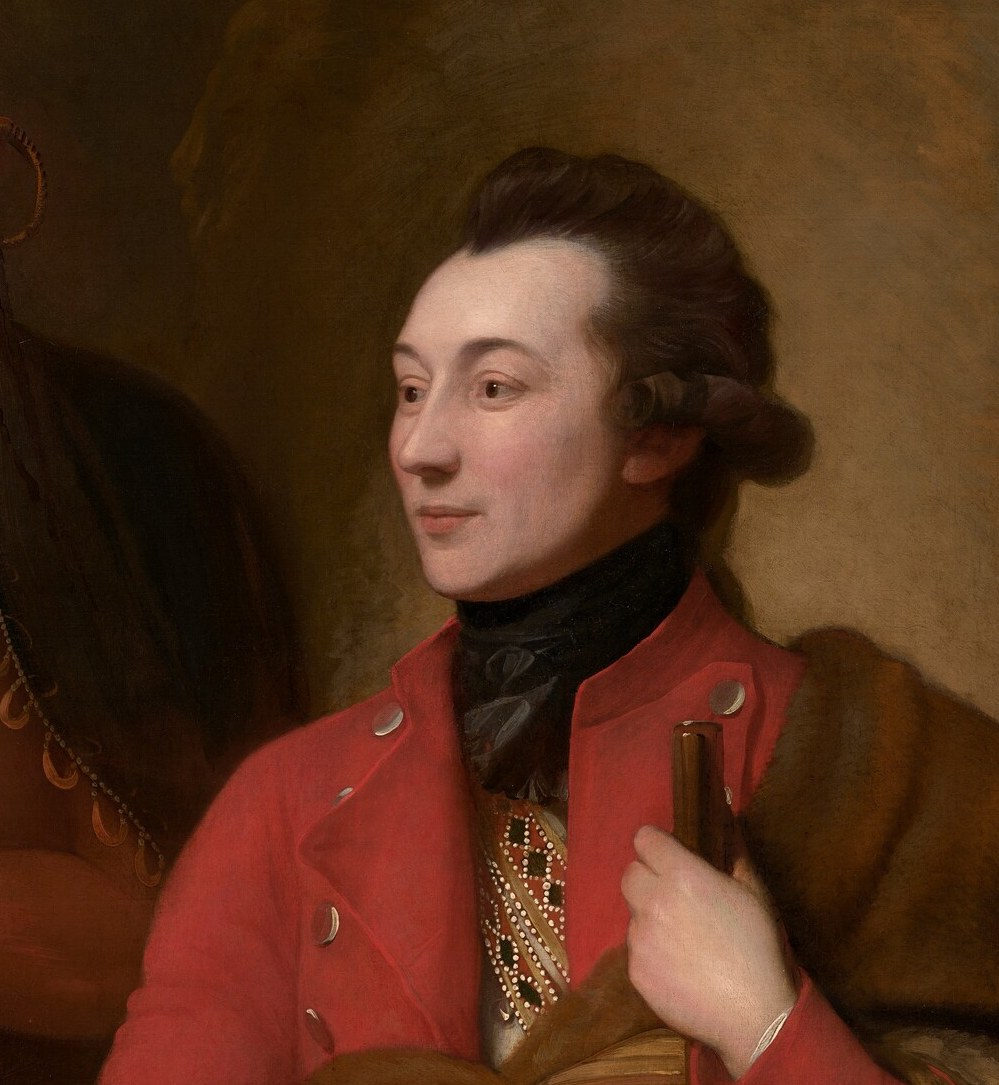
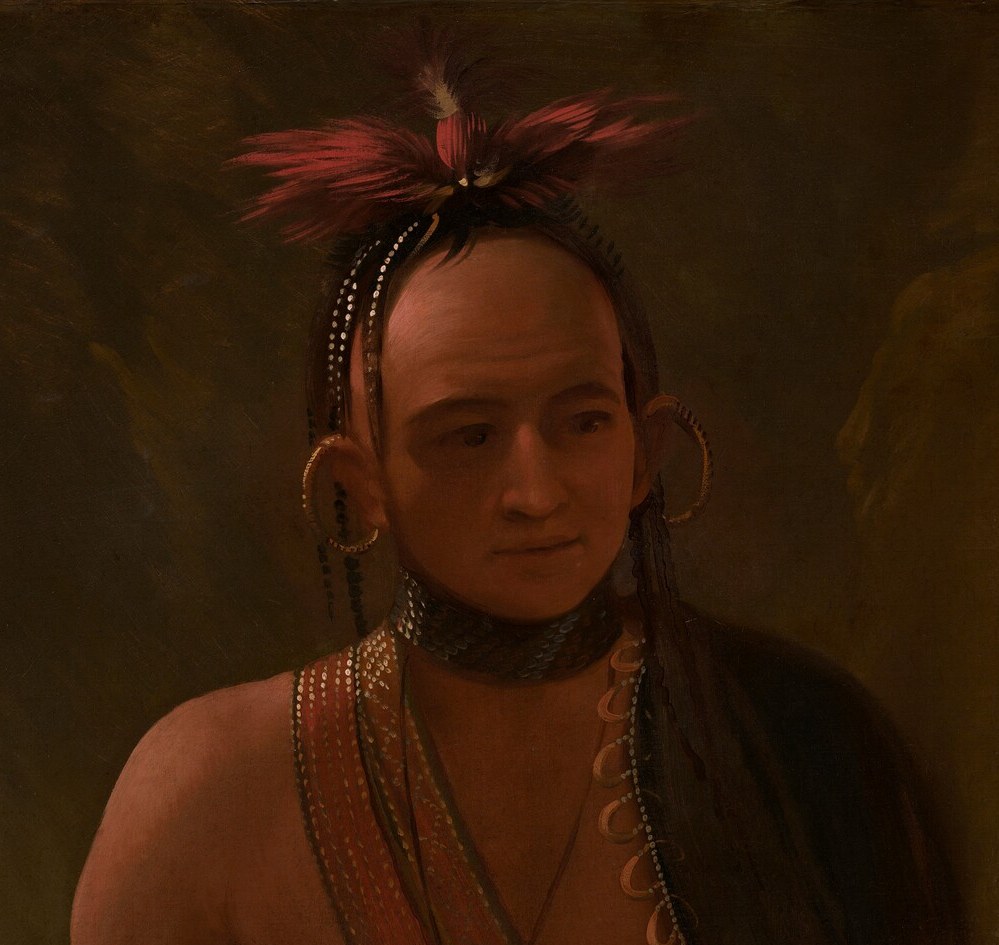
This is Benjamin West's 1776 portrait of Colonel Guy Johnson and the Mohawk chief Karonghyontye, now in the collection of the National Gallery of Canada. Painted in London at the height of the American Revolution, it is less a straightforward likeness than a diplomatic credential rendered in oil.
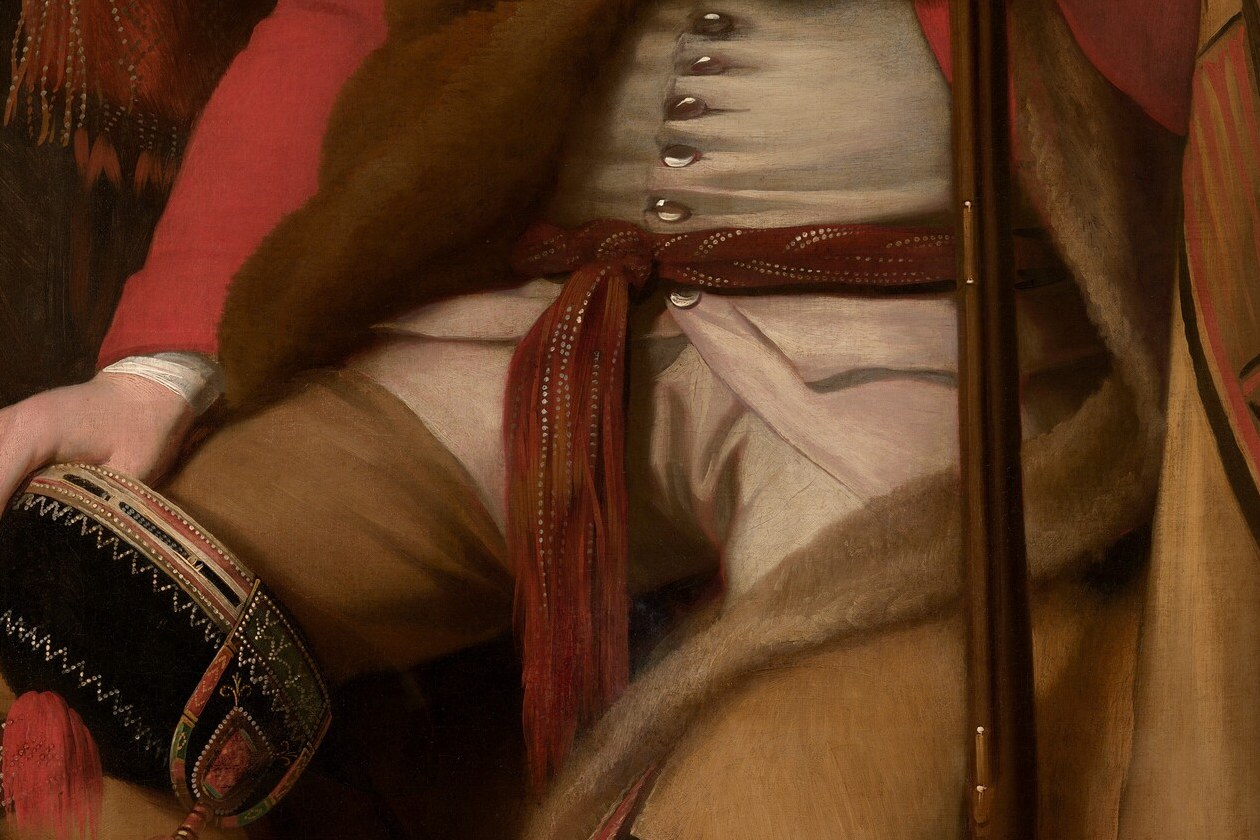
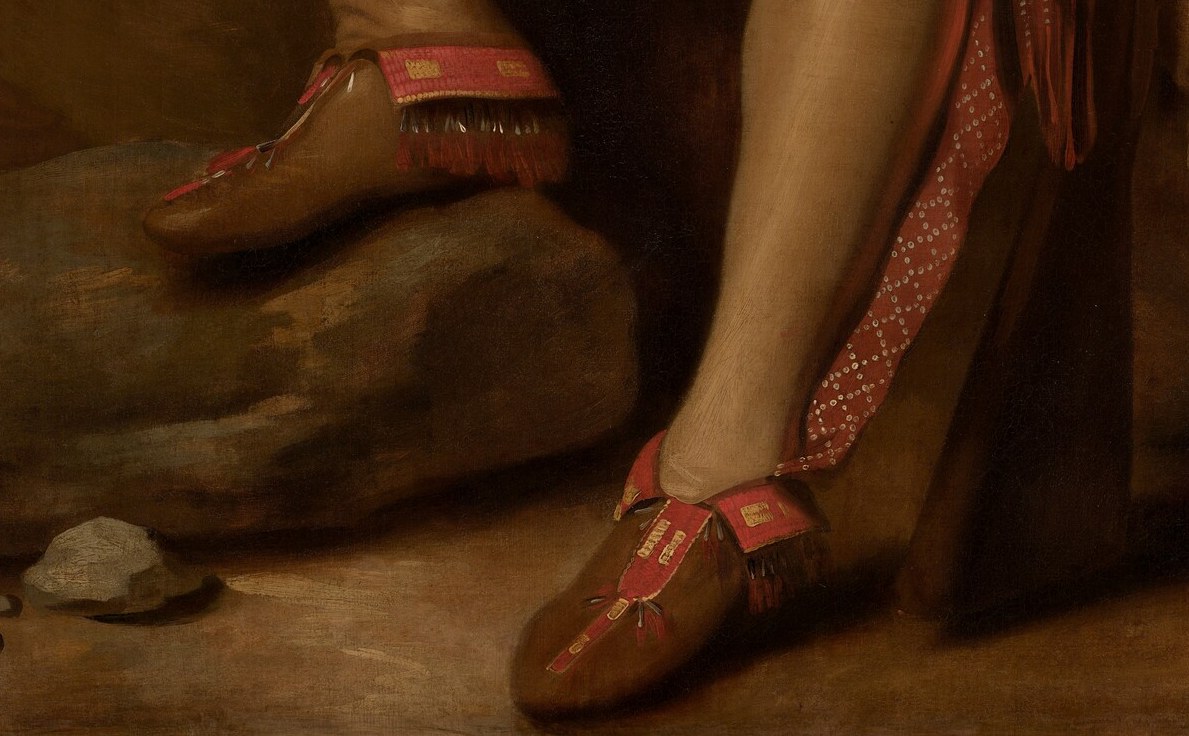
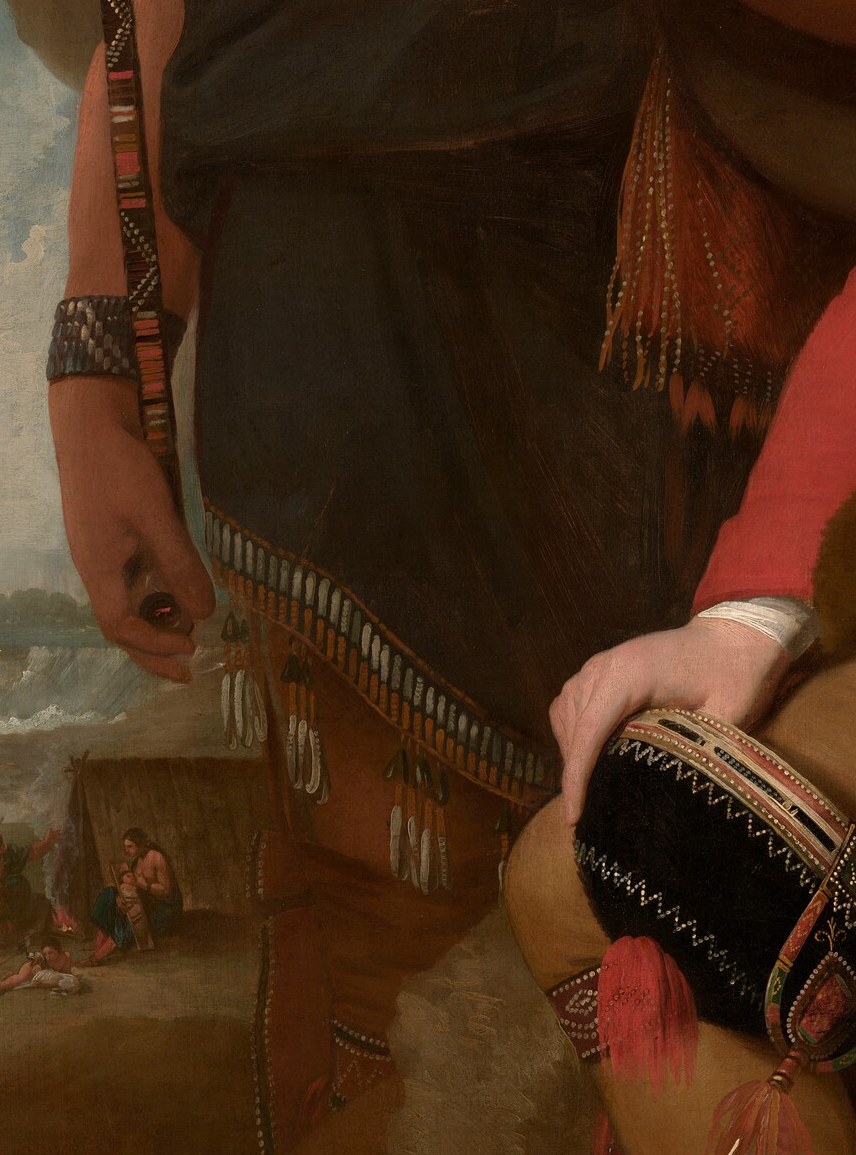
Johnson arrived in London to secure his appointment as superintendent of Britain's northern Indian department. He brought Karonghyontye, a close friend, with him. The portrait was part of that campaign. West dressed him in the red coat of British rank but layered it with a wampum belt, a trade blanket with Scottish tartan echoes, and moccasins. The moccasins are the quietest, clearest signal: this man's power walked on Native ground.
The painting makes an argument. Karonghyontye points to a peace pipe; Johnson holds a musket. A Native family gathers peacefully near a British tent in the dark forest behind them. The composition says: the Crown's hold on North America depends on these bonds. Johnson's face meets the viewer directly, but the alliance beside him does the real work.
West himself was an American who had settled in London and would become president of the Royal Academy. He knew exactly how much meaning a uniform could carry, and how to make a canvas speak to the men who handed out promotions.
Details
Transcript
London, 1776. A British officer commissions his own portrait. He had just sailed from Canada to demand a promotion. So he showed up in a redcoat, then layered it with a wampum belt. Look at his feet. Moccasins, not buckled officer's shoes. The man beside him is a Mohawk chief, his close friend. He points to a peace pipe. Johnson holds a musket. The bargain is visible. Johnson's authority depended on Native alliance, and he wanted London to see it.