The Y at Amsterdam, seen from the Mosselsteiger (mussel pier) by Ludolf Bakhuizen
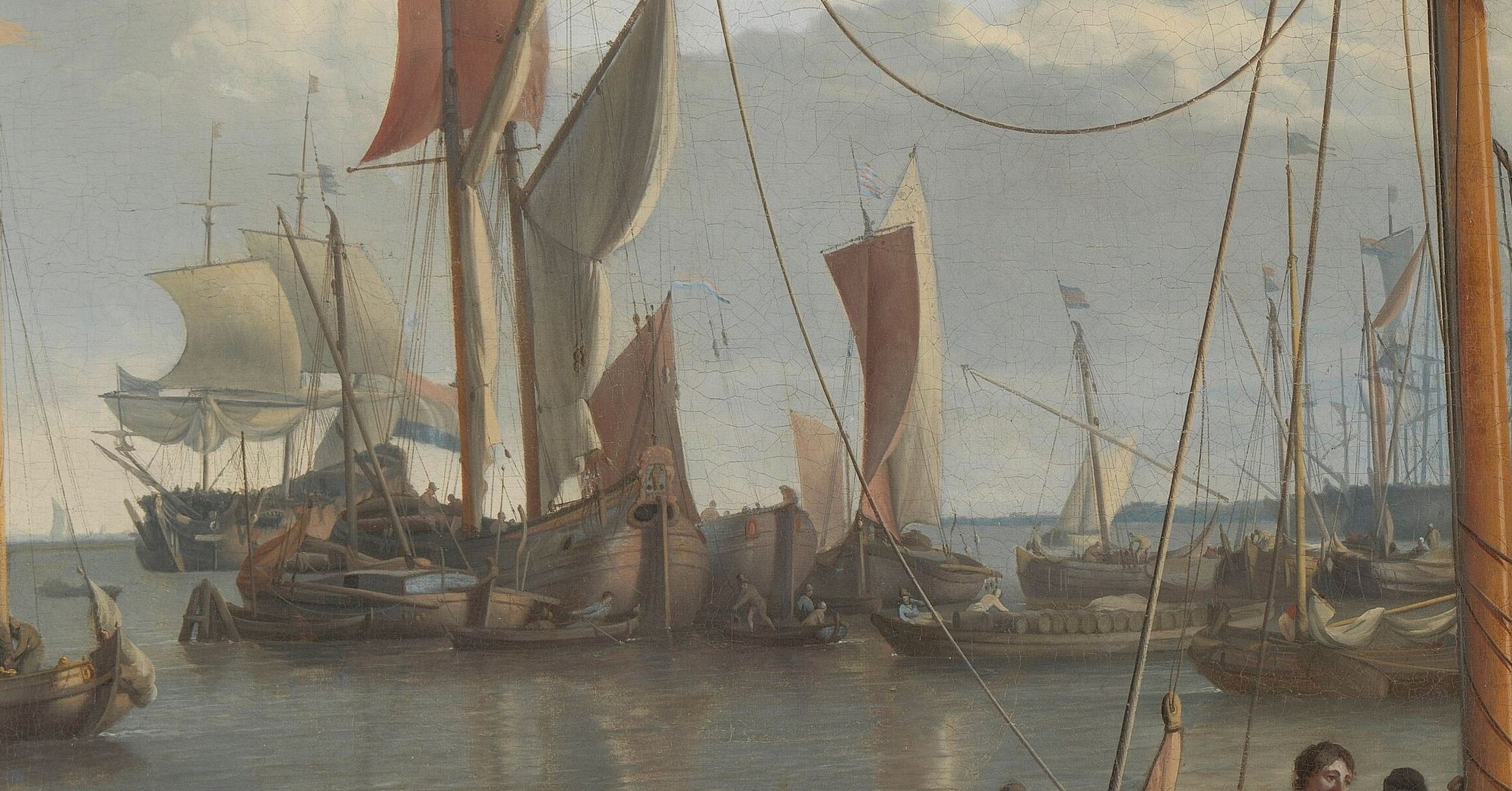
Ludolf Bakhuizen's 1673 painting, *The Y at Amsterdam, seen from the Mosselsteiger*, captures a vibrant moment in a 17th-century Dutch port. While the grand ships and bustling trade dominate the scene at the Rijksmuseum, a closer look reveals tender, human details often overlooked.
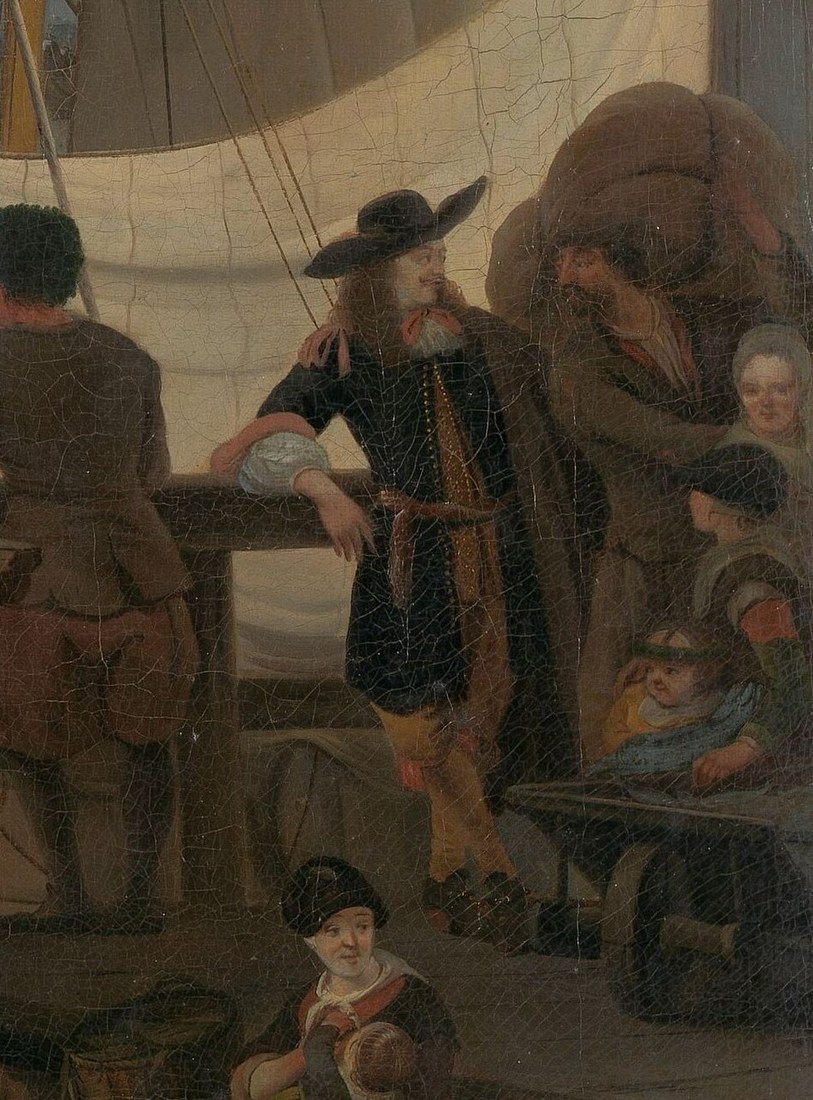
Notice the detailed rendering of the ships and the figures on the dock. Then, observe the small group on the left: a woman holding a child, and a tiny dog at her feet. This quiet interaction offers a glimpse into daily life amidst the busy commerce.
Bakhuizen became the leading Dutch seascape painter after the van de Velde family moved to England. His meticulous attention to detail extends beyond the maritime elements, grounding the scene in the human experience of the Dutch Golden Age.
What other small details do you notice that tell a larger story?
Details

Transcript
This 1673 painting shows a bustling Amsterdam port. Ships fill the horizon, symbolizing Dutch maritime power. Even the artist, Ludolf Bakhuizen, specialized in seascapes. But look closely at the activity on the dock. Amidst the commerce, a woman holds a child. And a small dog observes the scene from her side.