Roses in a Vase by French 19th Century
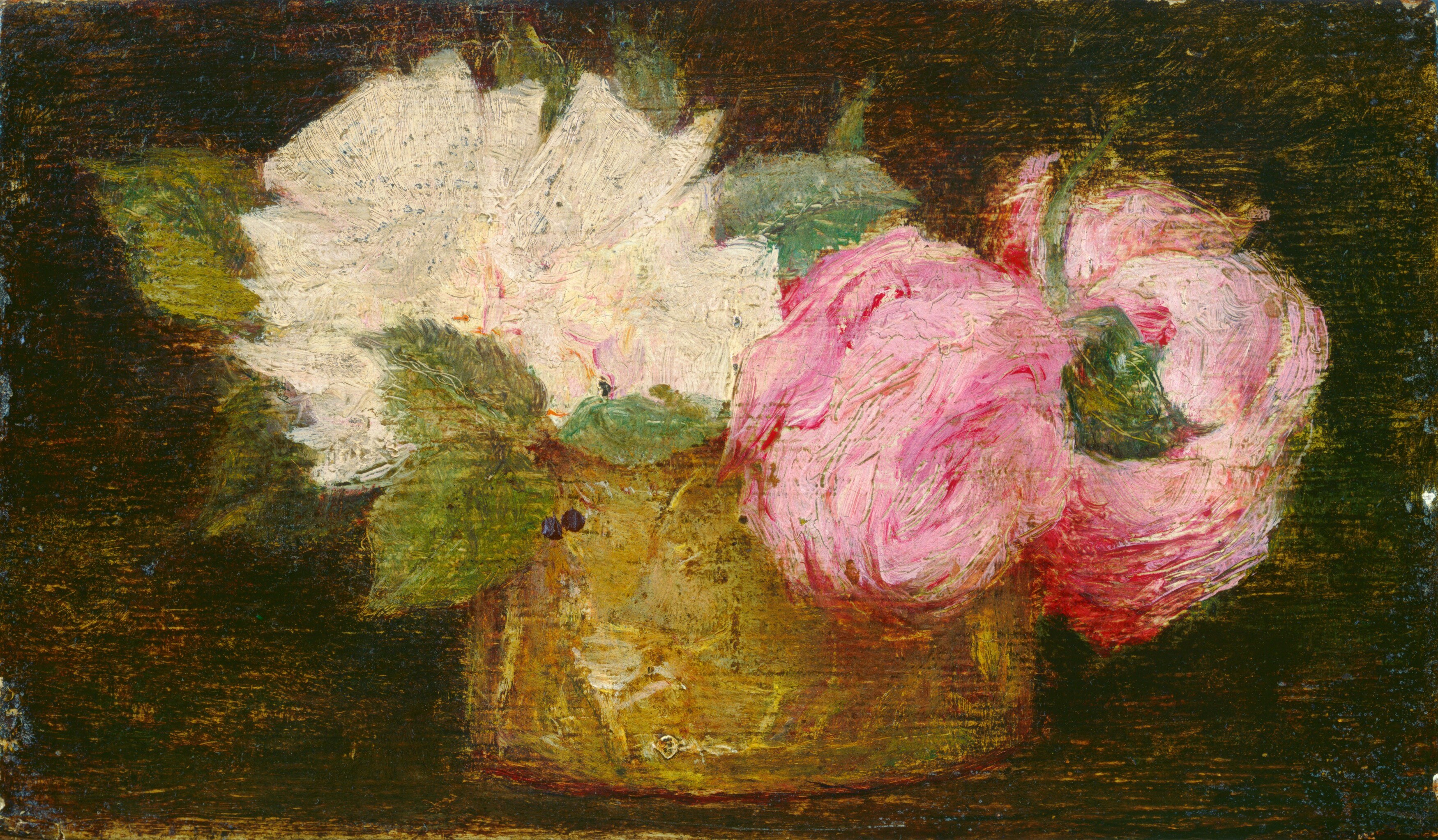
Roses in a Vase is an oil painting on wood panel from the late 19th century, circa 1880-1900. This work, by an unknown French artist, is a classic example of still-life painting from the period, showcasing delicate floral arrangement and masterful handling of light and texture. The composition draws the eye with its vibrant colors and soft brushwork.
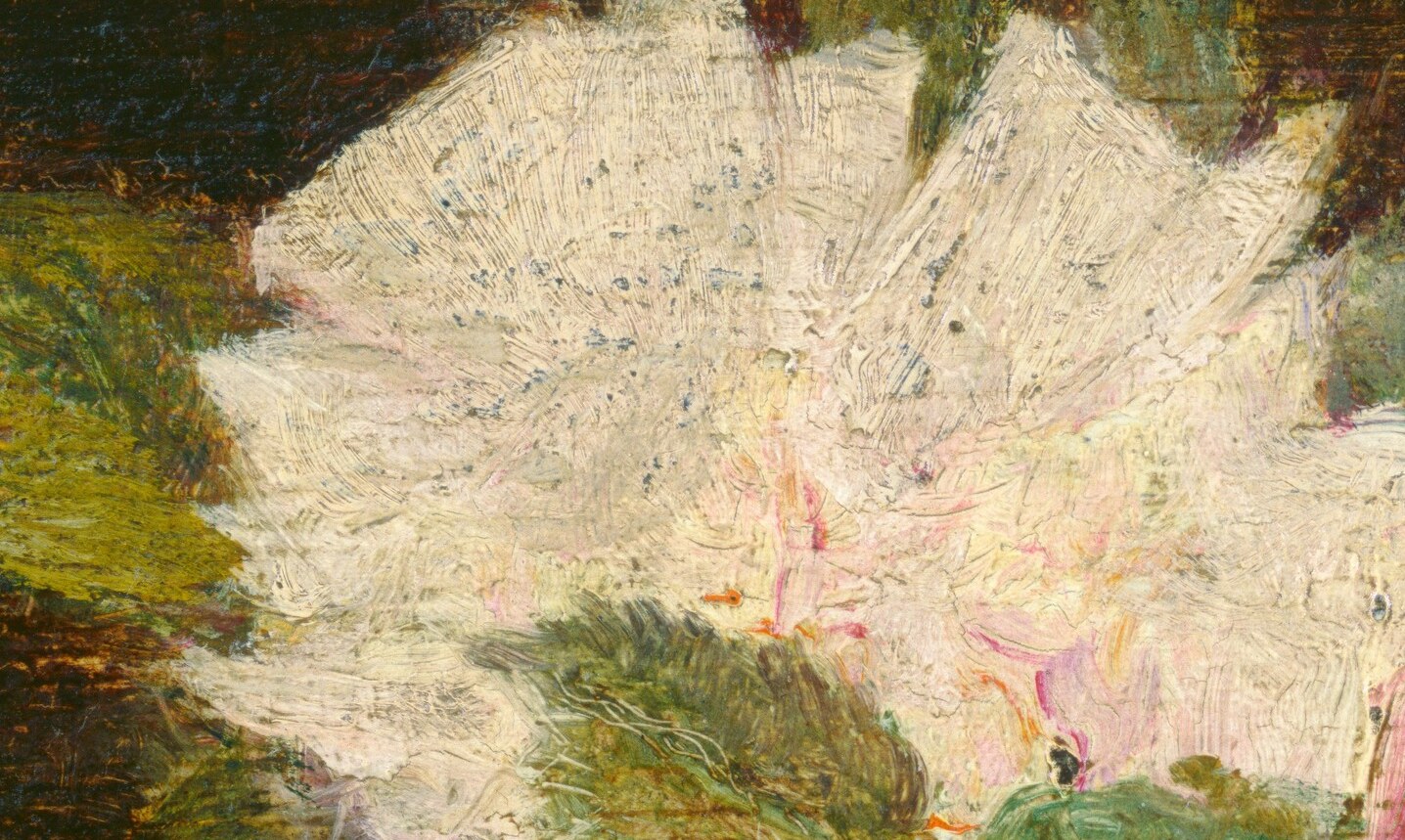
Observe the two distinct roses, one white and one pink, set against a deep background. The artist uses smooth, tactile brushstrokes to create a sense of volume and realism in the petals, particularly evident in the white rose where thick paint builds form. Notice the subtle interplay of light and shadow that enhances the three-dimensionality of the blossoms.
The painting's provenance is not fully documented, leaving the artist and specific context uncertain. This lack of definitive attribution adds a layer of intrigue, typical of many works from this prolific but less individualized period of French art. The deliberate inclusion of small details, such as the dark speck in the foliage and the faint inscription on the vase, invites closer inspection and speculation about hidden meanings or maker's marks.
These small, almost imperceptible elements encourage us to look beyond the surface beauty and consider the artist's intentions. What stories do these hidden details tell about the creation and intended audience of this exquisite still life?
Details

Transcript
A simple vase of two roses. The white rose petals invite touch. Textured paint builds soft volume. A dark speck hides in the foliage. What could this tiny detail mean? A faint mark circles the yellow vase. Is this a maker's mark or a signature? The artist remains unknown from this era.