The adoration of the Magi by Joris van Schooten
Joris van Schooten's "The Adoration of the Magi," painted in 1646, offers a detailed glimpse into a pivotal biblical narrative. This oil painting, held at the Rijksmuseum, showcases the Dutch Golden Age artist's skill in composing a bustling yet reverent scene.
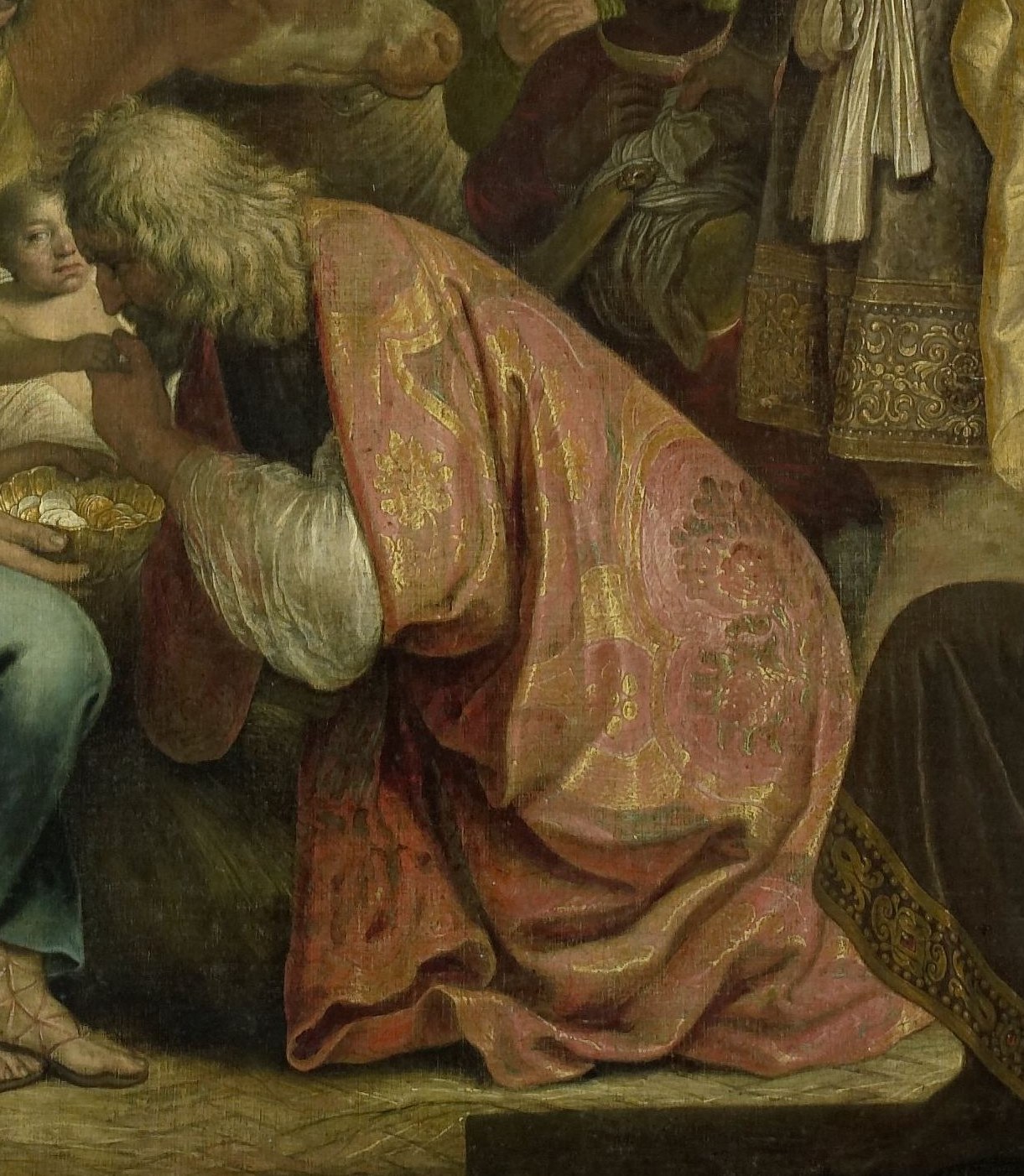
Observe how Mary, with a gentle expression, cradles the infant Jesus, who directly engages the viewer. The first Magi kneels in devotion, offering gold coins that represent Christ's kingship. Look closely at the rich textures and patterns of the second Magi's ornate robes, symbolizing the wealth and distant origins of these visitors.
Van Schooten employs strong contrasts of light and shadow, a technique known as chiaroscuro, to highlight the central figures amidst the crowded stable. This painting not only tells a sacred story but also reflects the artistic trends of 17th-century Leiden, where Van Schooten was active, even connected to the era's scientific minds through his mathematician nephew. It's a testament to the enduring power of art to capture and convey universal themes across centuries.
What details in the background do you find most interesting?
Details
Transcript
This painter depicts a universal story. Mary gently holds the infant, central to the scene. The first Magi kneels, offering his golden gift. Gold coins, a symbol of kingship, spill from his bowl. His opulent robes show the wealth of the East. The Star of Bethlehem, high above, guided their journey. This 1646 painting joins a long tradition of storytelling.