Two Ojibbeway Warriors and a Woman by Catlin, George
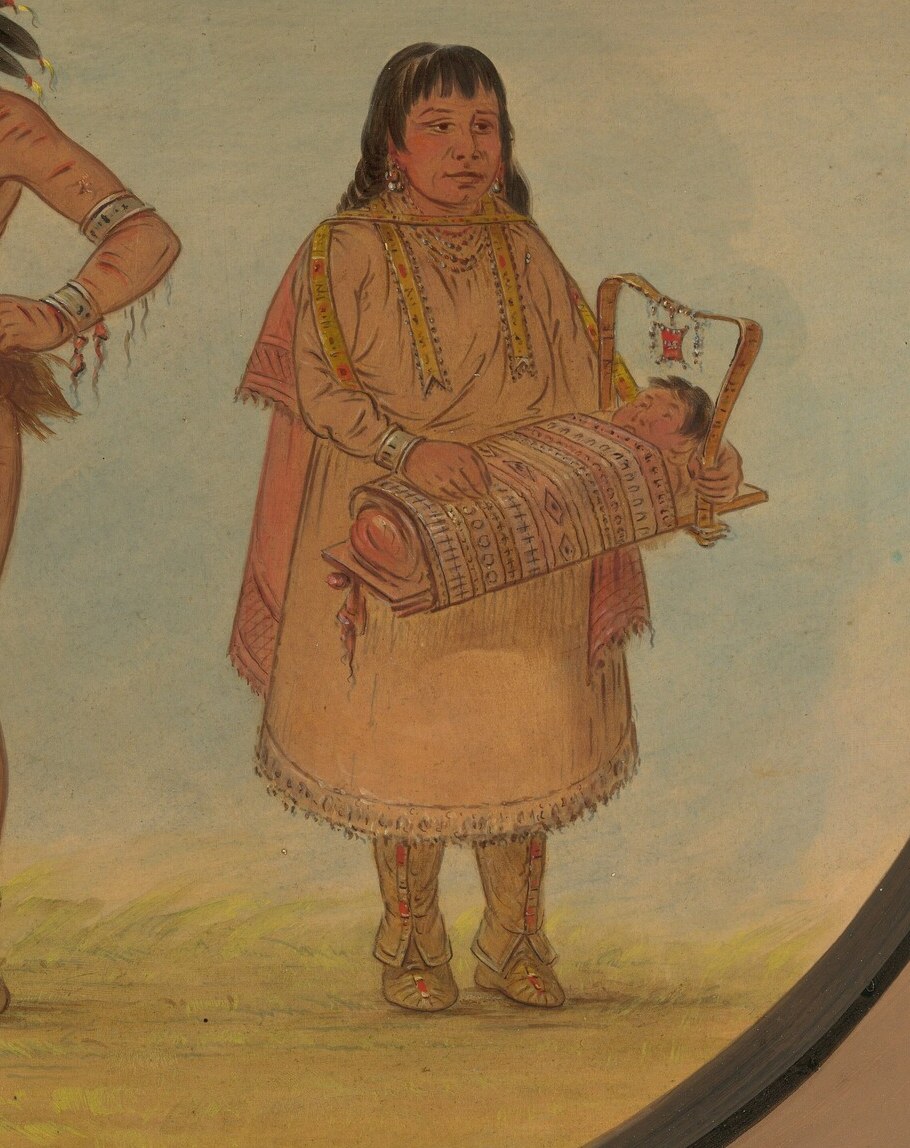
George Catlin, a self-taught American artist, created *Two Ojibbeway Warriors and a Woman* in 1861. This oil painting on card, now in a private collection, is part of his extensive visual archive of Native American tribes from the American frontier.
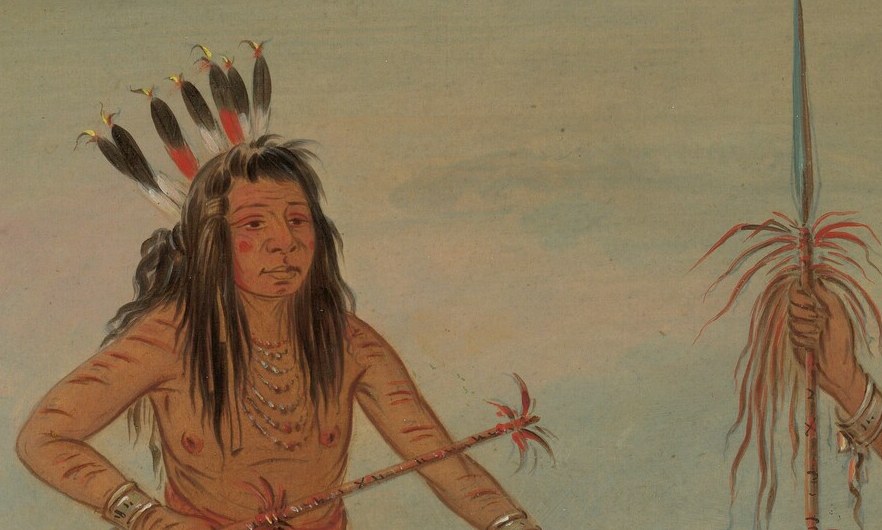
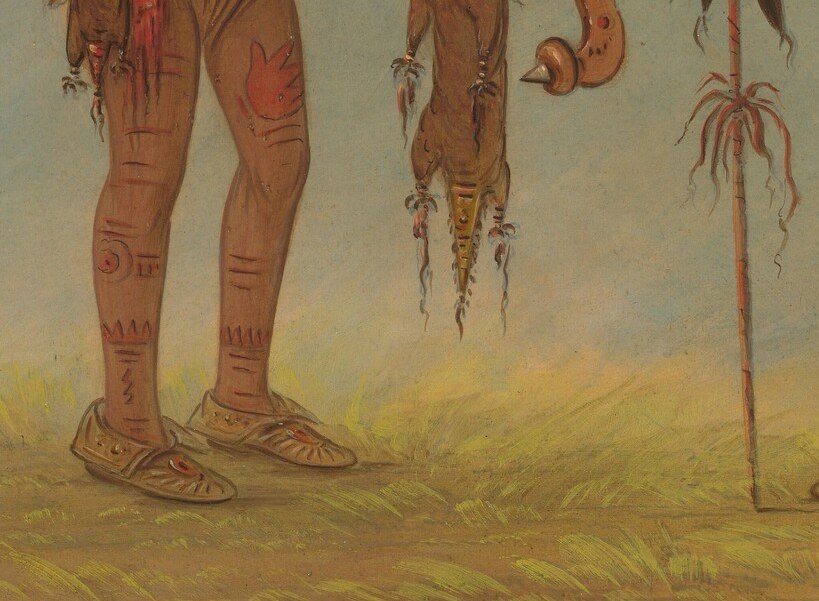
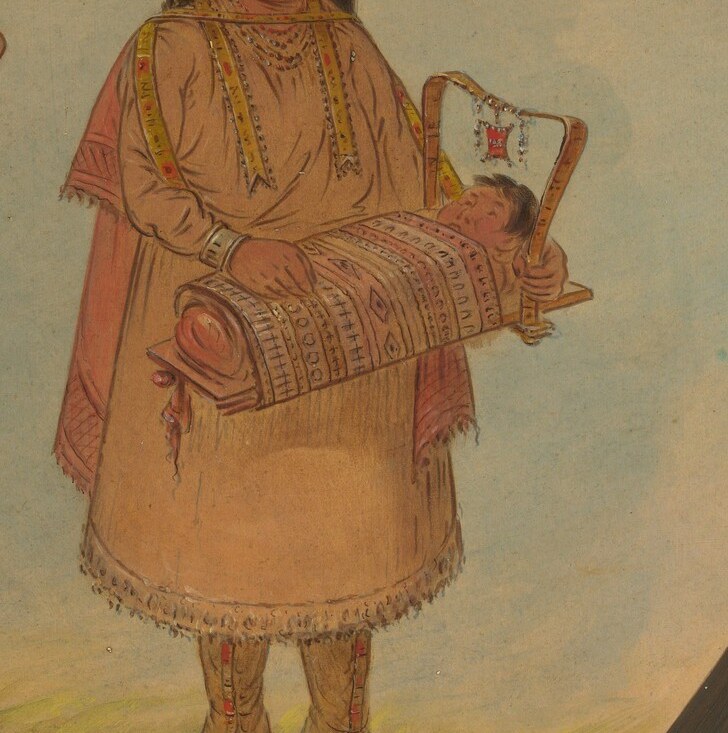
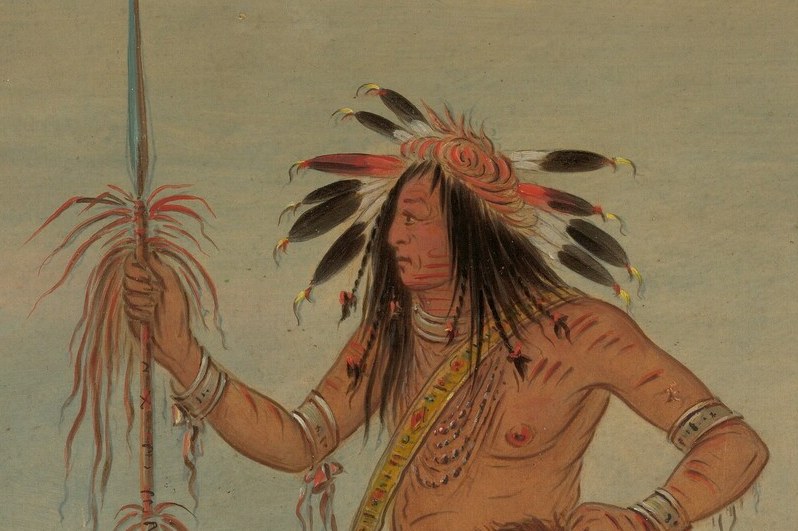
Catlin focused on capturing the intricate details of dress and daily life. Observe the left warrior's feathered headdress and the patterns on his leggings, along with the skillfully woven basket carried by the woman. These elements offer a glimpse into the material culture of the Ojibwe people.
Traveling extensively in the 1830s, Catlin documented Native peoples and their customs, driven by a desire to preserve what he feared was a disappearing way of life due to expanding Euro-American settlement. His work served as a crucial visual record of Indigenous groups of the Plains and Great Lakes.
His dedication to detail aimed to ensure that these cultural narratives would not be lost to history. What aspects of this historical record resonate with you?
Details
Transcript
This artist traveled the American frontier in the 1830s. He sought to document Native peoples and their customs. Look at the left warrior's detailed feather headdress. And the intricate patterns on his leggings. The artist recorded every detail of their attire. He aimed to preserve a vanishing way of life.