Prince Holding a Falcon by http://www.wikidata.org/.well-known/genid/bf63d975c5f4b0f3dbacc4f2f26dbb5c
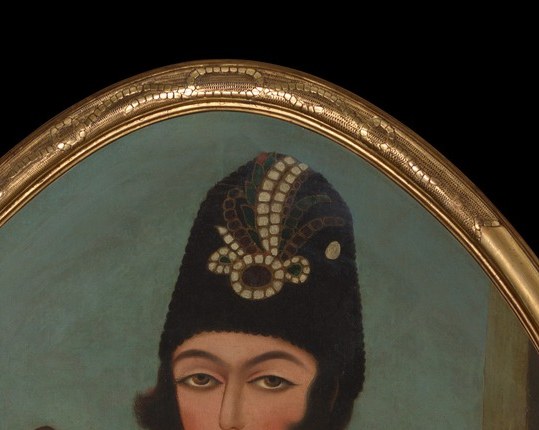
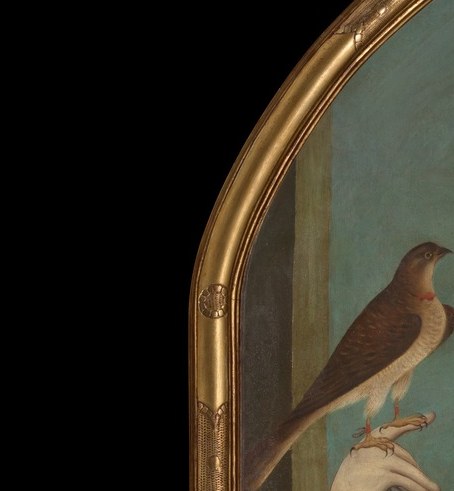
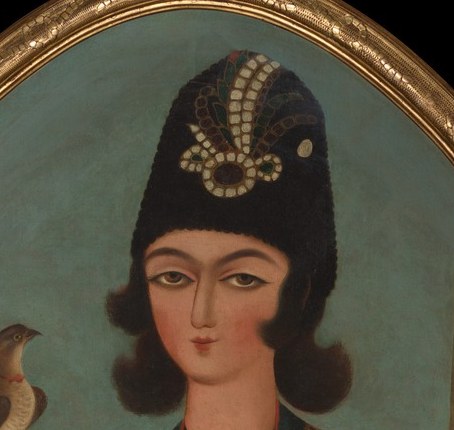
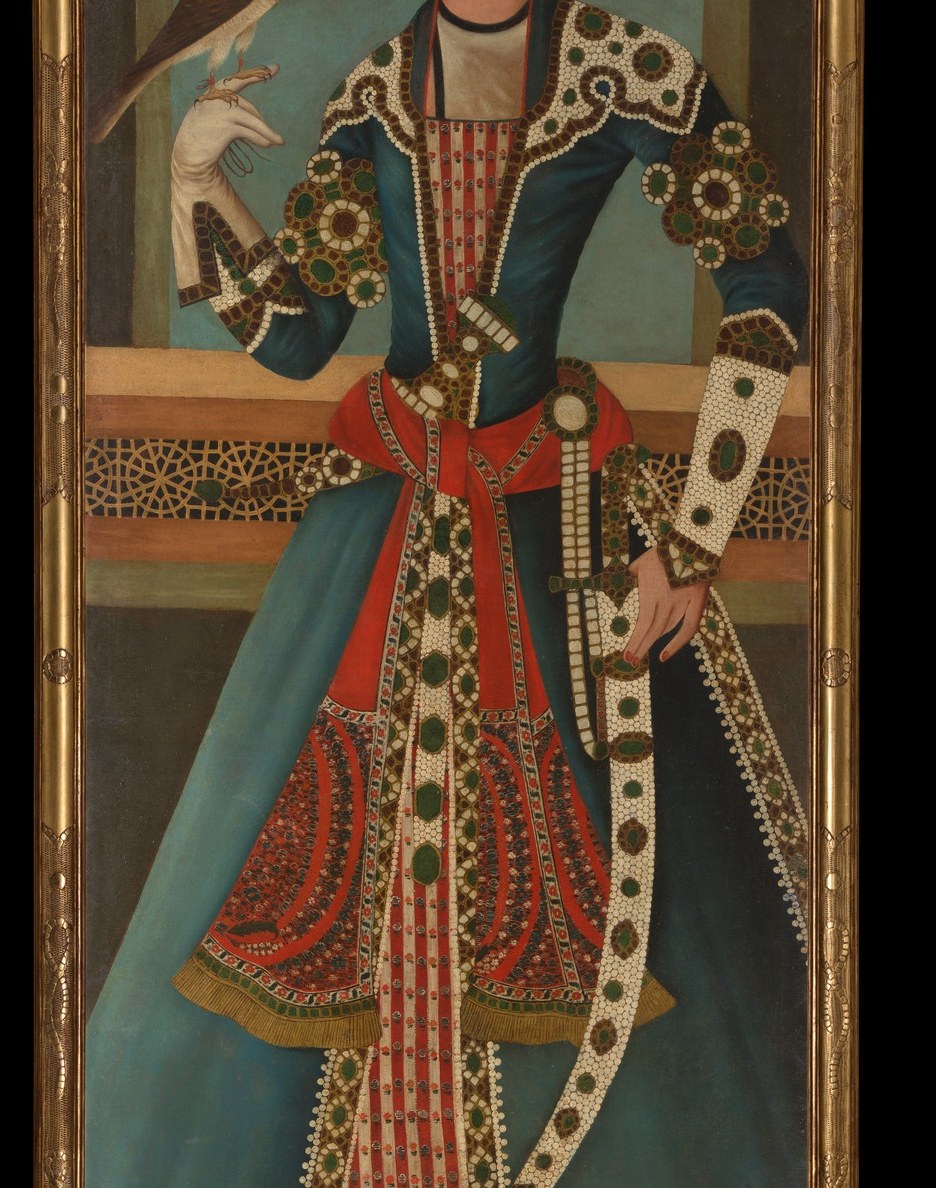
This is "Prince Holding a Falcon," an oil portrait from Qajar-era Persia, painted around 1820 by an unknown court artist. At first glance it looks like a standard show of princely authority, the falcon, the dagger, the jewels. But the real signature of power is literally woven into his clothes.
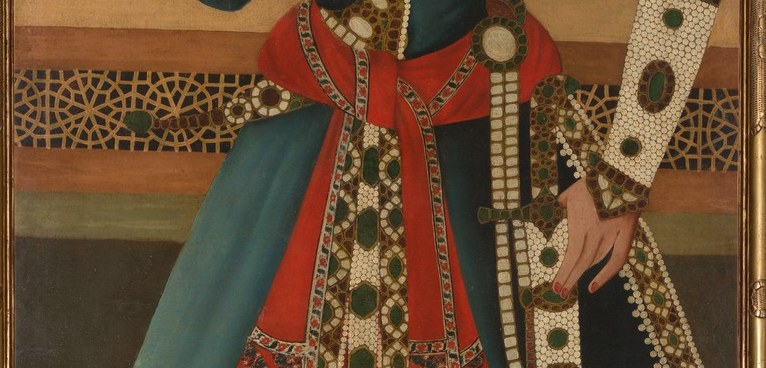
The prince’s sash is not just a strip of decorative fabric. Qajar court sashes were often produced in royal workshops and could include woven Arabic or Persian calligraphy, prayers, dedications, or the name of the wearer himself. The text runs through the gold threads, a permanent inscription inside the image. You can spot it as a rhythm of denser, deliberate lines cutting across the floral pattern.
This detail matters because it turns the painting from a generic portrait into a specific, named claim. The sash was probably woven for this man alone, making the painting itself an object of personal identity as much as a picture. When you look at the tight shot of the sash, you are reading something meant for him.
Next time you see a Qajar portrait, check the sash first. The painting’s real name might be hidden there.
Details
Transcript
A prince and his falcon. The picture of aristocratic power. Every surface announces his rank, from the jeweled headdress to the falcon, a bird reserved for the hunting parties of the court. But the most personal detail is the one most easily overlooked. Look closely at the woven sash that binds his robe. Inside the gold threads, a hidden message in Arabic script. A woven dedication to the prince, made permanently part of his own portrait.