Christ Bearing the Cross by Nikolaos Tzafouris
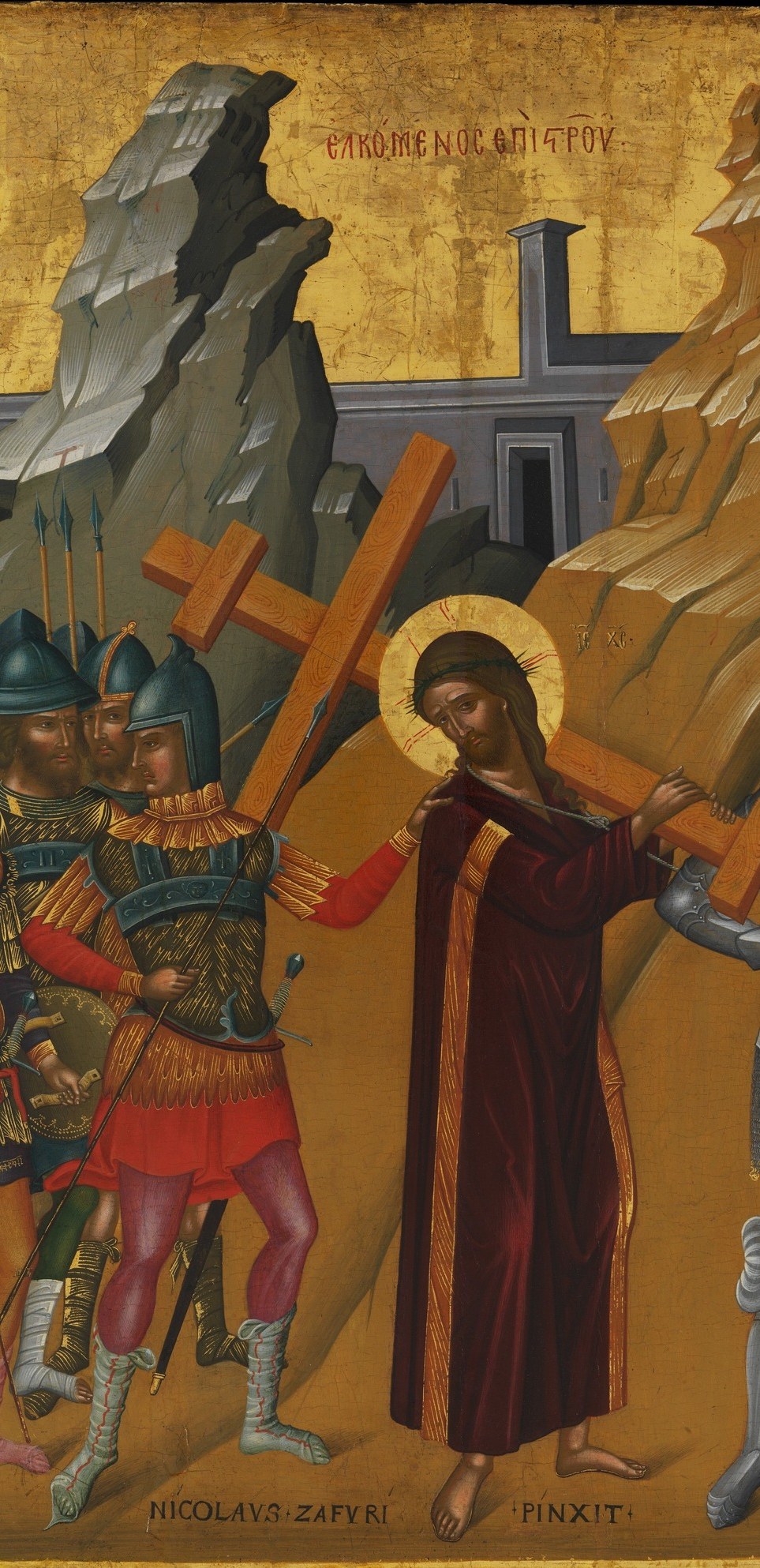
Christ Bearing the Cross, painted around 1494 by Nikolaos Tzafouris, is a tempera-on-wood icon from the final years of Venetian-ruled Crete. It is one of only thirteen works securely attributed to him, and its blend of Byzantine gold ground with Western-influenced figures marks a fragile moment when two worlds of Christian art briefly touched.
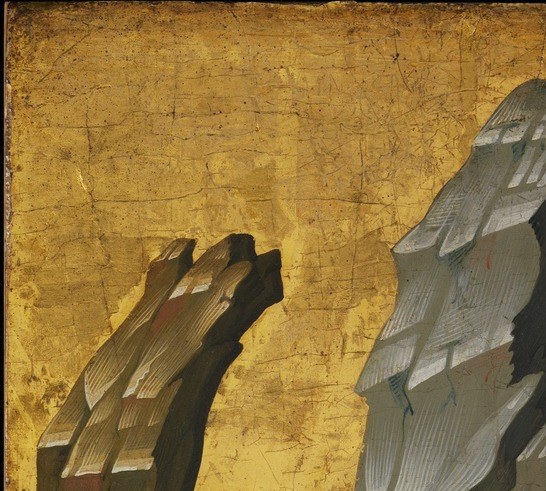
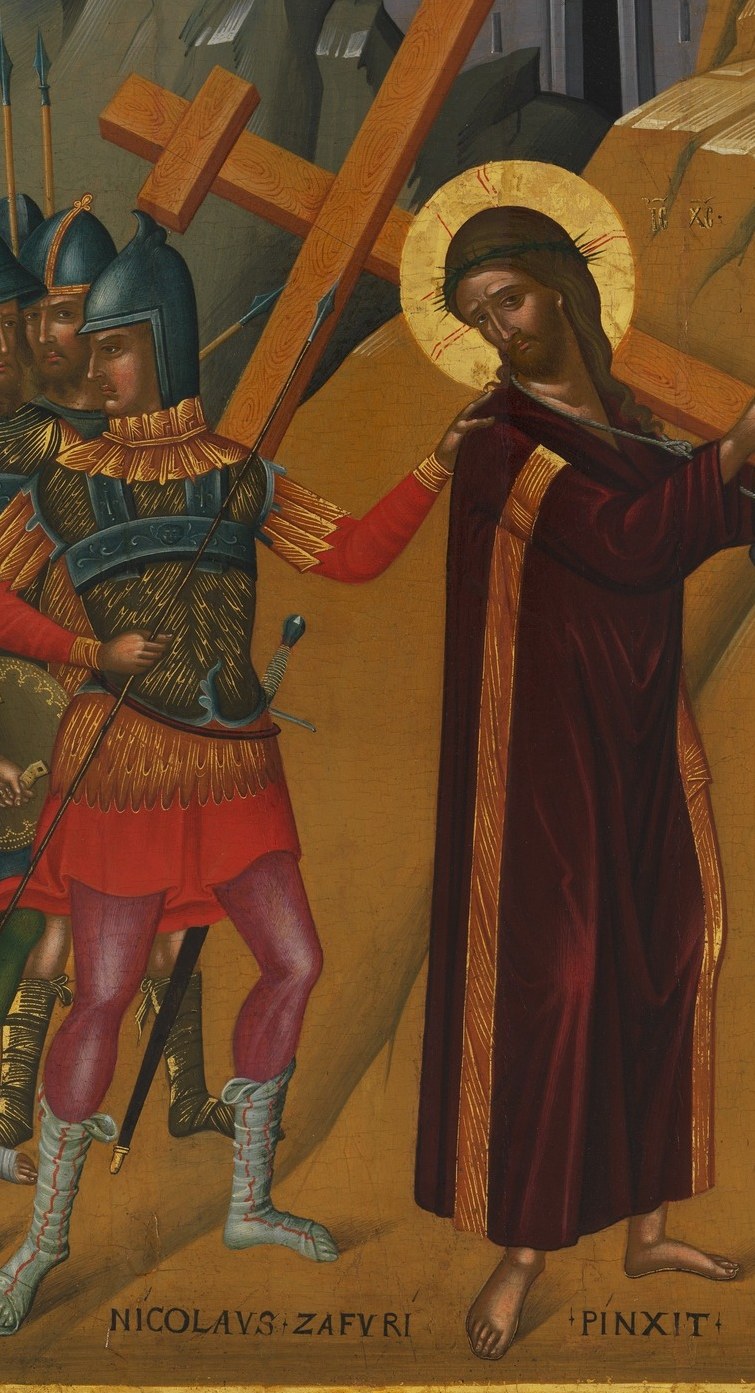
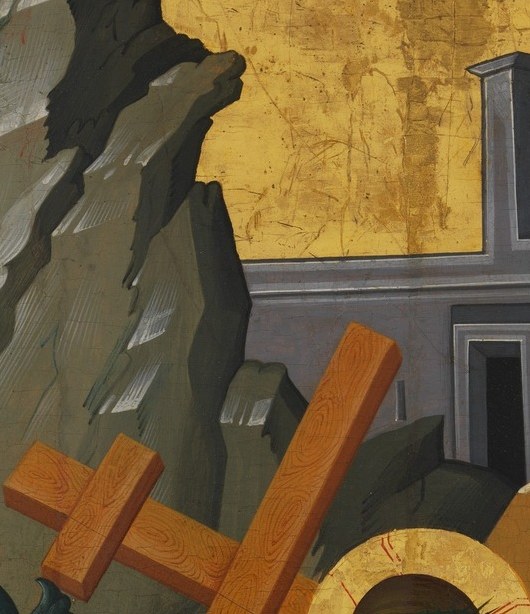
The gold field behind Christ is not a sky. In Orthodox iconography, gold leaf signifies uncreated divine light, the eternity that breaks into history at the crucifixion. The diagonal wood grain of the cross, by contrast, is entirely earthbound. Tzafouris rendered its texture with the precision tempera allows, making the physical burden central to the image.
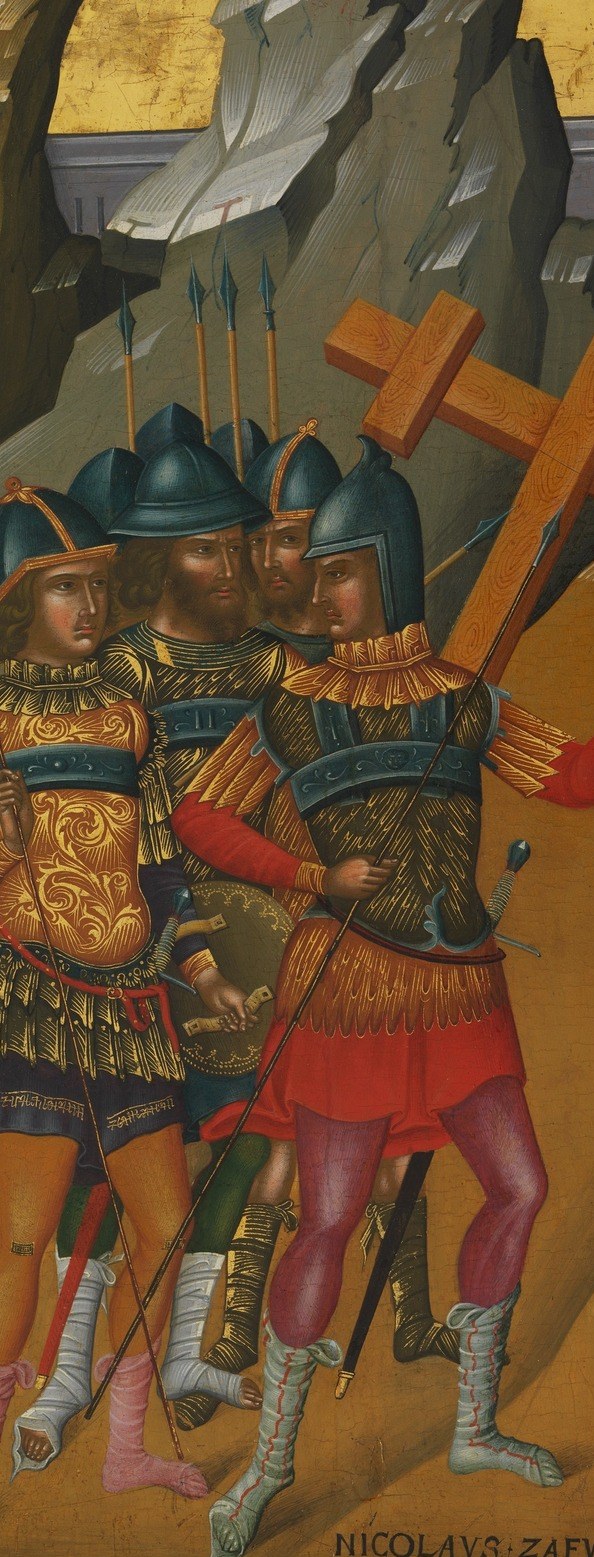
Tzafouris ran a workshop in Heraklion during the 1480s and 1490s, part of the founding generation of the Cretan School alongside Andreas Ritzos and Andreas Pavias. Crete was then a Venetian colony, and its painters increasingly absorbed Italian pictorial techniques. Here, the soldiers' armor and the spatial grouping of figures show that influence, while the cruciform nimbus and Greek titulus above Christ keep the icon firmly inside Orthodox tradition.
This icon was made for a local church and meant to be prayed with, not merely looked at. The hands gripping the cross are the hinge of the image: the moment before nailing. What do you notice first, the gold, or the wood?
Details
Transcript
They march him through a landscape of solid gold. That gold isn't decoration. It is uncreated light, heaven breaking in. This icon was painted in Heraklion around 1494. It belonged to a small church, made for prayer, not a museum wall. Look at the cross. The wood grain alone is a feat of tempera. The painter stood where two worlds met. Crete was Venetian then. Byzantine saints began to cast Western shadows. And now the face. Downcast, exhausted, eternal.