Lake Albano by Wilson, Richard
This is "Lake Albano," painted by Richard Wilson in 1762. It hangs today at the Yale Center for British Art, but its true home is a very specific patch of earth: a volcanic lake just outside Rome, looking across the water to where the pope spent his summers. It is a document of a journey as much as a painting.
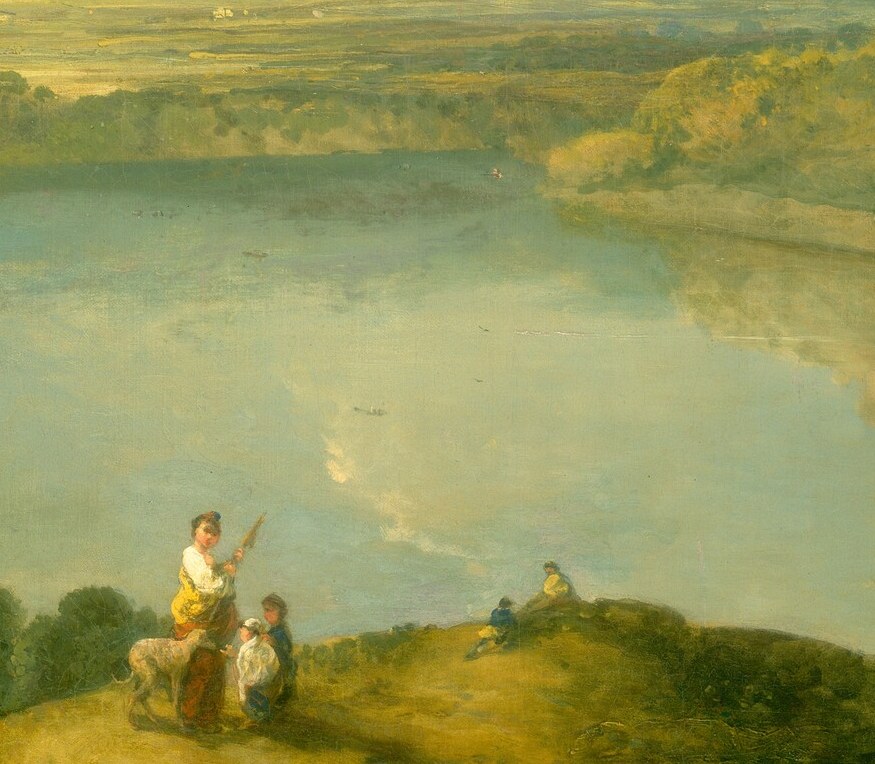
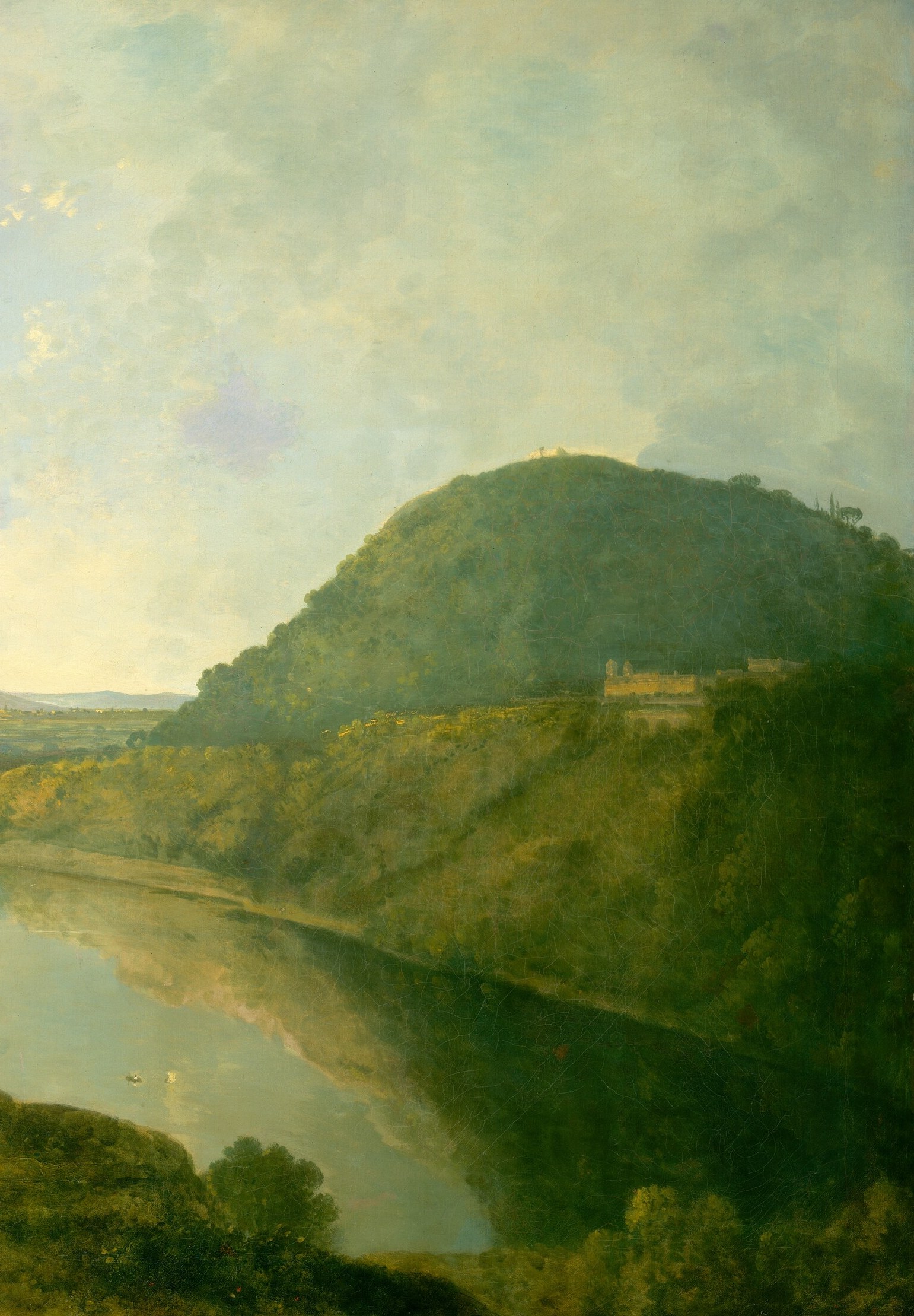
Find the two figures resting on the grassy slope in the foreground. One of them points toward the lake, a rhetorical gesture that invites you, the viewer, to follow their gaze. Scan across the calm water until the far shore comes into focus. That pale cluster of buildings is Castel Gandolfo, the papal summer residence. Once you see it, the painting shifts from a generic Italian landscape into a precise, inhabited map of history and privilege.
Wilson painted this at the height of the Grand Tour, a period when young British aristocrats traveled to Italy for months or years to absorb classical culture. They returned with marble busts, old master prints, and often a landscape by an artist like Wilson, proof that they had stood and stared at the same views. Wilson, a Welshman trained in London, had himself gone to Italy and returned with a new eye, one that fused Claude Lorrain's golden air with a careful record of real geography.
Next time you see a luminous 18th-century Italian landscape, ask yourself: is this pure invention, or is there a real address hidden inside the paint?
Details
Transcript
1762. The height of the Grand Tour. Young British aristocrats crossed Europe to learn about art and antiquity. This painter's job was to send home proof of the journey. The view is Lake Albano, just south of Rome. Look at the far shoreline. That cluster is Castel Gandolfo, the pope's summer residence. It is not a timeless wilderness. It is a specific, inhabited place.