Bouquet of Chrysanthemums by Pierre-Auguste Renoir
Pierre-Auguste Renoir's 'Bouquet of Chrysanthemums' (1891) at The Metropolitan Museum of Art is a vibrant exploration of floral beauty. Renoir, a leading Impressionist, uses dynamic brushwork to bring these flowers to life.
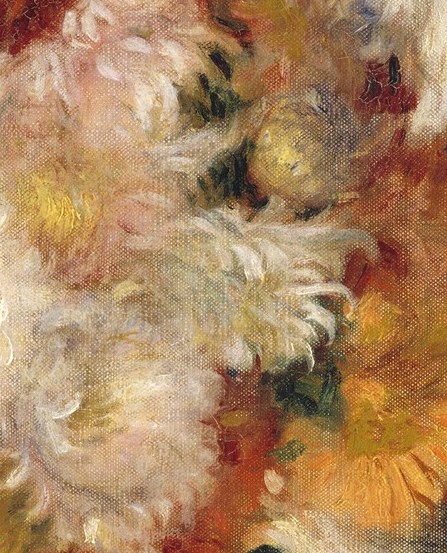
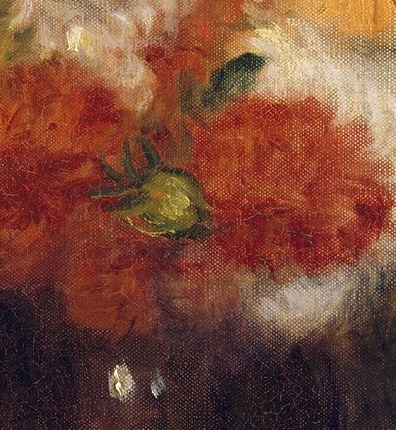
Look closely at the central white chrysanthemum. Notice how Renoir's distinct brushstrokes build its layered petals, giving it a soft, ethereal quality. Then, observe the red chrysanthemum on the lower left, its visible texture conveying energy and depth.
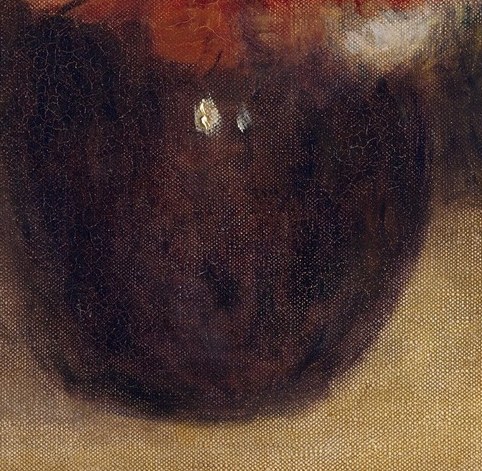
Painted in 1891, this work showcases Renoir's mature style. He employed thick impasto, allowing colors to vibrate and create luminosity. The dark vase grounds the composition, making the lively blooms pop against the indistinct background.
This still life exemplifies Renoir's enduring fascination with light, color, and the energetic vitality of nature.
Details

Transcript
This is Renoir's Bouquet of Chrysanthemums. See how the petals appear almost alive. Renoir painted this in 1891. His brushstrokes build form and capture light. Vibrant colors vibrate against the dark vase. Each flower bursts with energy and depth. He captures the fleeting beauty of blooms.