Mount Vesuvius at Midnight by Albert Bierstadt
View the artwork: Mount Vesuvius at Midnight →
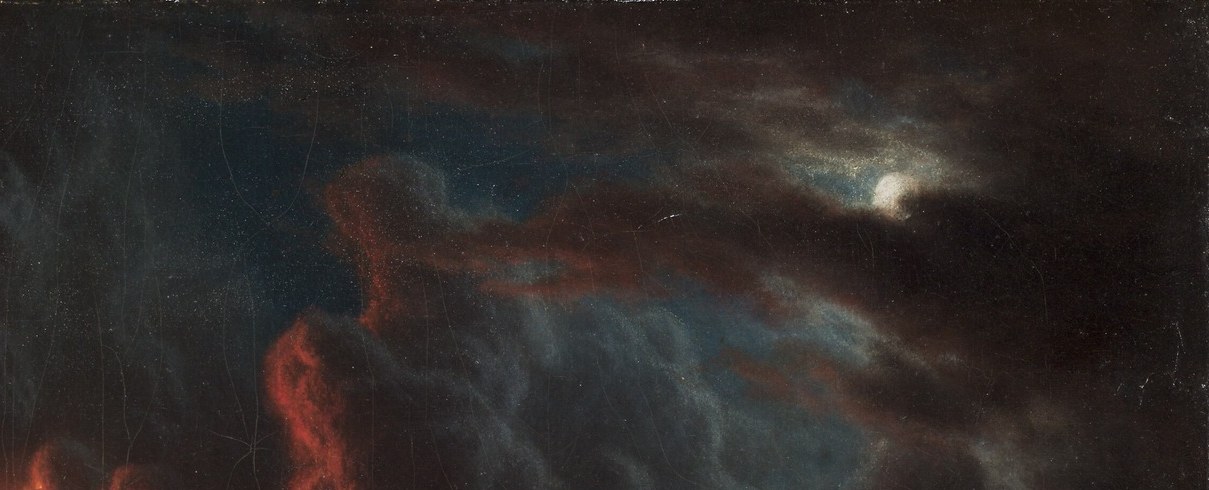
Albert Bierstadt’s “Mount Vesuvius at Midnight” (1868) is a volcanic nocturne that looks more like a special effect than an oil painting. It’s currently in a private collection.
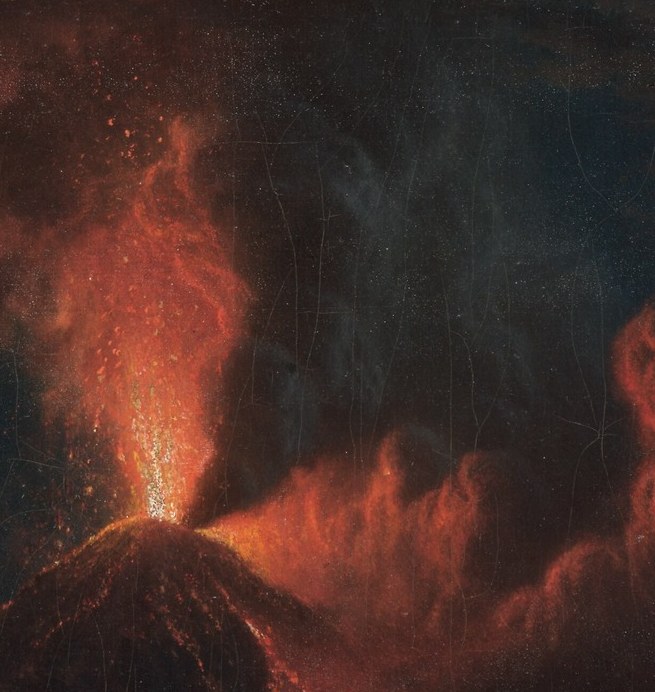
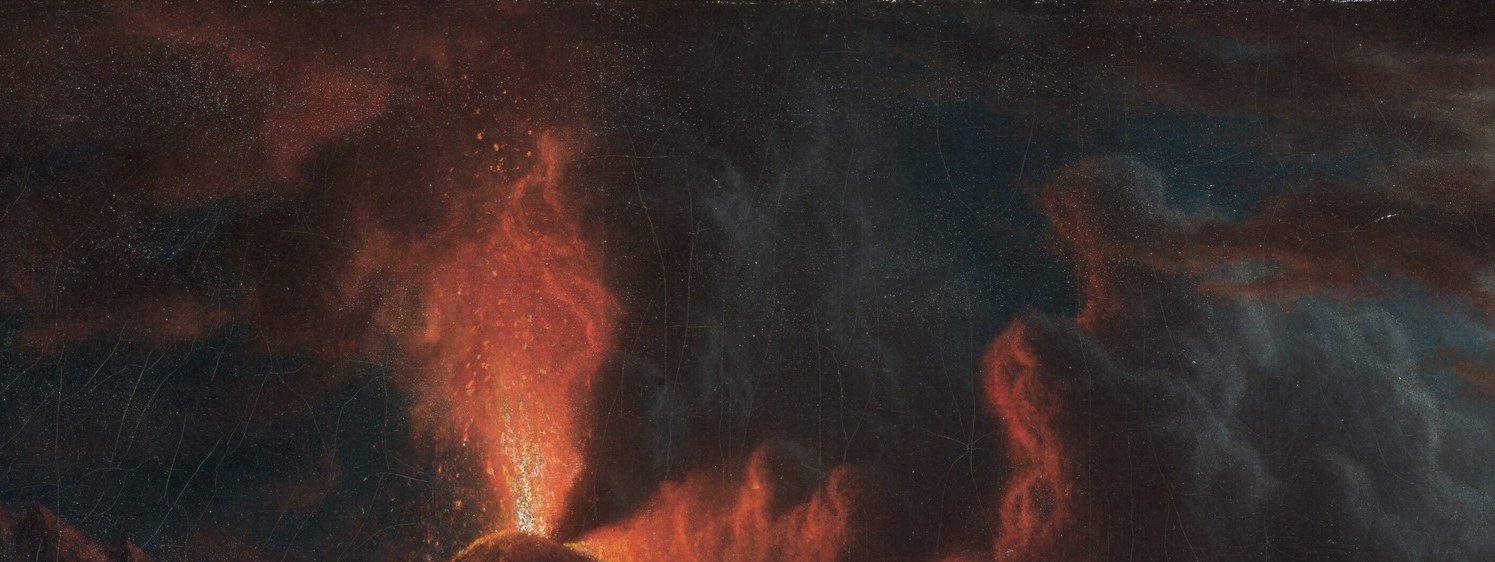
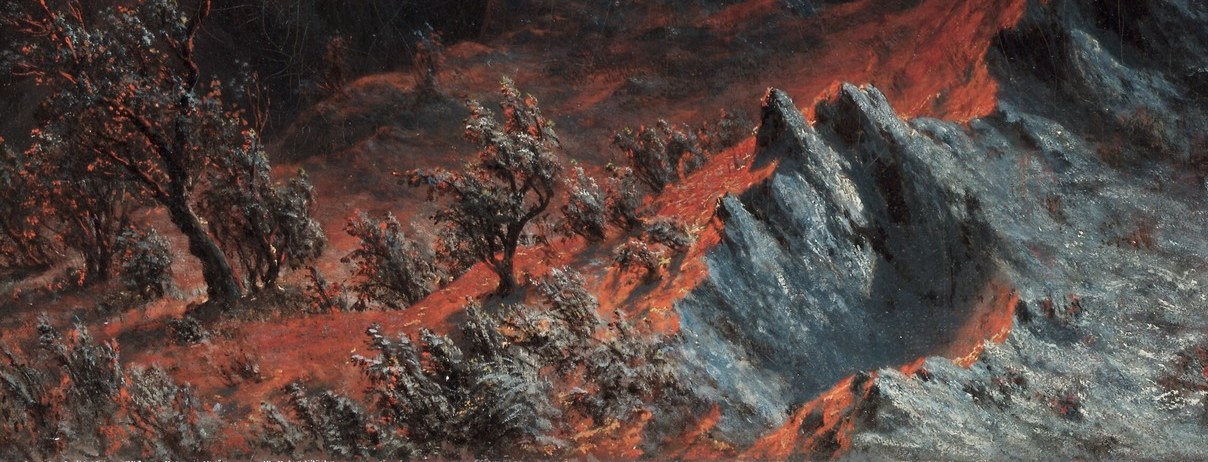
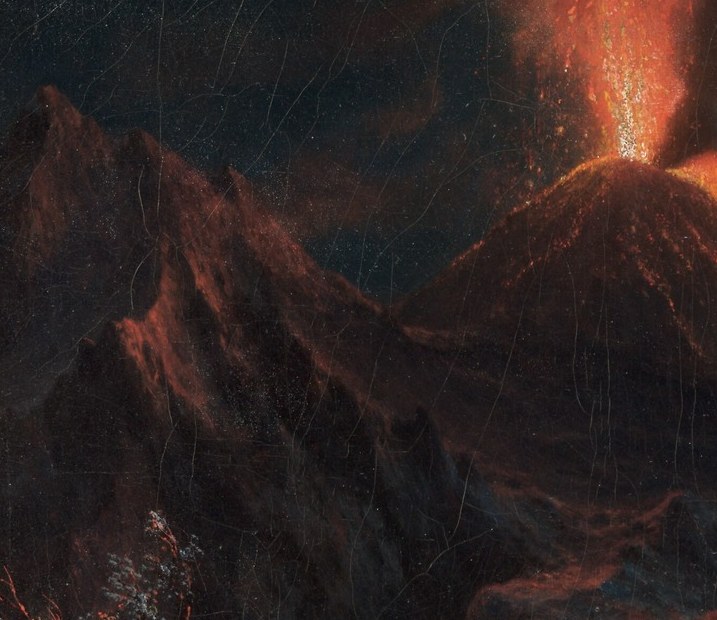
Bierstadt is famous for the glowing, romantic light he brought to the American West. Here he turns that same Luminist eye on a different kind of frontier. The moon hangs in the upper right, a sliver of cool silver, and it is completely outmatched. Look at the lava river on the left flank, the airborne cinders above the crater, and the dead trees silhouetted against the fire. He painted the ash cloud with such thick impasto that the eruption seems to be happening in the room.
The artist traveled in Italy and witnessed Vesuvius in an active phase. He was not a volcano painter by trade, but a landscape painter confronted with the sublime. The result is a painting that bridges two worlds: the careful, almost divine light of the Hudson River School and the explosive, destructive chaos of the earth itself.
What would it have felt like to stand on that rocky foreground outcrop, a famous painter from New York, and sketch this by the light of the lava?
#arthistory #albertbierstadt #hudsonriverschool
Details
Transcript
Night turned into day over Italy. Mount Vesuvius roared alive in 1868. Bierstadt was there, and he painted what he saw. Look at the moon. It can barely compete. These trees are already dead from past eruptions. The lava does not just flow. It illuminates the entire slope. He used thick impasto to make the fire feel physical. A beautiful American West painter, staring into hell.