Artwork
Mount Vesuvius at Midnight
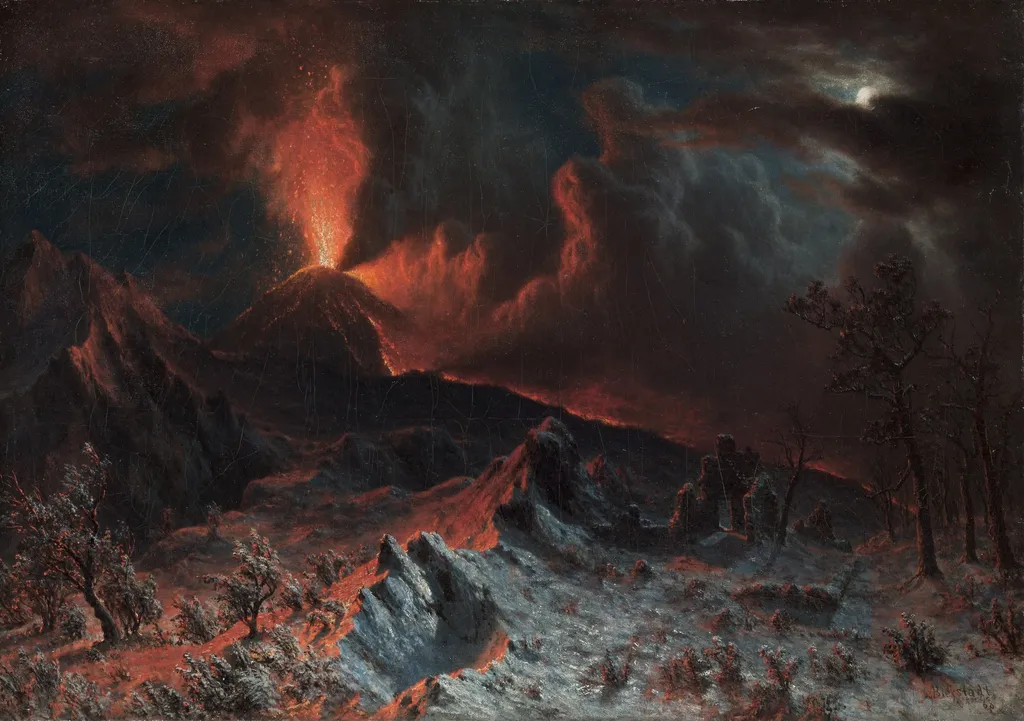
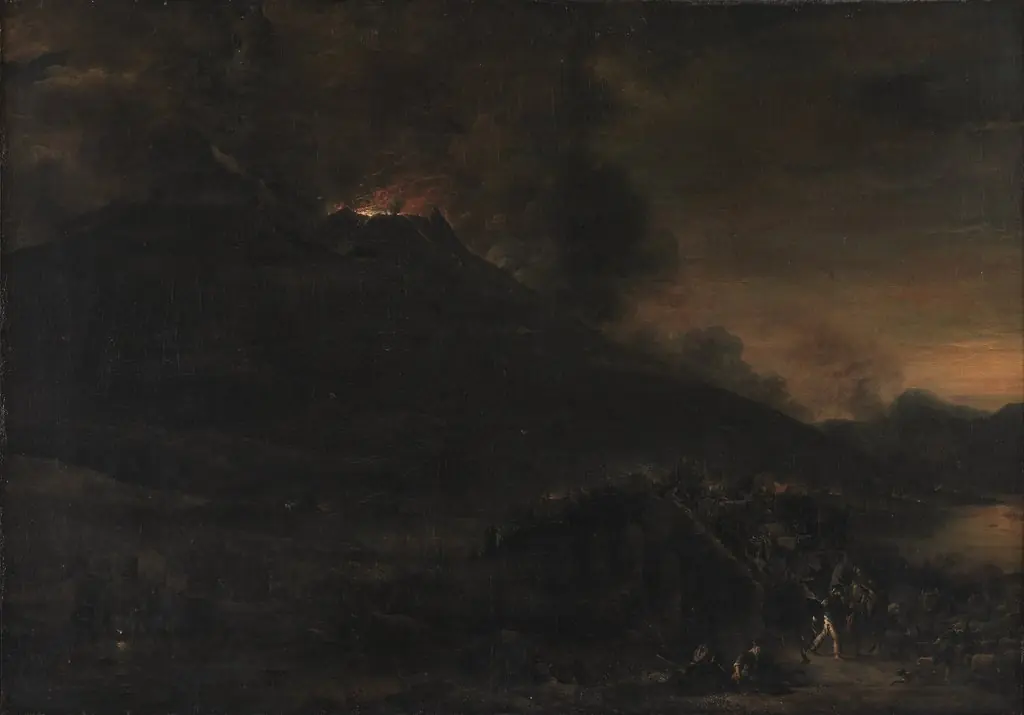
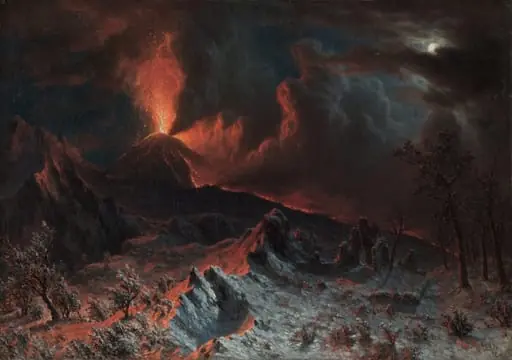
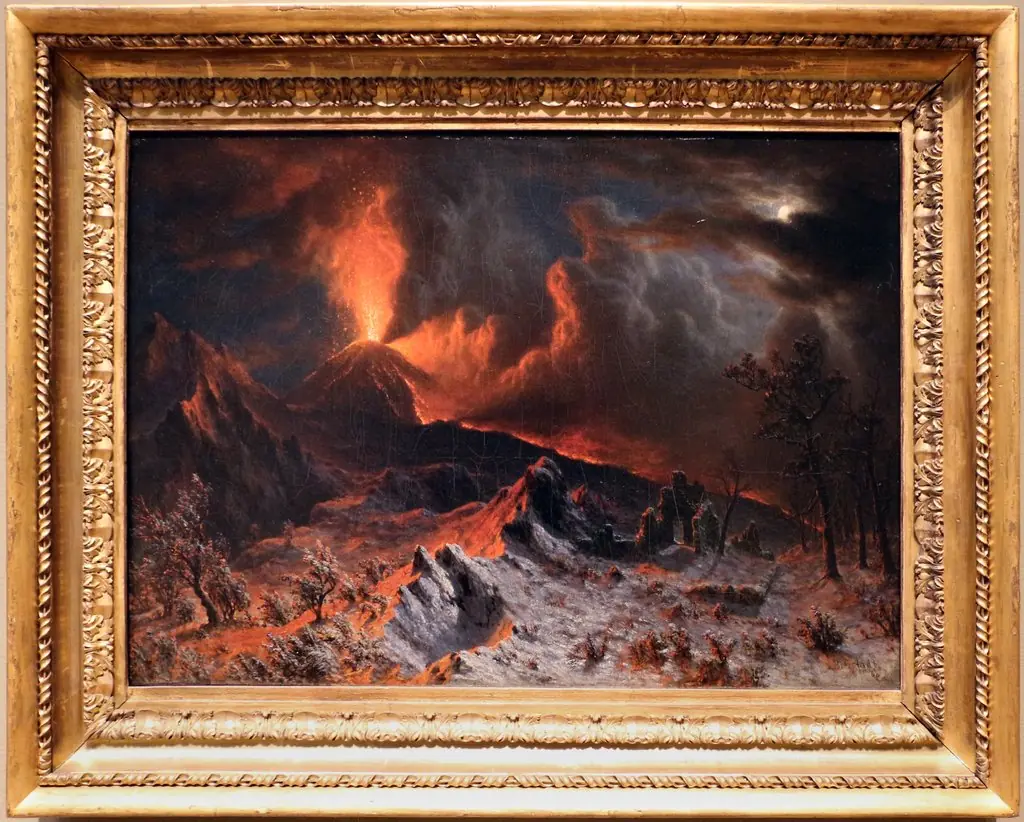
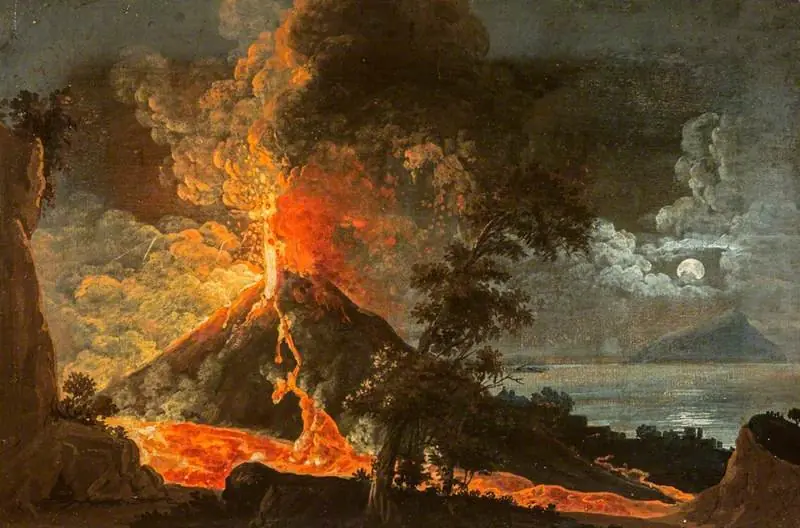
Mount Vesuvius at Midnight is an oil painting by the Hudson River School artist Albert Bierstadt. It dates from 1868 and is held in the collection of the Cleveland Museum of Art. This oil painting depicts the dramatic eruption of Mount Vesuvius under a nocturnal sky.
About this work
Subject & Meaning
The moonlight illuminates the mountain's silhouette, highlighting the contrast between the glowing eruption and the surrounding obscurity.
Painted by Albert Bierstadt in 1868, the work captures Mount Vesuvius erupting under a night sky, with luminous lava flows and ash plumes visible against the darkness. The moonlight illuminates the mountain's silhouette, highlighting the contrast between the glowing eruption and the surrounding obscurity. This nocturnal view emphasizes the raw, dramatic power of Vesuvius, presenting the volcano as both a formidable natural force and a subject of awe-inspiring timeless beauty.
Technique & Style
The painting is executed in oil on canvas, a support typical of Albert Bierstadt's practice. The artist applied the oil medium to achieve layered, luminous effects that render the volcano's lava, ash, and moonlit atmosphere. The composition depicts the mountain under night conditions, with glowing lava, ash clouds, a crescent moon, and the surrounding terrain, emphasizing dramatic contrast and realistic detail characteristic of the Hudson River School's romantic realism. The canvas measures approximately 42.6 × 60.7 cm.
History & Provenance
Albert Bierstadt created the oil painting Mount Vesuvius at Midnight in 1868. Produced in the United States, the work depicts the volcanic landscape of Mount Vesuvius under a night sky, featuring lava, ash, and the moon. The canvas, measuring approximately 42.6 by 60.7 cm, eventually entered the collection of the Cleveland Museum of Art, where it is accessioned under the identifier 1949.541.
Overview
This oil painting depicts the dramatic eruption of Mount Vesuvius under a nocturnal sky. The artist captures the volcano's raw power as it expels vivid orange flames and ash, illuminating the surrounding landscape. The work emphasizes the sublime force of nature, contrasting the destructive energy with the faint presence of the moon, creating a scene of intense natural drama.
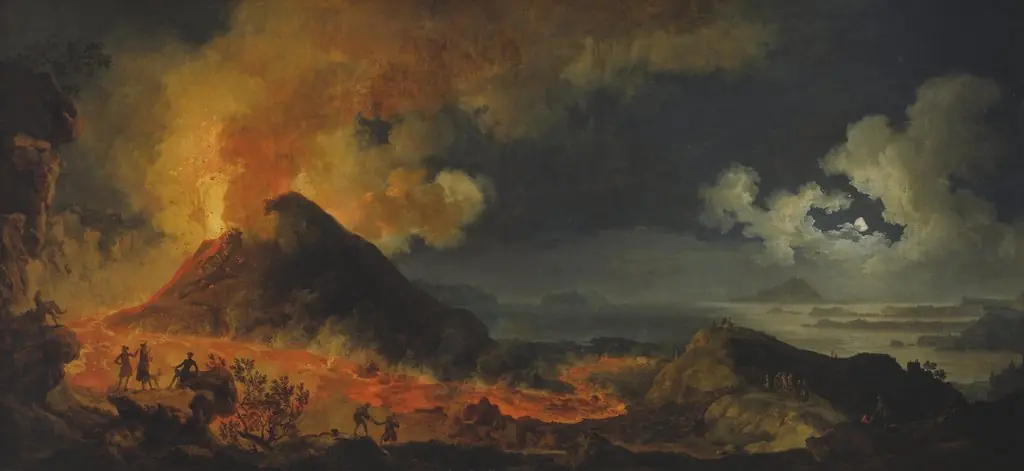
Own this work as a print
Artist & collection

Artist
Albert Bierstadt (January 7, 1830 – February 18, 1902) was a German-American painter best known for his lavish, sweeping landscapes of the American West.

- The Eruption of Vesuvius
 Vesuvius Erupting at Nightfall
 Vesuvius Erupting at Nightfall
 Mount Vesuvius at Midnight
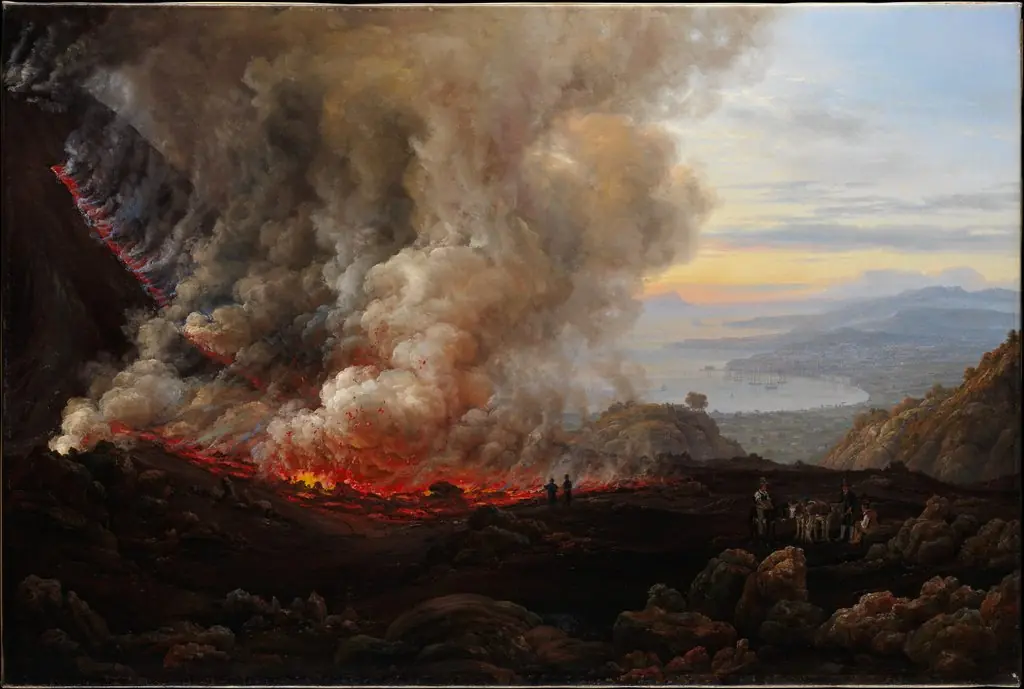 An Eruption of Vesuvius
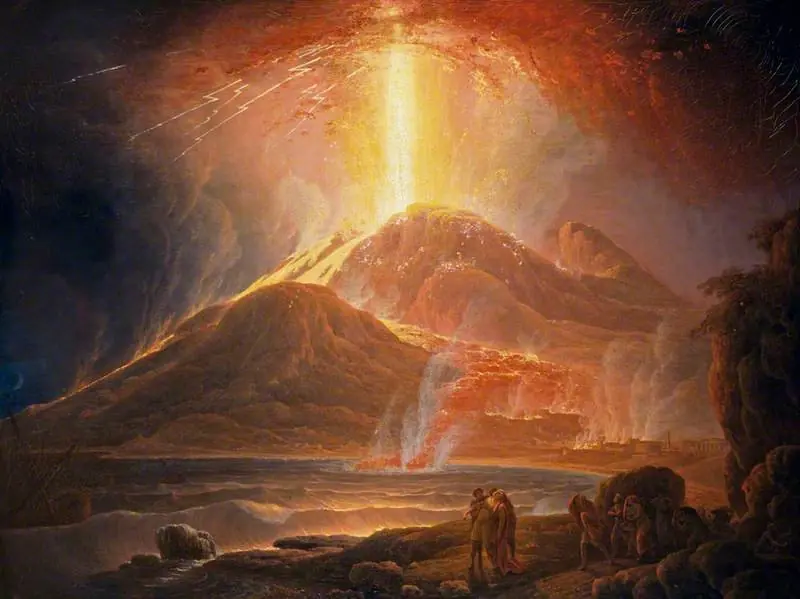 Mount Vesuvius in Eruption
 Vesuvius in Eruption, Italy
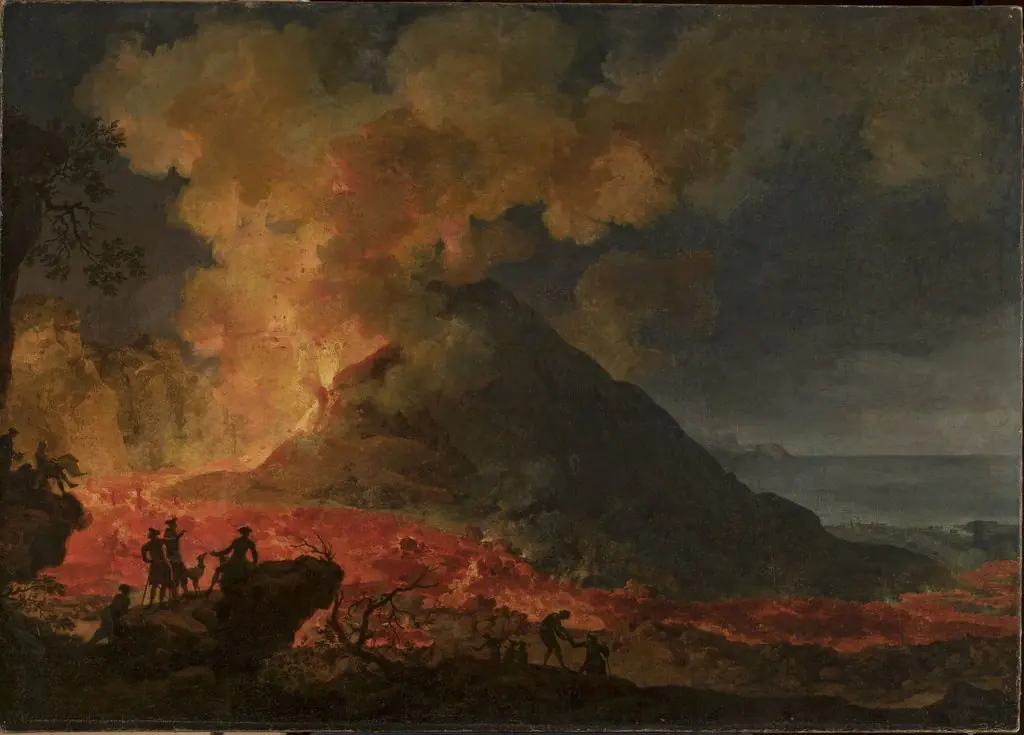 Eruption of Vesuvius
 The Vesuv at night
 Eruption of the Volcano Vesuvius
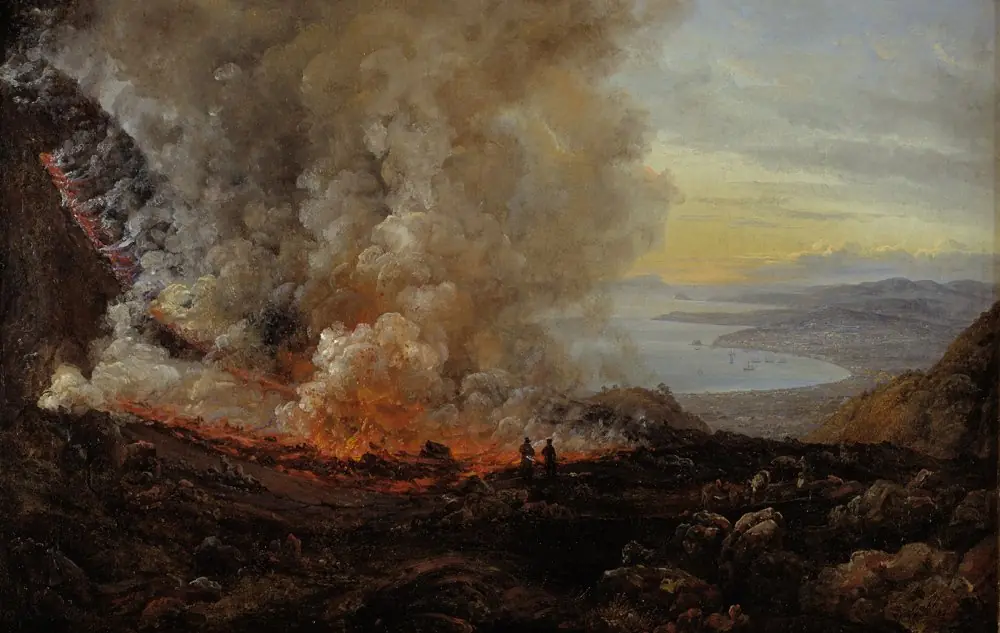 The Eruption of Vesuvius
 Eruption of Vesuvius