Entrance to a Dutch Port by Willem van de Velde the Younger
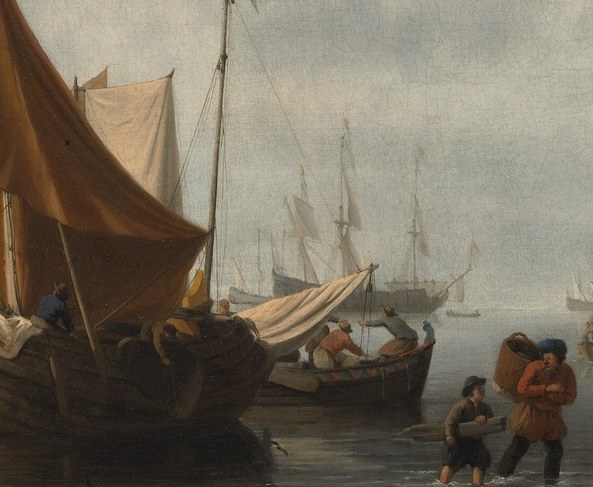
Willem van de Velde the Younger painted "Entrance to a Dutch Port" around 1665 with a knowledge of ships that was practically in his DNA. He was trained by his father, Willem van de Velde the Elder, a celebrated marine draughtsman who sailed into the thick of naval combat to sketch battles as they unfolded.
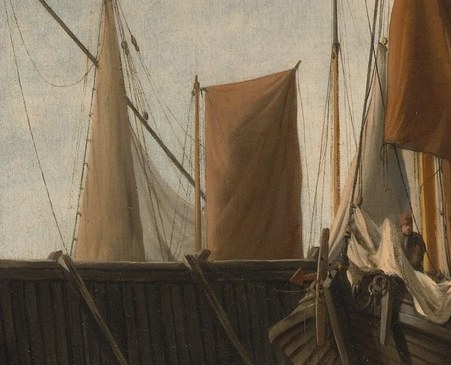
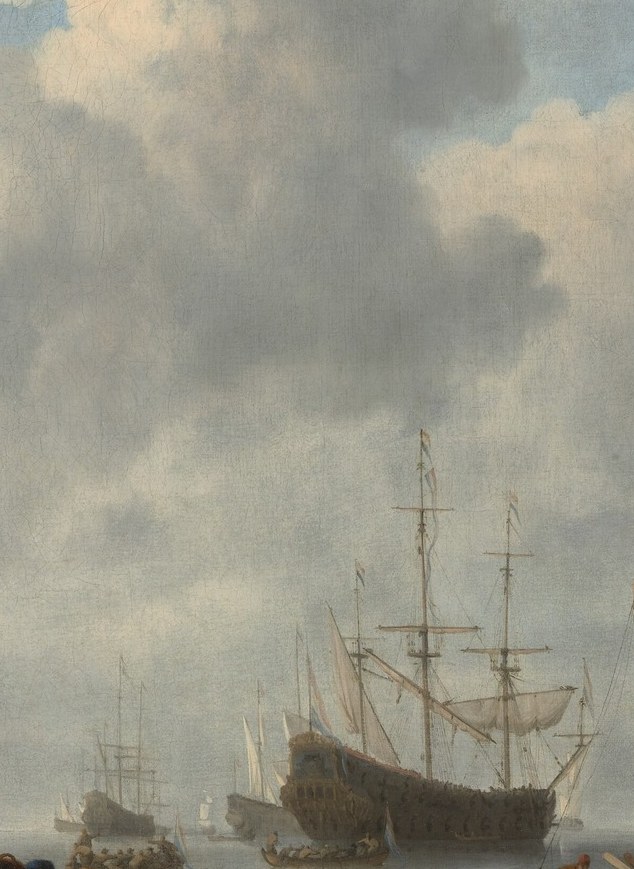
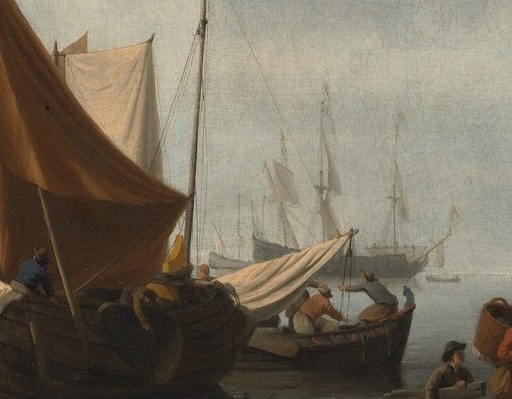
Van de Velde the Younger doesn't just show us ships. He shows us how they worked. The furled sails, the precise anchor hardware, and the gently curved pennants all confirm a light, steady breeze and a calm anchorage. The cattle gathered on the shore aren't a pastoral afterthought, they are proof that this is a living port, moving goods and livestock.
The painting is a record of the Dutch Golden Age, when the Netherlands controlled much of global trade. It now hangs in the Metropolitan Museum of Art in New York, preserving a moment of quiet, efficient prosperity.
Next time you see a marine painting, look at the flags. A painter who knew the sea will always tell you which way the wind was blowing.
Details
Transcript
He grew up on paper, sketching naval battles from an open boat. Look at the anchor. Every link in the chain is functional. His father was a ship draughtsman for the Dutch navy. So when he paints a pennant, it tells you the exact wind direction. Now find the beach. See the tiny figures walking. Cattle on the sand. This isn't a show of force, it's commerce.