The Fishermen (Fantastic Scene) by Paul Cézanne
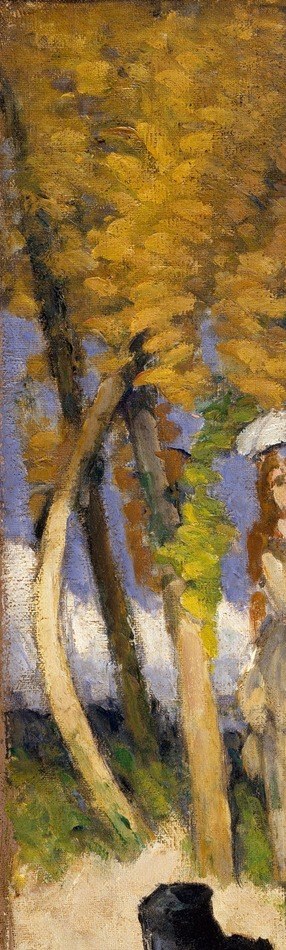
This is Paul Cézanne's The Fishermen (Fantastic Scene), painted in 1875 and now at The Metropolitan Museum of Art. Cézanne called it a 'fantastic scene', a name his friends in the Impressionist circle understood. He was already drifting away from simply capturing light, searching for something more permanent underneath.
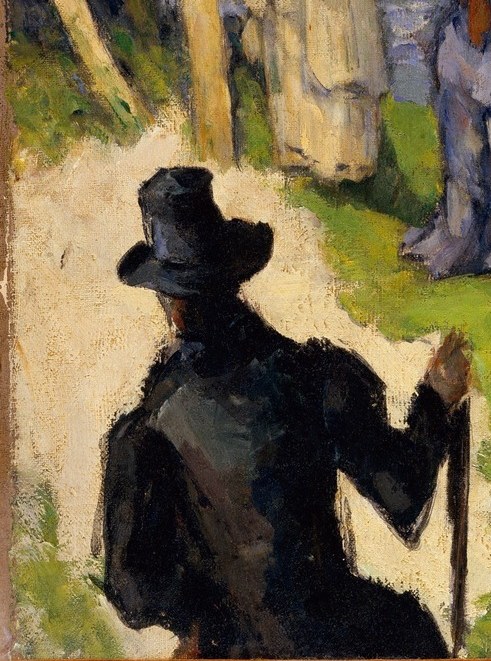
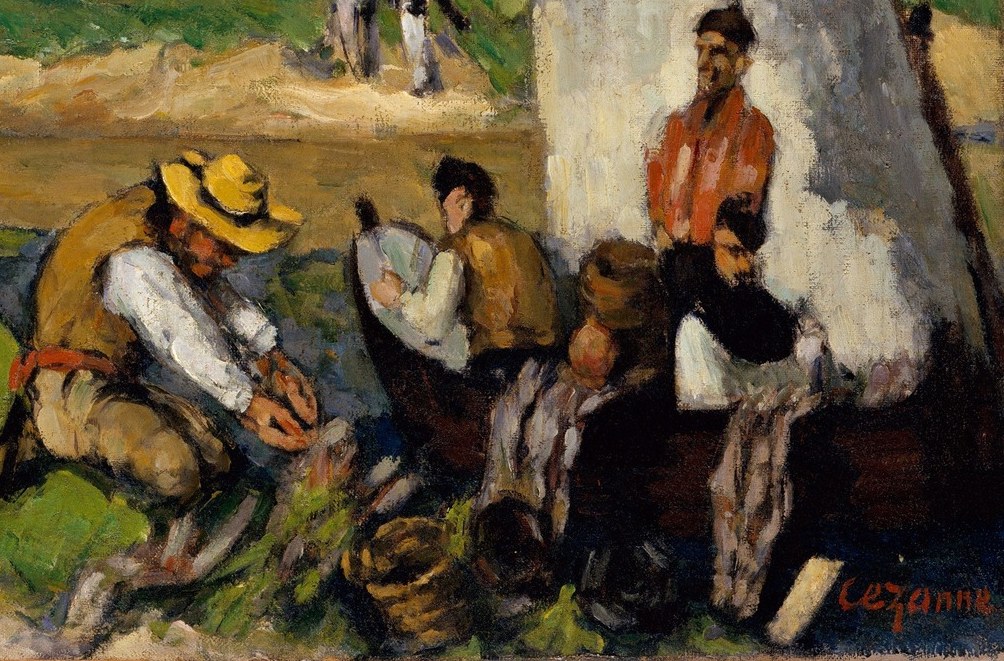
Look at the dark-coated man in the lower left, turned away from us. He is a surrogate, a viewer within the painting, but he is also unmistakably solitary. Across the river, the fishermen relax in dappled light. He stands in shadow, refusing to enter the scene. The white figures in the middle distance are almost spectral, allegorical presences that don't belong to a straightforward day by the water.
In 1875 Cézanne was in his mid-thirties, repeatedly rejected by the Salon, and had not yet sold a major painting. Pissarro believed in him, but the art world did not. He painted this at a moment of intense private uncertainty, his brushwork already beginning to break objects into planes of color rather than dissolving them in atmosphere.
You are looking at a man who is already leaving. The back turned toward us is not a trick of composition, it is a portrait of withdrawal, of someone who felt he did not yet belong in his own century.
Details
Transcript
Paris, 1875. The Impressionists are in full revolt. But one painter stands apart, watching, not joining. He is thirty-six and has never sold a major work. Look across the river. They are at ease, inside the painted world. He is not. The friends he painted with called this his 'Fantastic Scene'. The man who stood outside Impressionism would change painting forever.