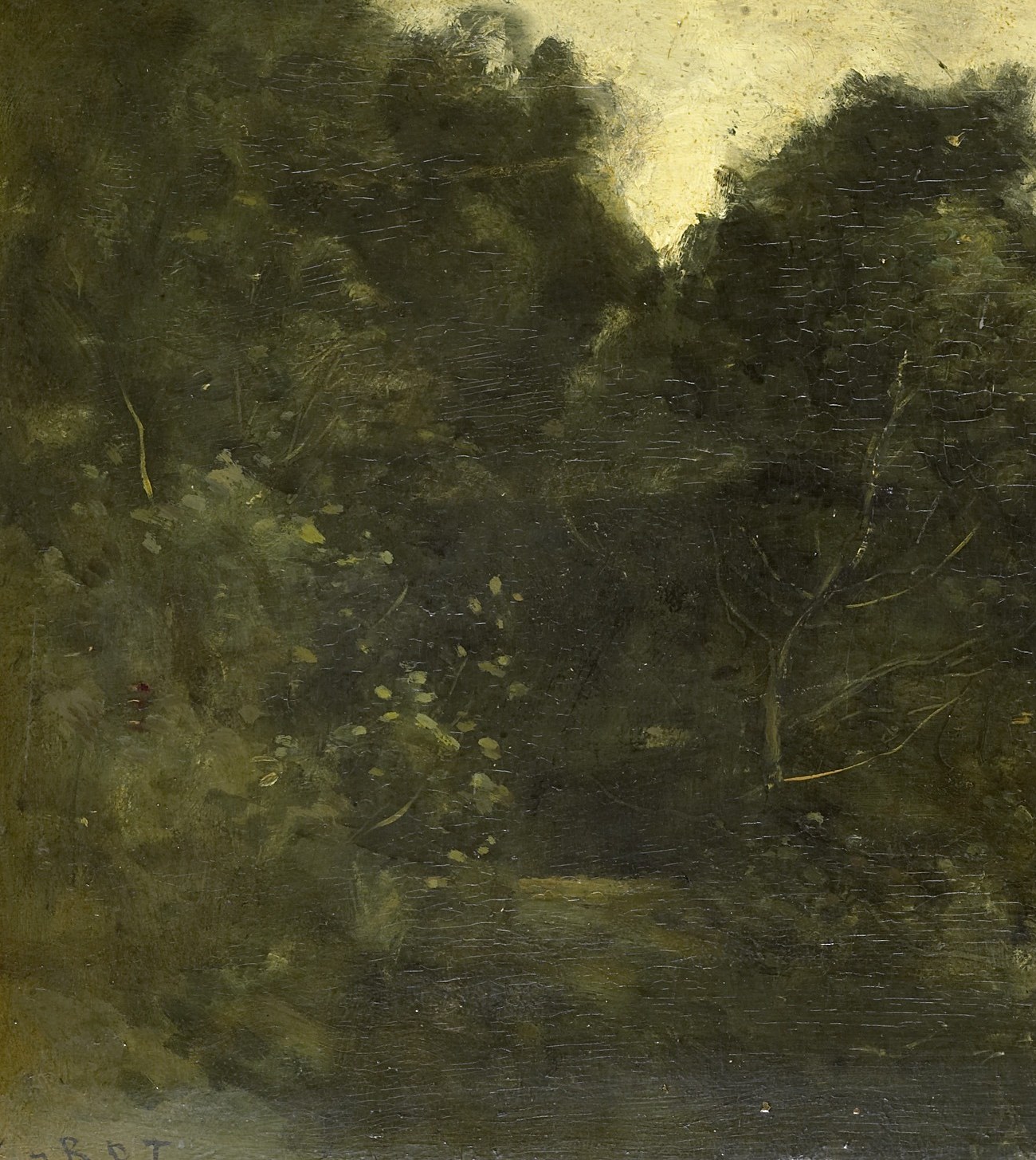
Pond in the Woods by Jean Baptiste Camille Corot
Jean-Baptiste-Camille Corot's *Pond in the Woods*, painted around 1840 and now in the Rijksmuseum, exemplifies his pivotal role bridging Neoclassicism and Impressionism. This seemingly simple landscape is a testament to Corot's evolving style and lasting influence.
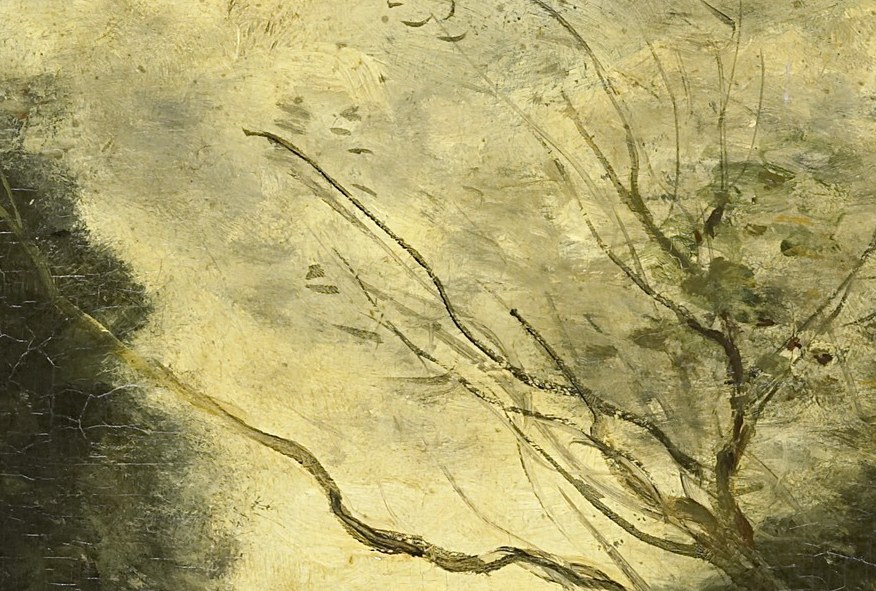
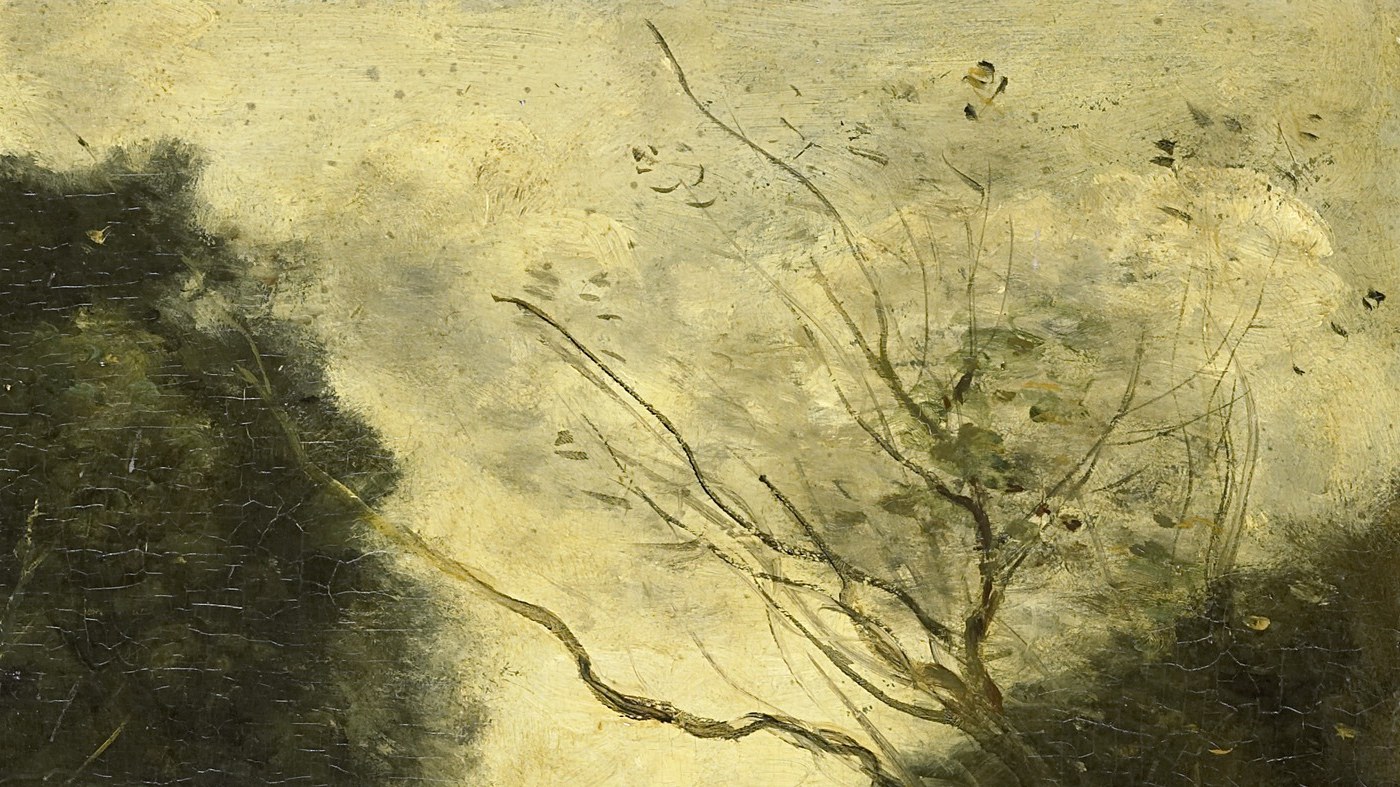
Observe the dense, dark trees on the left, a hallmark of Corot's early style, contrasted with the luminous, hazy sky. Notice the delicate bare branches silhouetted against this sky, adding a fragile element. The pond's surface reflects the light, suggesting movement within the stillness.
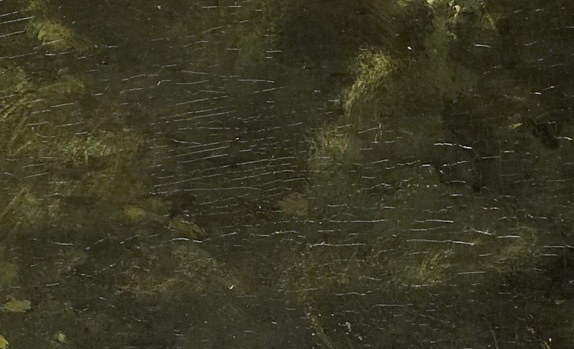
Corot was a key figure of the Barbizon School, focusing on natural light and texture. His loose, fluid brushwork, evident in the foliage details, was groundbreaking and directly influenced the Impressionist movement that followed, changing landscape painting forever.
While this specific painting's market value is not the focus, Corot's works are now considered priceless, highly sought after by collectors and institutions.
Details
Transcript
This quiet scene hides a great name. Look at the trees, dark and dense. Corot painted this in 1840. He was a bridge from old to new. See the bare branches against the sky. His technique would influence Impressionists. The faint signature tells us it's his. Today, his works are priceless.