Evening Calm, Concarneau, Opus 220 (Allegro Maestoso) by Paul Signac
View the artwork: Evening Calm, Concarneau, Opus 220 (Allegro Maestoso) →
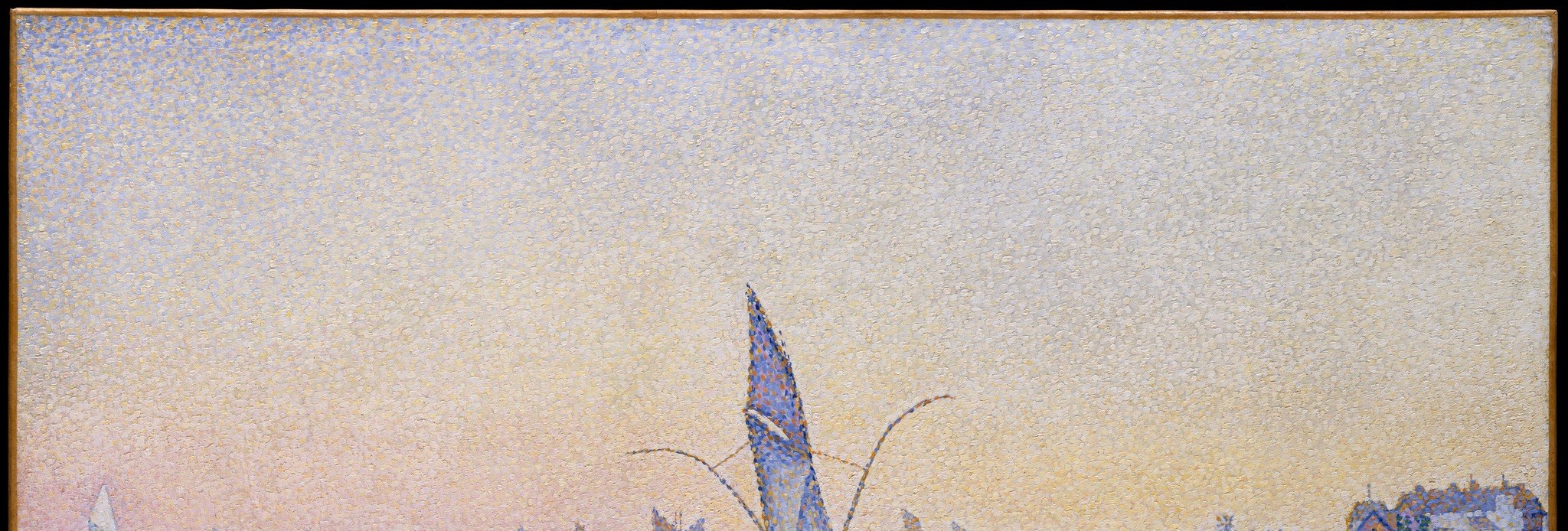
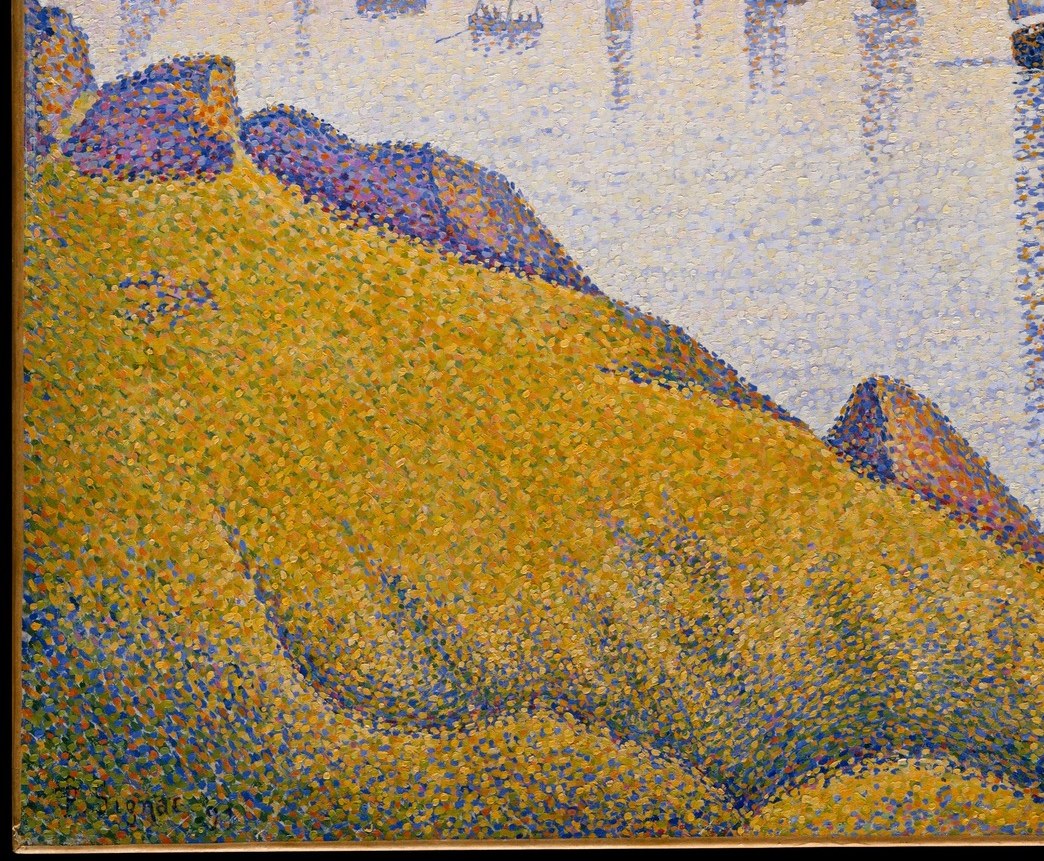
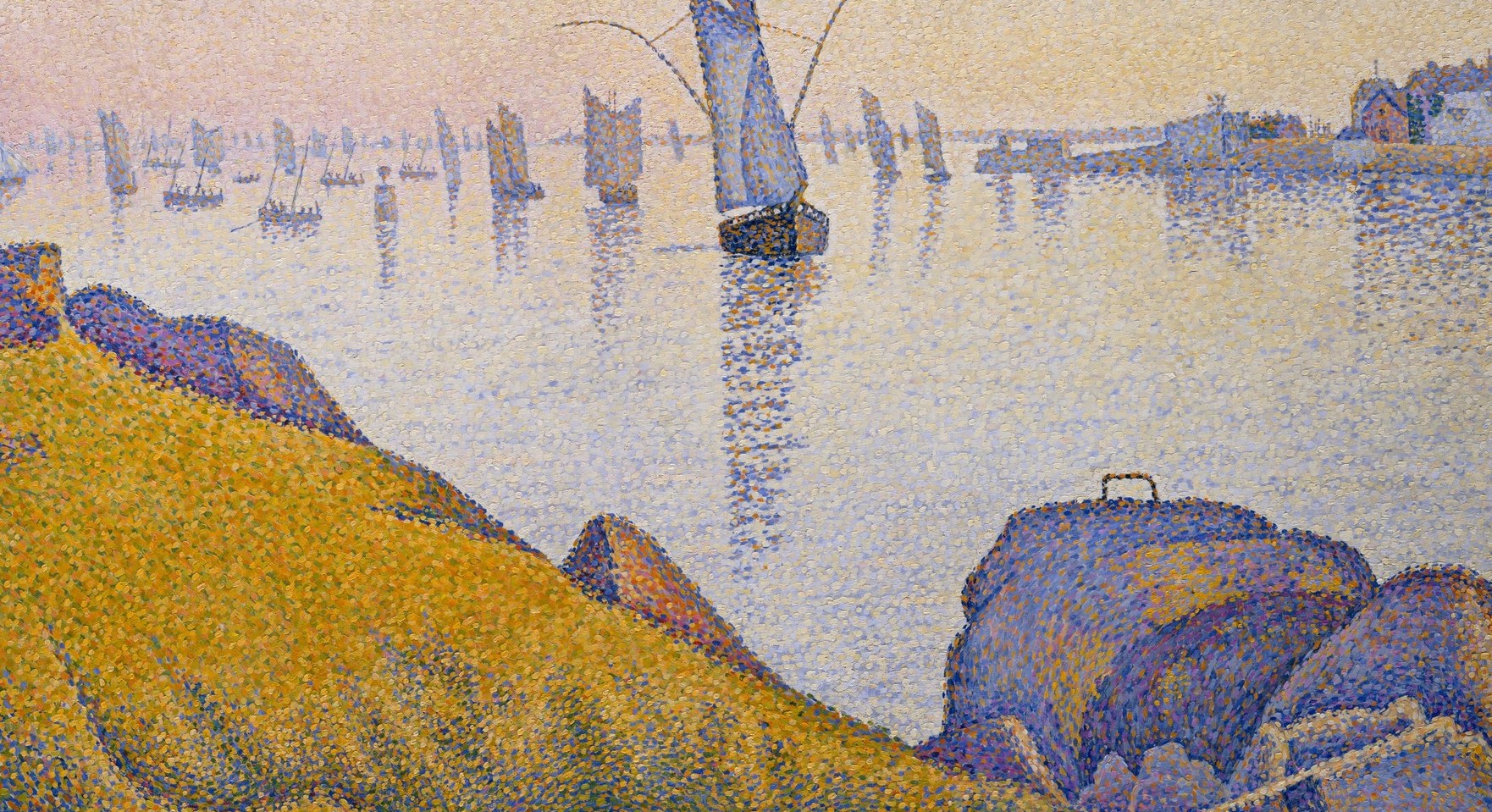
Paul Signac's 'Evening Calm, Concarneau, Opus 220 (Allegro Maestoso)' is a harbor scene built note by note. Painted in 1891 in Brittany and now at The Met, it is one of five seascapes Signac gave musical tempo markings. The subtitle is not decoration: Signac believed color had mathematical and musical properties, so he structured a sunset like a scored composition.
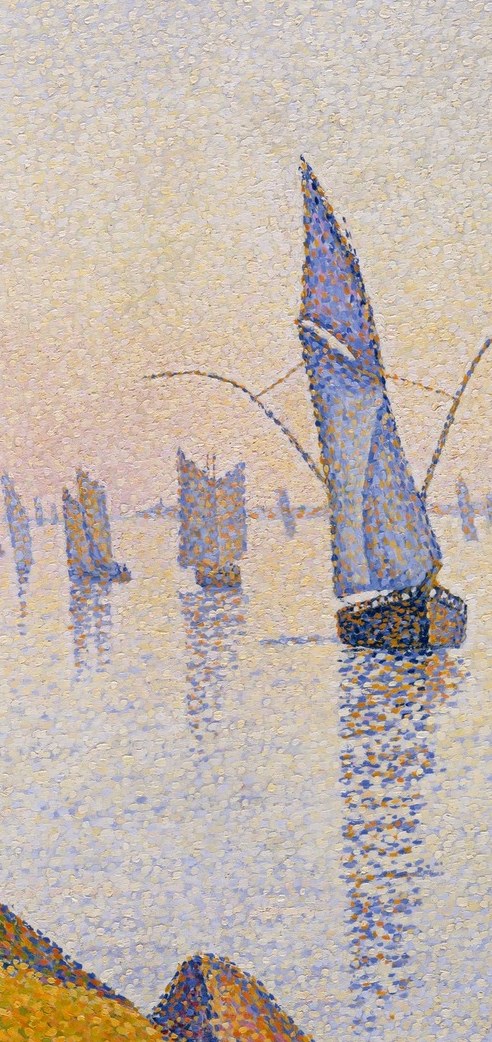
Stand back and the dots dissolve into a glassy twilight. Move close and you see the method: the violet sail sits directly against a warm pink-orange sky. Signac applied pure complementary colors side by side and let your eye mix them into luminosity. The warm light of the setting sun made him paint the shadows in cool cerulean and violet.
Signac learned the divisionist technique from Georges Seurat and became its most vocal champion. The painting debuted in 1892 at Les XX, the Brussels avant-garde salon that showed work too radical for Paris. It later entered the Robert Lehman Collection before coming to The Met in 1975.
A harbor at rest, rendered as a system of optical laws and tempo markings. Does knowing the science behind it change how the calm feels?
#arthistory #pointillism #paulignac
Details
Transcript
A summer harbor dissolves into violet and pink dots. The title is a tempo marking: Allegro Maestoso. Paul Signac believed color was mathematics and music. Look at the sail. Pure violet next to pink-orange sky. He never mixed the colors. Your eye does the mixing. The method was called Divisionism. Critics were baffled. This calm harbor is one of five musical seascapes.