Artwork
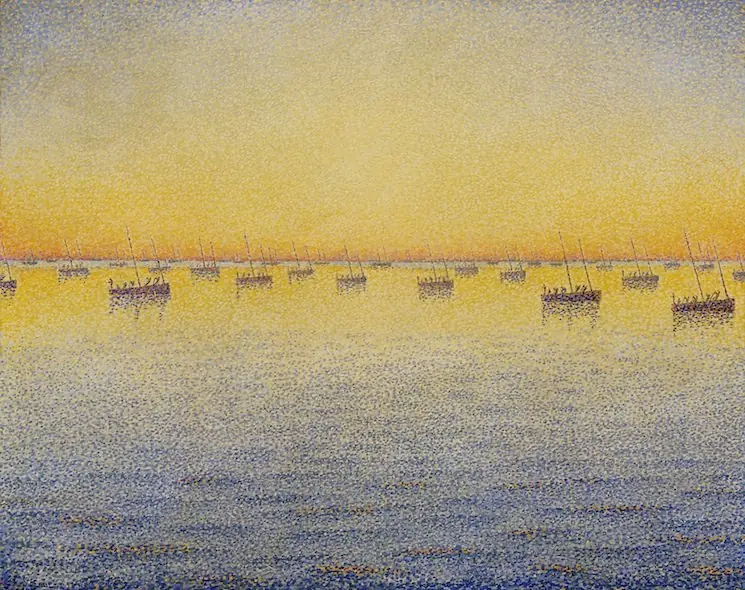
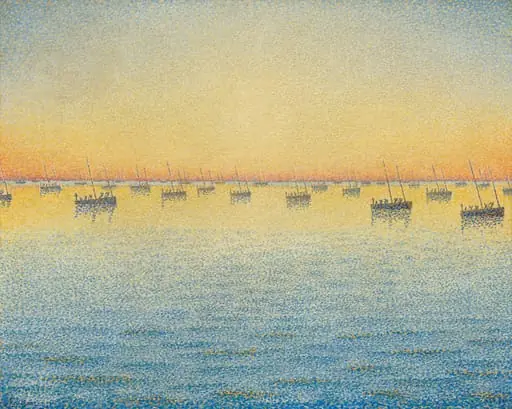
Evening Calm, Concarneau, Opus 220 (Allegro Maestoso)
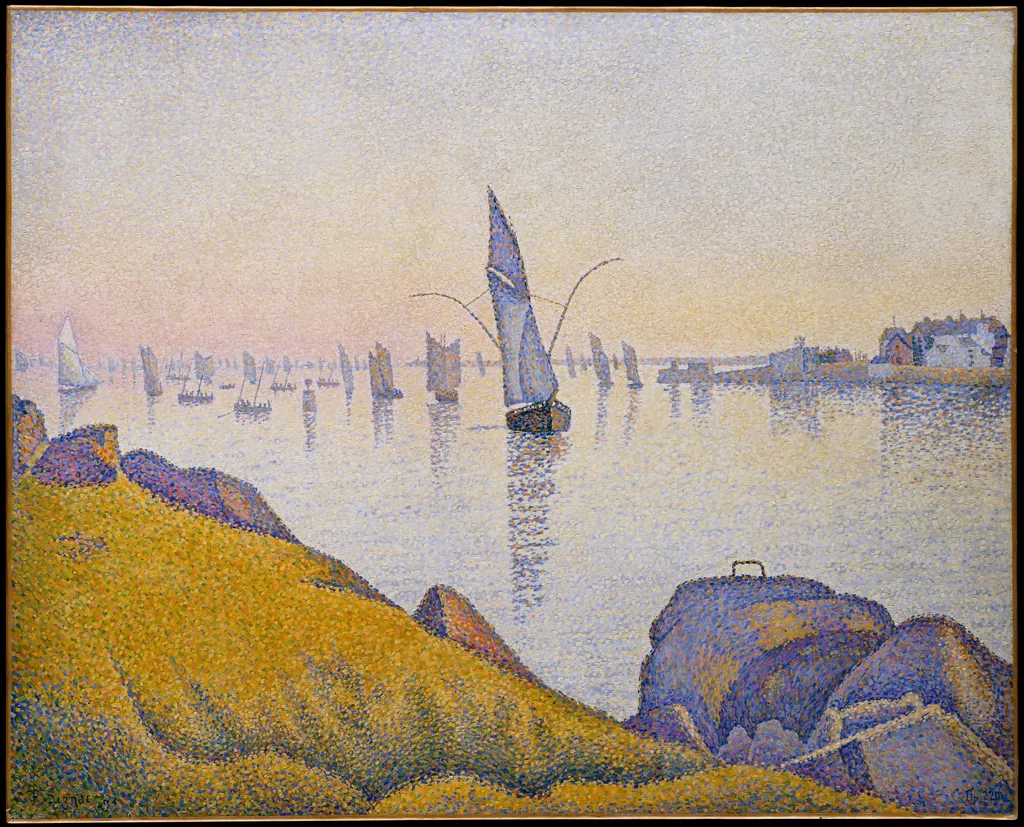
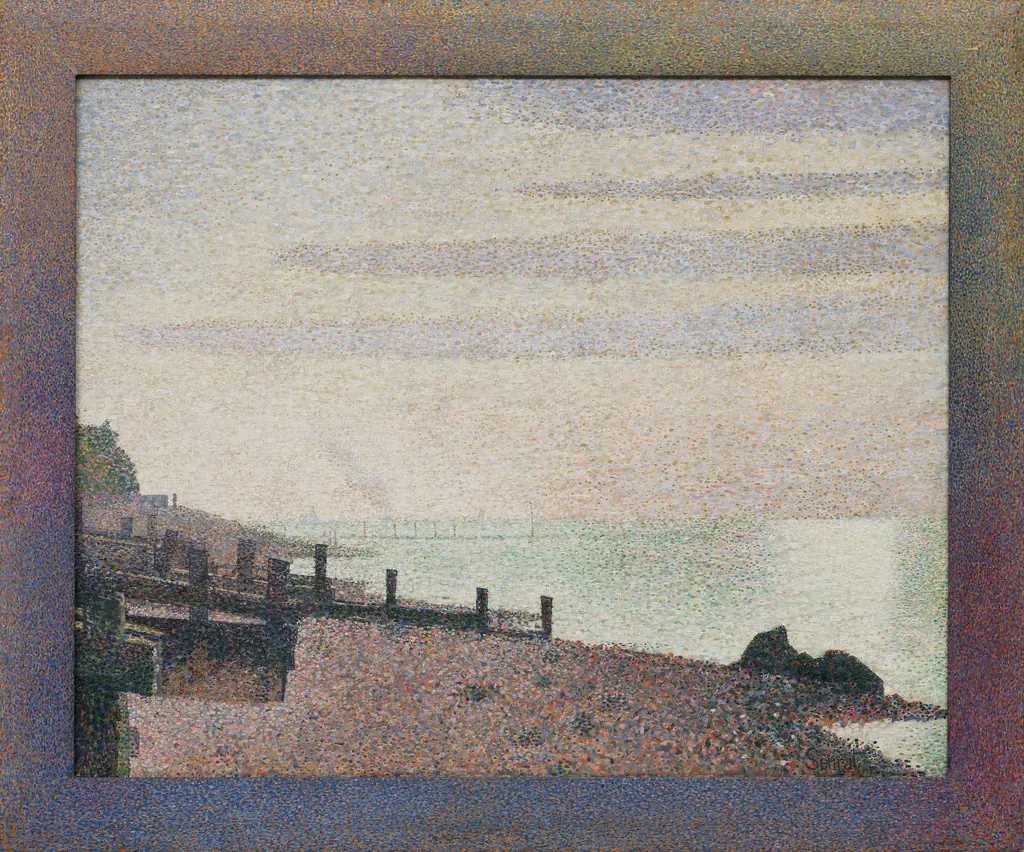
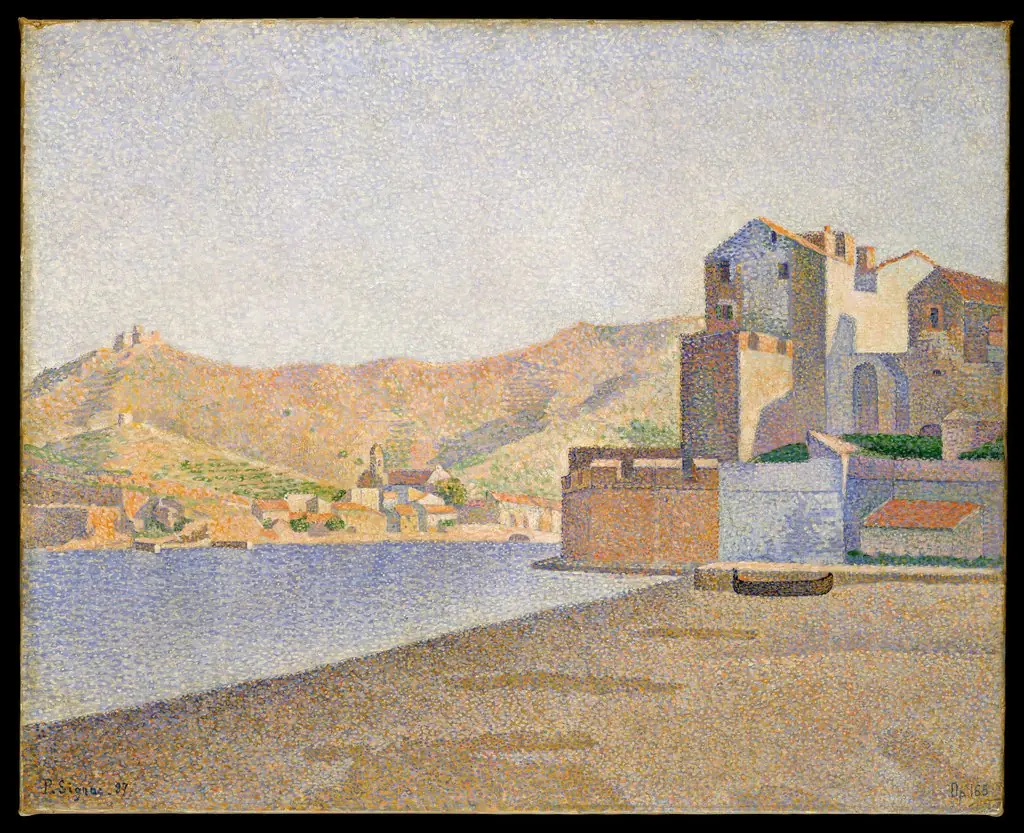
Evening Calm, Concarneau, Opus 220 (Allegro Maestoso) is an oil painting by the Neo-Impressionist artist Paul Signac. It dates from 1896 and is held in the collection of the Metropolitan Museum of Art.
About this work
Paul Signac built the scene from thousands of separate dots of orange, rose, and ultramarine, each kept unblended so the eye fuses them from a distance.
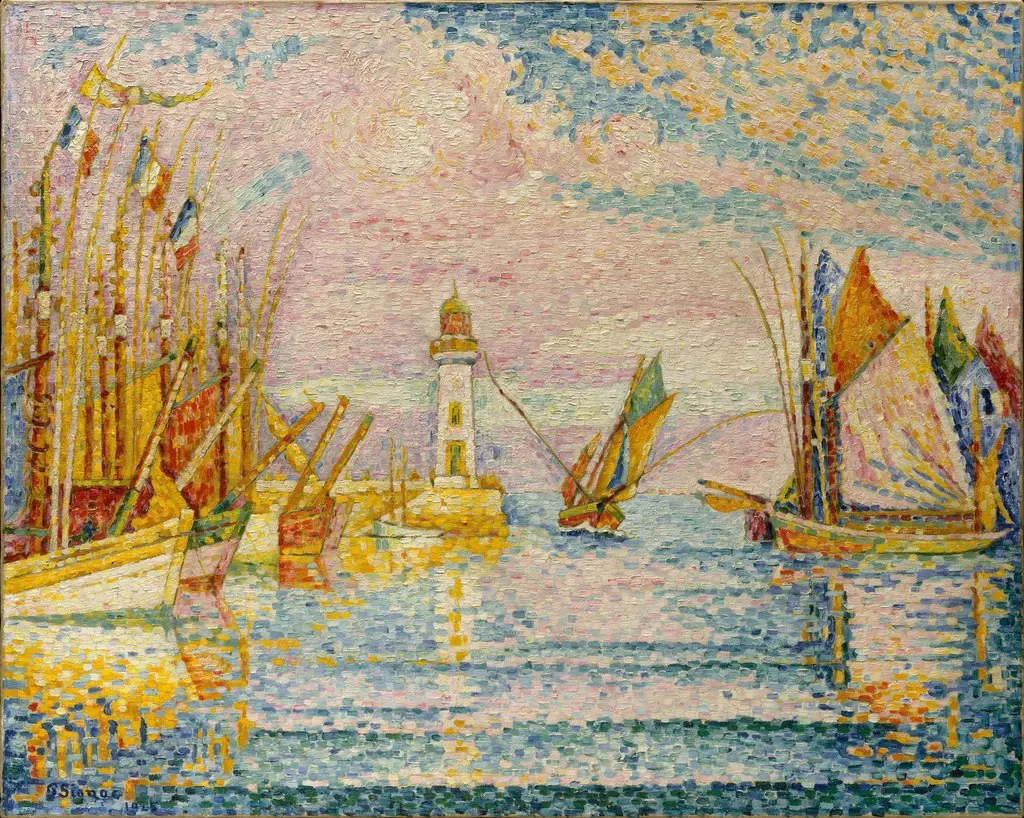
Fishing boats off the Brittany coast at Concarneau rest on violet-shadowed water as a pink-yellow twilight settles overhead. Paul Signac built the scene from thousands of separate dots of orange, rose, and ultramarine, each kept unblended so the eye fuses them from a distance. Part of a five-canvas symphonic sequence with musical subtitles, it entered the Metropolitan Museum of Art with the Robert Lehman Collection in 1975.
Overview
Paul Signac's "Evening Calm, Concarneau, Opus 220 (Allegro Maestoso)" is an oil painting from 1891. It depicts fishing vessels at rest in the Breton port of Concarneau during twilight. This canvas is one of five seascapes created during Signac's summer visit, each bearing a musical tempo marking.
The artwork exemplifies the artist's divisionist technique, where unblended colors are applied to achieve optical luminosity and a harmonious visual effect.
Subject & Meaning
This painting captures the serene transition from day to night in Concarneau, featuring fishing boats gently moored under a sky of fading pinks and yellows. Titled "Allegro Maestoso," it is part of a series where Signac explored the relationship between color and music. He believed that color possessed mathematical and musical properties, using these tempo markings not merely as decoration, but as a conceptual framework to structure his visual compositions.
Technique & Style
Signac employed Georges Seurat's divisionist method, meticulously applying small, distinct strokes of pure oil paint directly to the canvas. Rather than blending colors on his palette, he relied on the viewer's eye to optically mix the juxtaposed hues, creating a vibrant, luminous surface. For instance, the warm orange-yellow of the sunset is contrasted with cool ultramarine shadows, evident in the cerulean and violet specks within the grassy foreground and shaded boat hulls.
History & Provenance
Measuring 64.8 by 81.3 centimeters, this oil painting made its public debut in 1892 at Les XX, an influential avant-garde exhibition in Brussels. The artwork later became a significant part of the esteemed Robert Lehman Collection. In 1975, it was acquired by The Metropolitan Museum of Art, where it is now cataloged under the object number 1975.1.209, making it accessible to the public.
Own this work as a print
Artist & collection

Artist
Paul Victor Jules Signac ( seen-YAHK, French:; 11 November 1863 – 15 August 1935) was a French Neo-Impressionist painter who, with Georges Seurat, helped develop the artistic technique Pointillism.