The Bend in the Road by Cezanne, Paul
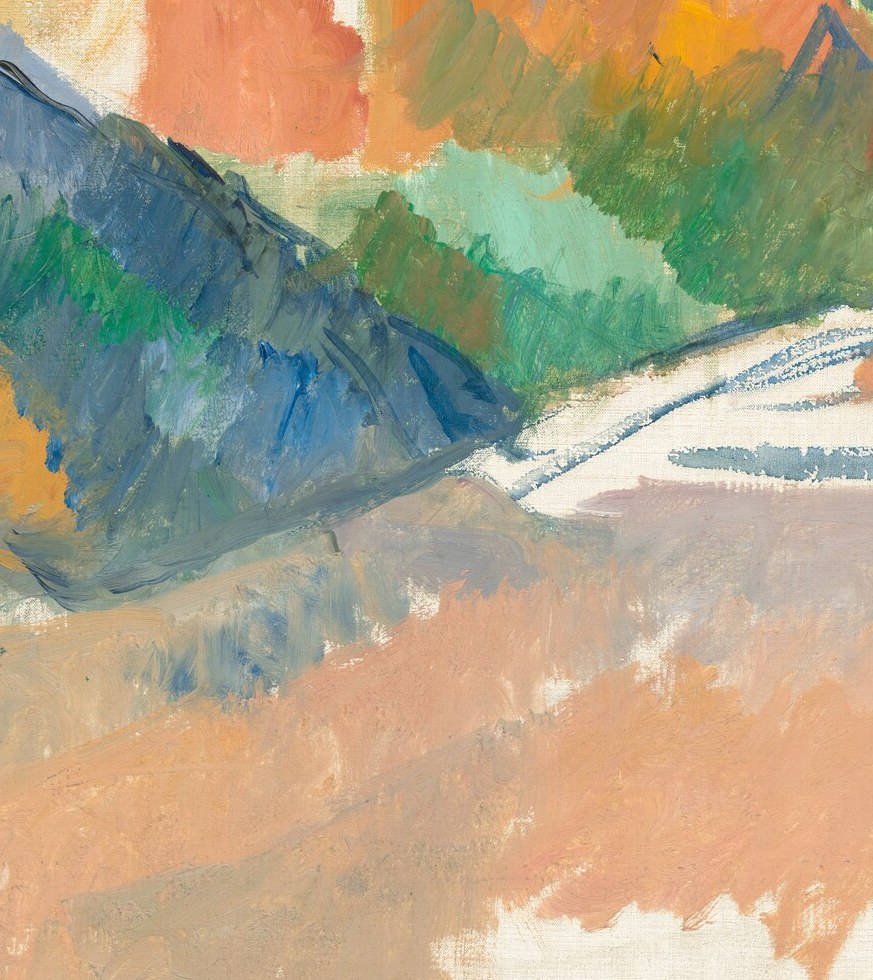
This is The Bend in the Road, painted by Paul Cézanne around 1903 near his home in Aix-en-Provence. It hangs now at the National Gallery of Art in Washington. What looks at first like a quiet country scene is actually something more radical: Cézanne is taking apart how we see, rebuilding the landscape from distinct planes of colour rather than from outlines or smooth shading.
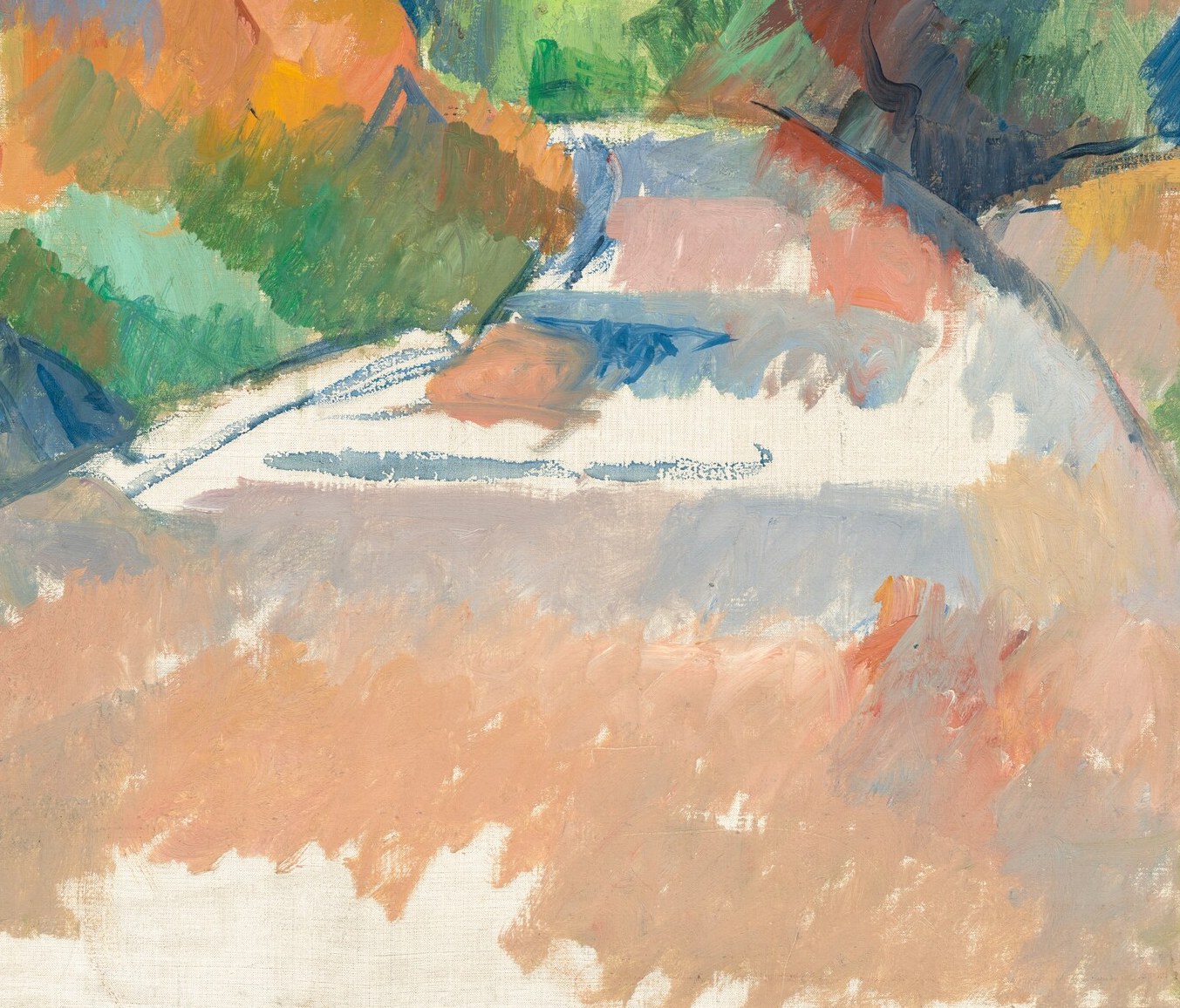
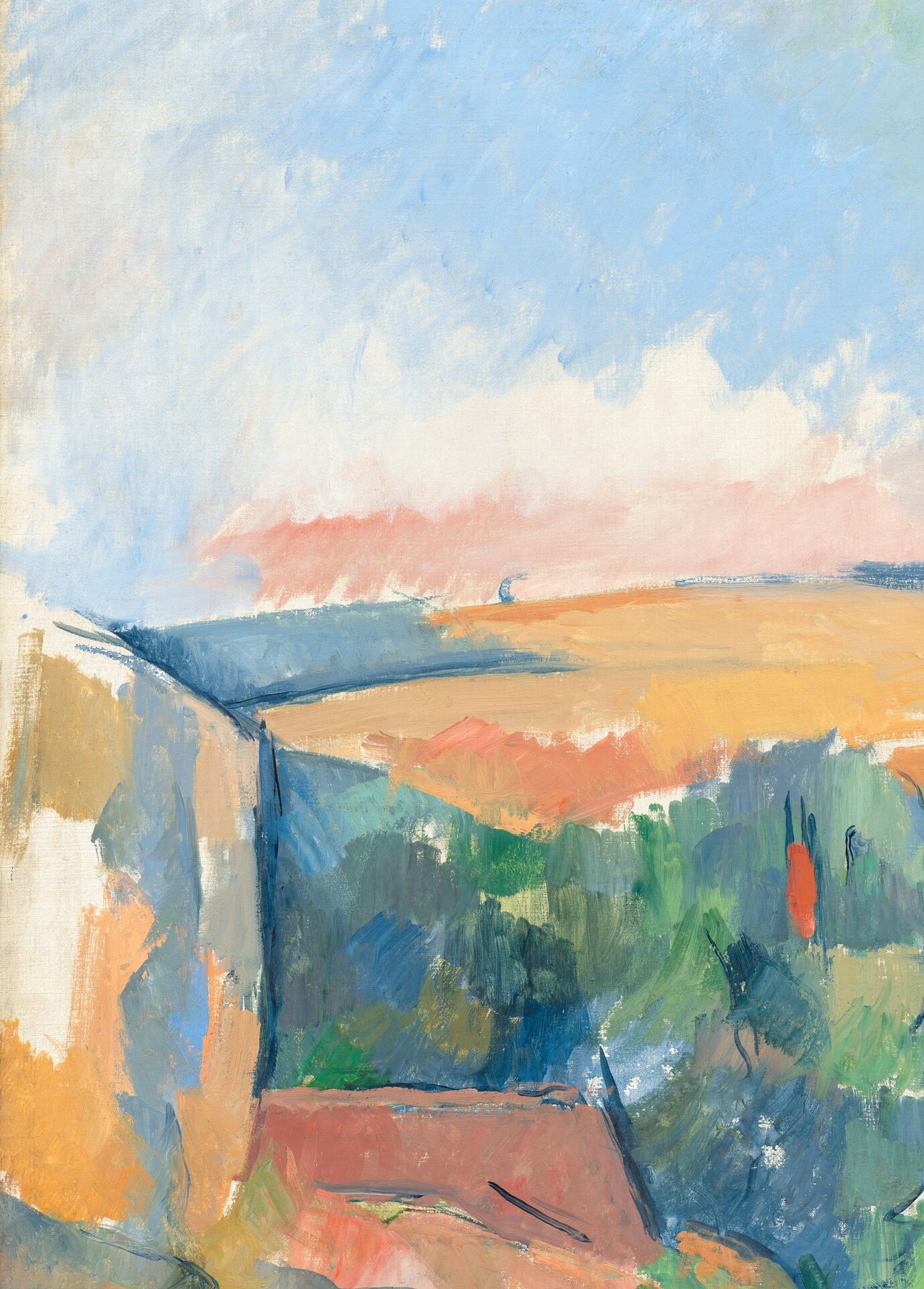
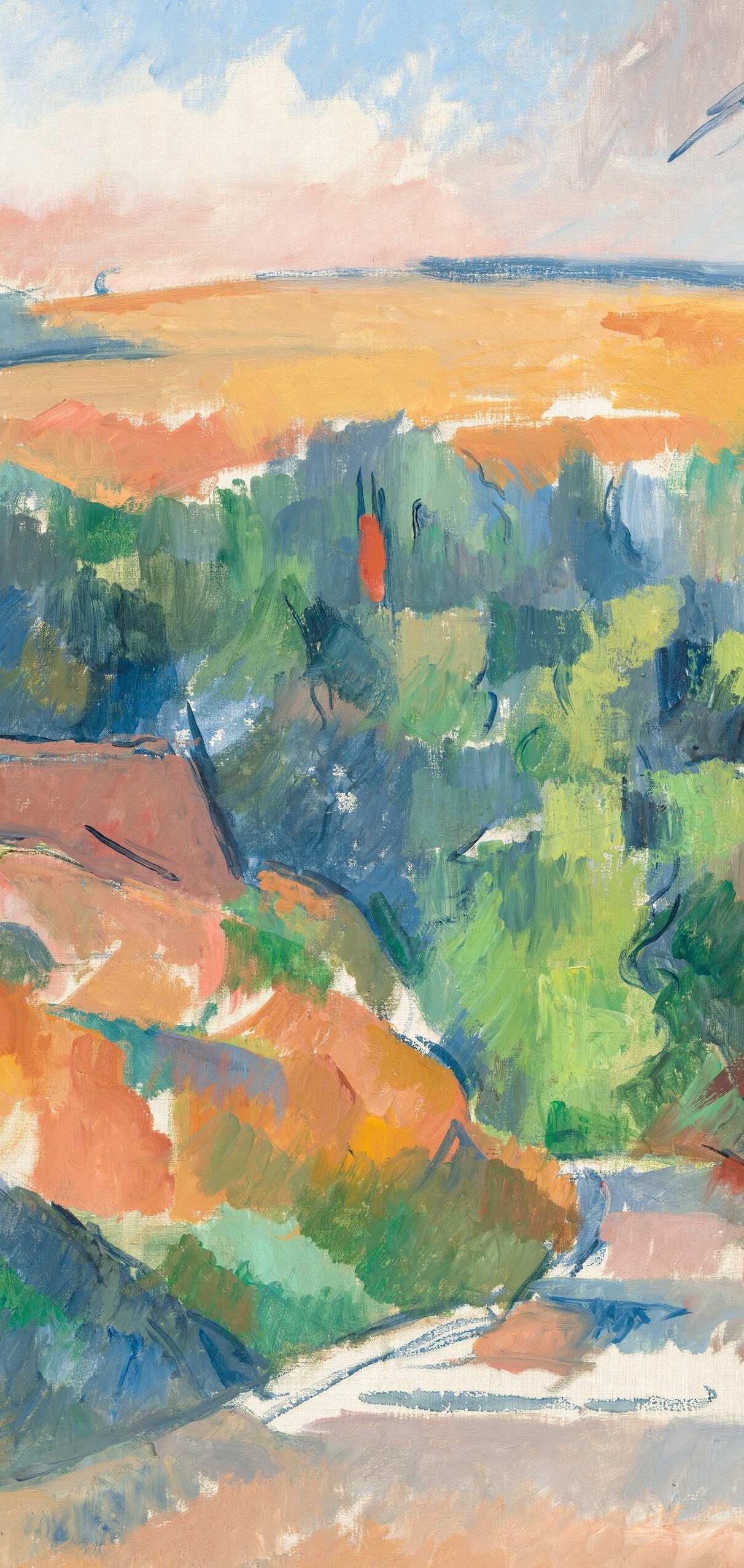
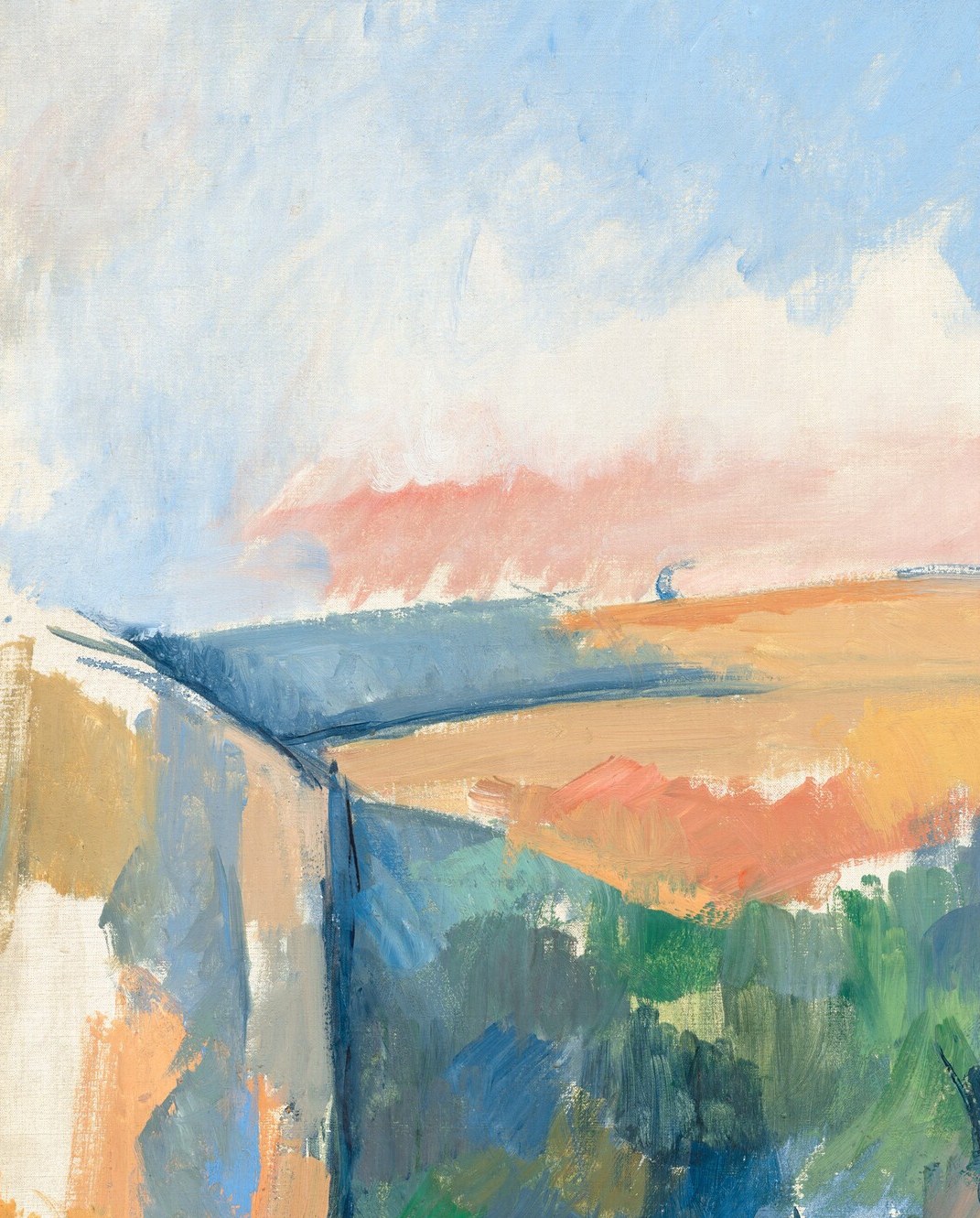
Look at the road surface. Those short, parallel strokes of ochre and beige don't just describe packed earth, they construct it, stroke by stroke, the way a mason lays stone. Then move up to the sunlit rock face on the left. Each facet of warm terracotta is its own colour-plane, stacked diagonally. The blue shadow on the road edge is painted in cool lavender, not brown, keeping the whole palette vibrating with light.
By 1903, Cézanne was in his sixties, working slowly and alone in Provence. He had exhibited with the Impressionists decades earlier but had long since moved beyond their shimmering surfaces. His goal now was something harder: to make paint feel solid, to give a tree trunk or a hillside the architectural weight he believed nature possessed. He famously said that all forms in nature could be reduced to the cylinder, the sphere, and the cone.
This painting had a direct line to Cubism. Braque and Picasso saw Cézanne's late work in Paris and recognised a new way of building a picture. When a young Picasso called him "my one and only master," this road, this tree, and these stacked strokes of colour were part of what he meant. What did you notice first in the painting?
Details
Transcript
This road bends and disappears. Cézanne built it with short parallel strokes. In 1903, he painted this near his home in Aix-en-Provence. He thought every shape could be reduced to the cylinder, the sphere, the cone. Watch his colour planes stack like masonry on the hillside. Even the blue shadow is luminous. A young Picasso called this man his one and only master.