The Western Ramparts at Aigues-Mortes by Bazille, Frédéric
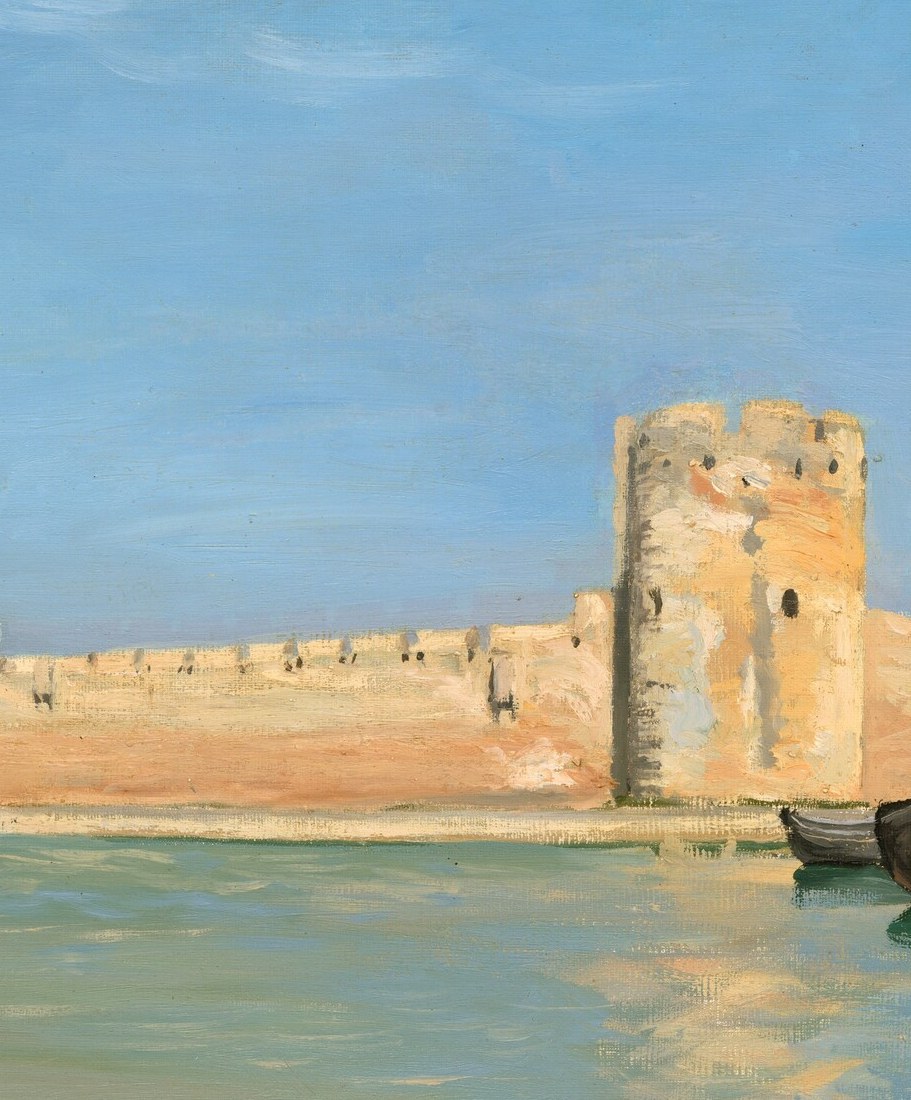
This is Frédéric Bazille's "The Western Ramparts at Aigues-Mortes," painted in 1867 and now in the National Gallery of Art in Washington, D.C. It is a landscape that knows something you don't at first glance: the dominant stone tower at the right edge of the ramparts is the Tower of Constance, which for decades served as a prison for Huguenot women who refused to renounce their Protestant faith.
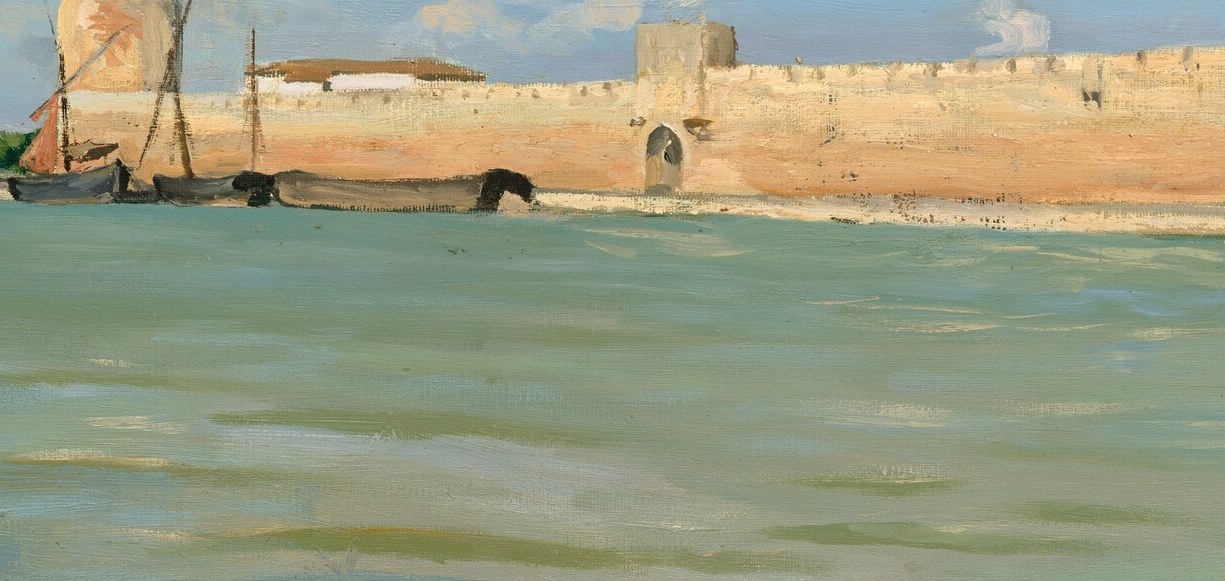
The painting holds all this history in perfect stillness. The moored boat in the foreground is a working commercial vessel, grounding a medieval fortress in the living 19th-century economy of the Camargue. The pale, mirror-flat water and the ghostly reflection of the ramparts double the mass of the stone. Bazille hides active maritime industry in plain sight: a slender mast or crane rises just above the boat, easy to miss across the wide canvas, but proof that these ruins were still in use.
Bazille was 26 when he painted this. He came from a wealthy Protestant family in Montpellier, not far from Aigues-Mortes, and he painted it outdoors, in the direct observational manner that aligned him with the emerging Impressionists. He never lived to see the movement take hold. In November 1870, three years after completing this work, he was killed in action during the Franco-Prussian War at the age of 28.
A young man painted a prison tower in still water, and the painting outlived him by a century and a half. The light that floods the scene is a Saturday-afternoon Mediterranean light, utterly serene. The history it contains is not.
Details



Transcript
It looks like a peaceful afternoon on the canal. But that stone tower on the right was a prison. The Tower of Constance. Huguenot women were held here for decades. A working boat rests at the base of a medieval prison wall. The painter, Frédéric Bazille, was 26. He died in the Franco-Prussian War. Three years after painting this quiet water.