The Repast of the Lion by Henri Rousseau
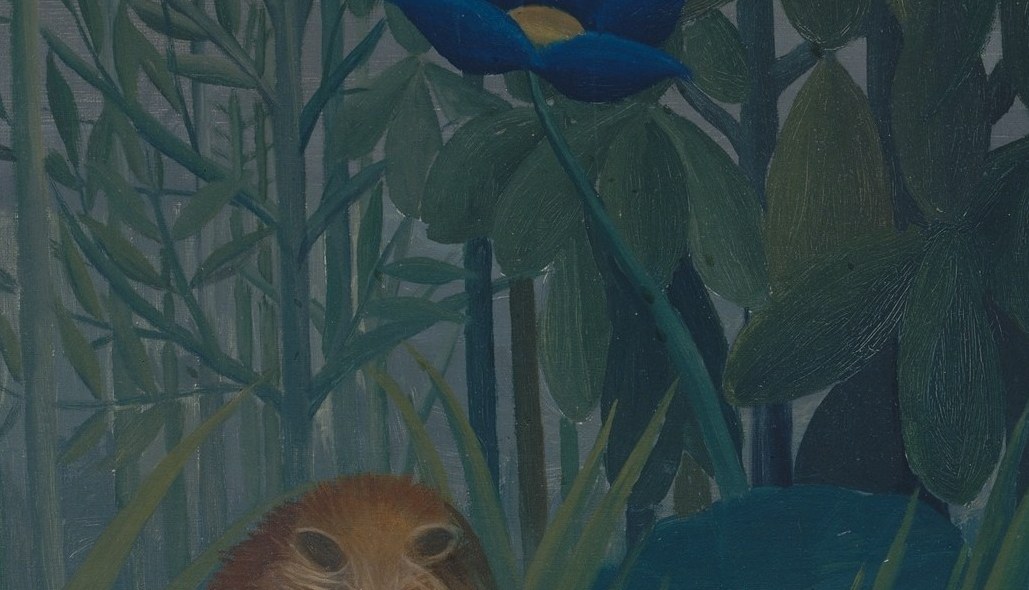
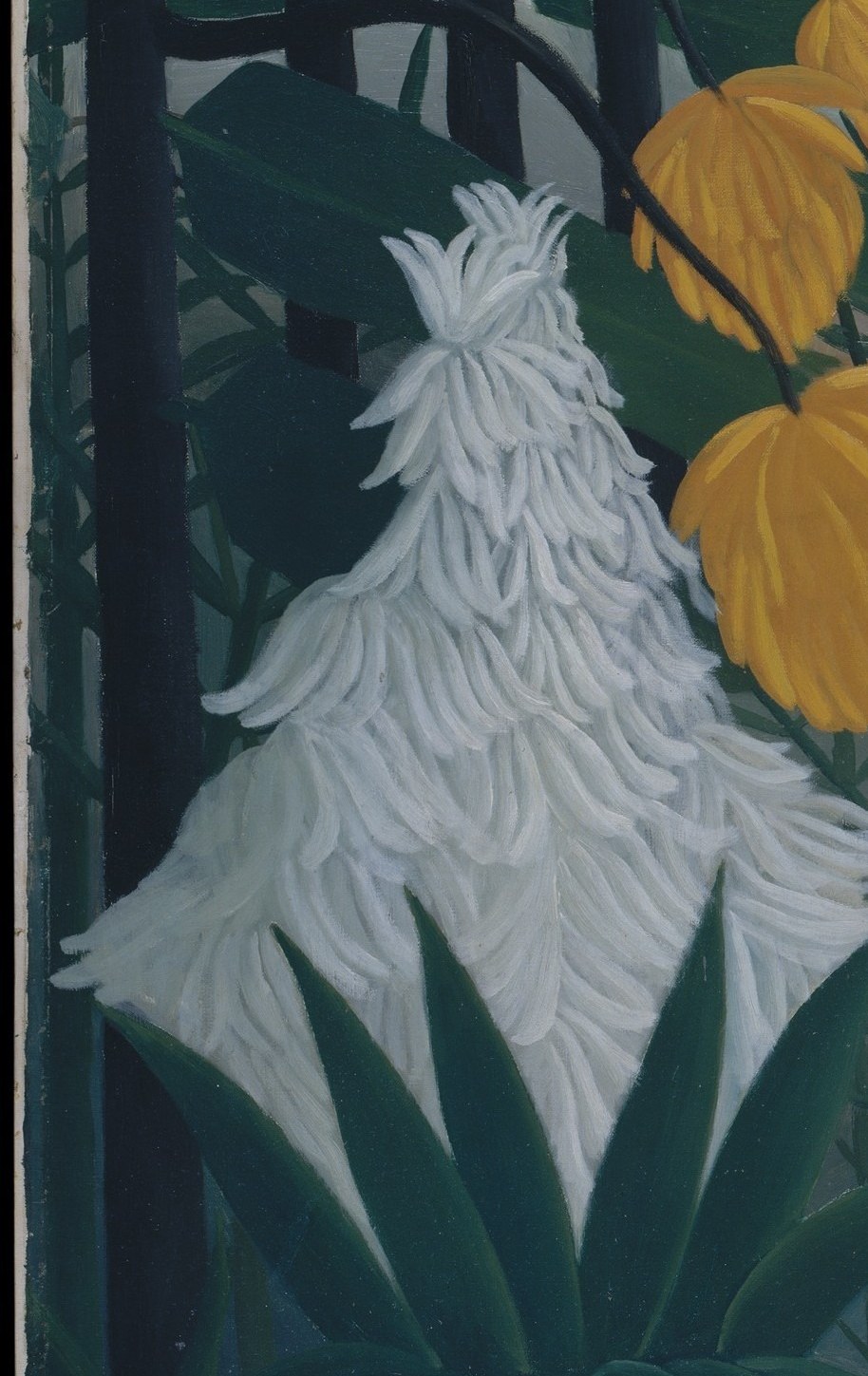
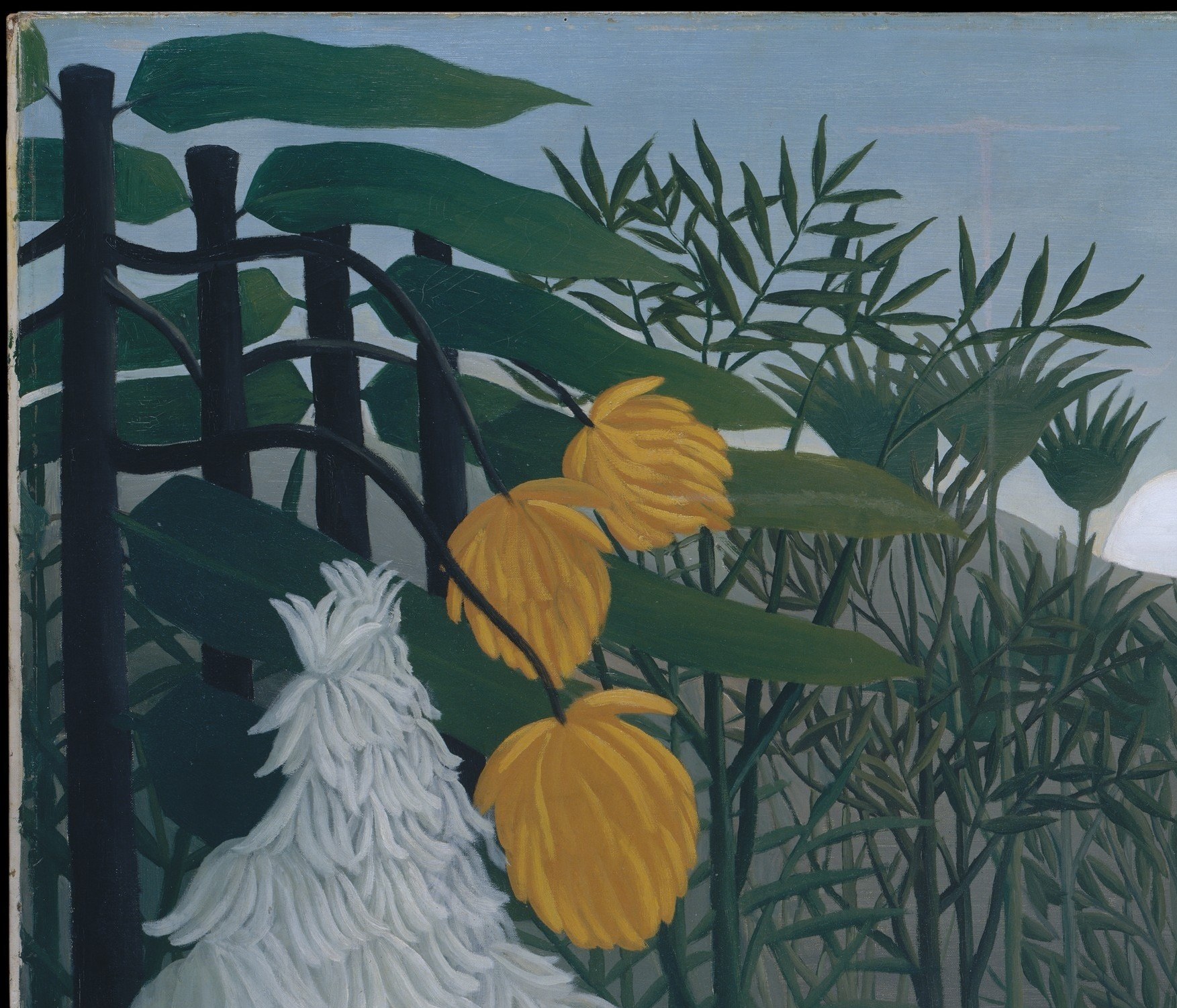
Henri Rousseau's The Repast of the Lion (1907) lives at the Metropolitan Museum of Art, but its soul is in the hothouses of Paris. The retired toll collector never left France. His jungles grew from careful study of the Jardin des Plantes botanical gardens, illustrated magazines, and a deep, untrained imagination.
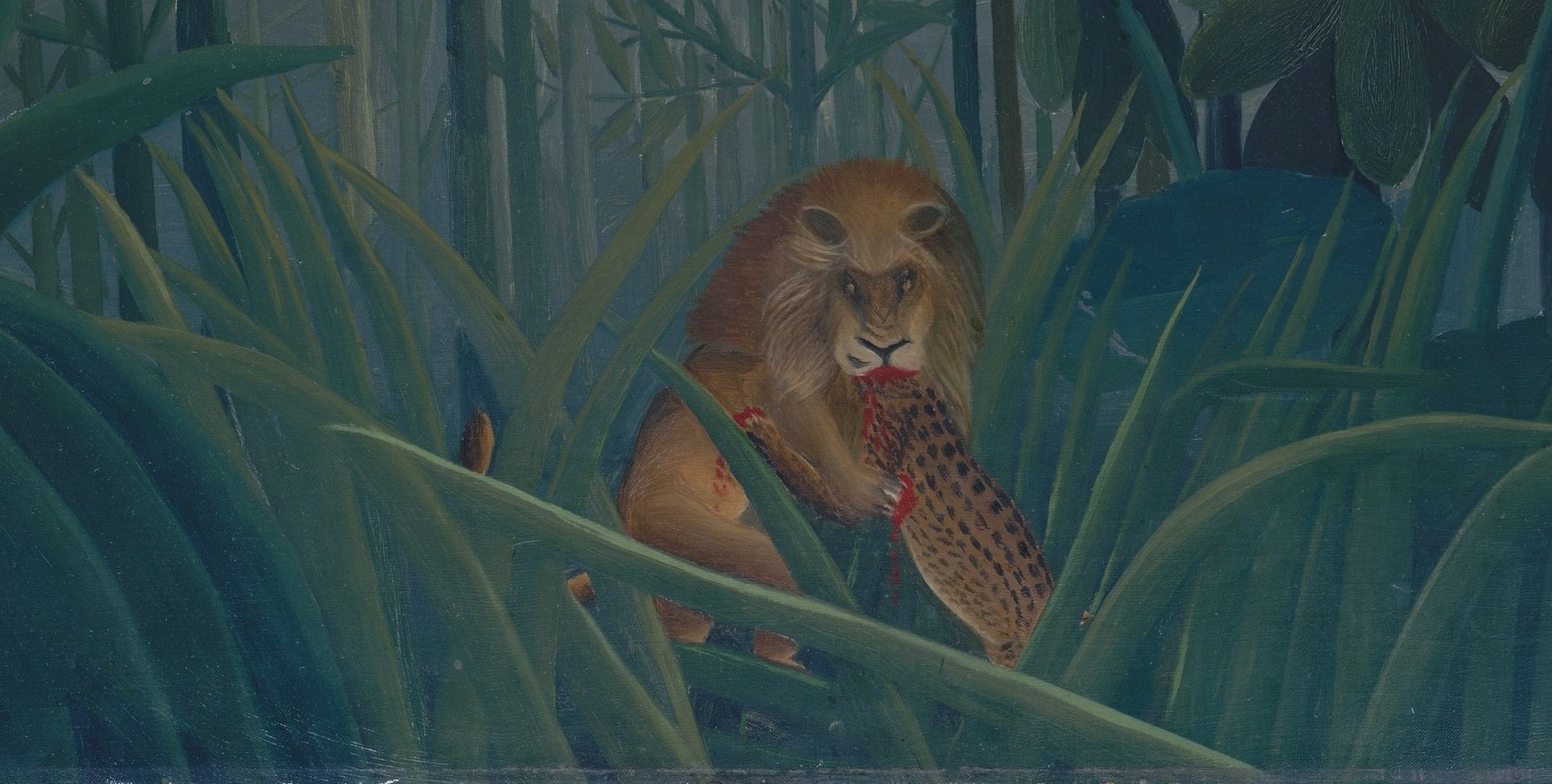
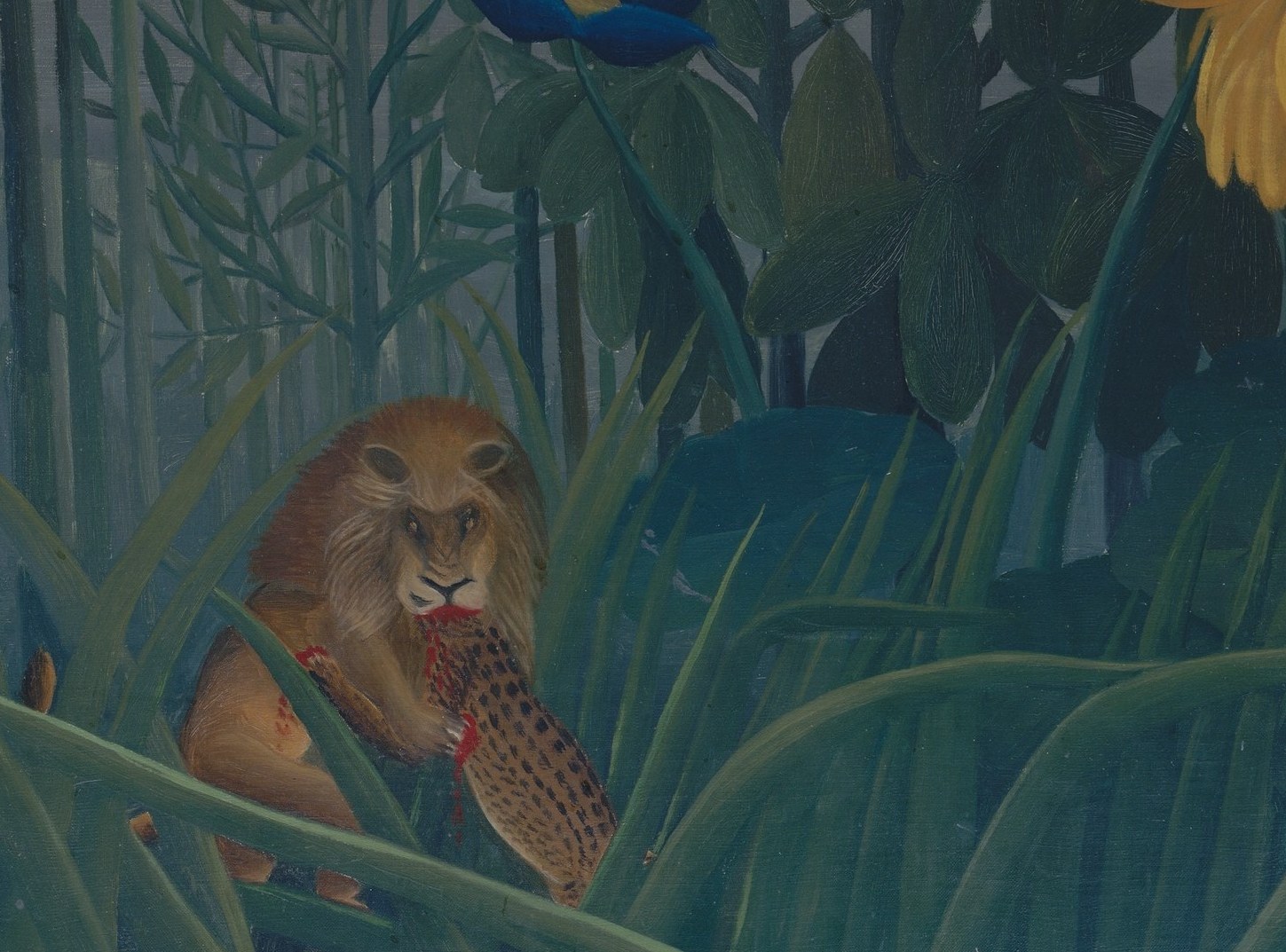
Look at how the kill disappears. The prey beneath the lion is flattened, almost pressed into the foliage like a botanical specimen. Rousseau outlines every leaf and grass blade with the same weight he gives to the predator. The lion's face is famously blank, not vicious, just there, and that vacancy makes the scene dreamlike instead of brutal.
Ridiculed at the official Salon, Rousseau found his champions in Picasso and the Parisian avant-garde. In 1908, Picasso hosted a legendary banquet in Rousseau's honor in his Montmartre studio. The jokes stopped being about him and started being told with him. A generation that was dismantling perspective saw his flat, decorative world as prophecy.
He died two years after this painting, a customs officer buried in a pauper's grave. Constantin Brâncuși would later carve the epitaph. The lions he painted still watch us, their faces as unreadable as the jungle he chose to imagine.
Details
Transcript
He painted this for the 1907 Salon d'Automne. The critics laughed. He was a retired toll collector. But look at the prey. It is flattened into the leaves. The feeding lion has the face of a stuffed toy. Violence becomes a pattern. A floral arrangement. Picasso saw this flatness and threw a banquet for Rousseau. A young avant-garde crowned the customs officer their king.