Mary Barry by Stuart, Gilbert
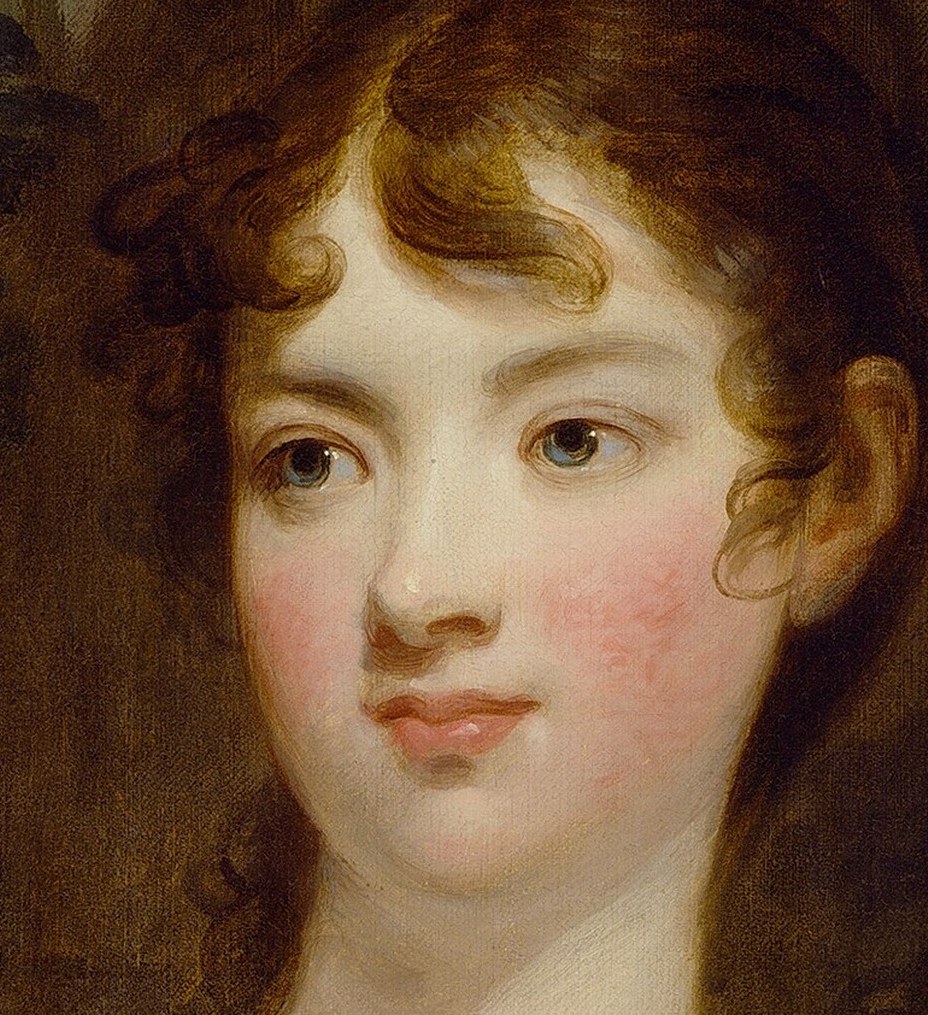
Gilbert Stuart's 1804 portrait of Mary Barry is a beautiful example of early American portraiture, housed in a distinguished collection. Look closely at Mary Barry herself: her serene expression, her elegant updo, and the delicate ruffled neckline of her white dress. Stuart was masterful at capturing the essence of his sitters, and this portrait is no exception.
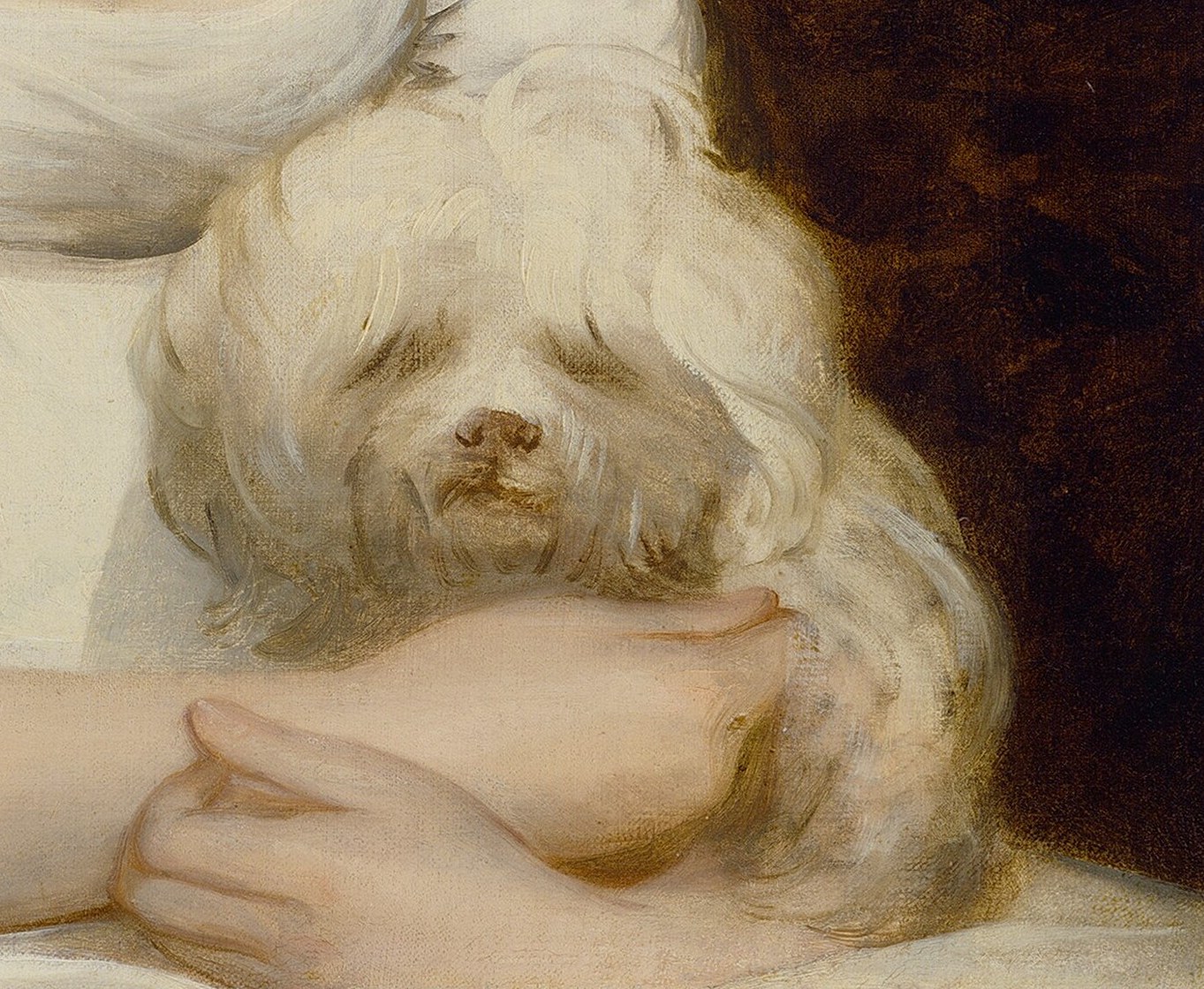
Then, turn your attention to the small white dog she cradles. While seemingly a simple detail, dogs in 19th-century portraits often carried symbolic weight. A small, affectionate dog like this one typically represented companionship, loyalty, and domestic virtue.
Stuart, an American painter, created this work during a prolific period of his career. His portraits, including many of founding fathers, are celebrated for their psychological depth and refined technique. Here, the dog provides a subtle, intimate detail that enriches our understanding of Mary Barry's character and the societal values of her time. What other subtle clues do you notice in historical portraits?
Details
Transcript
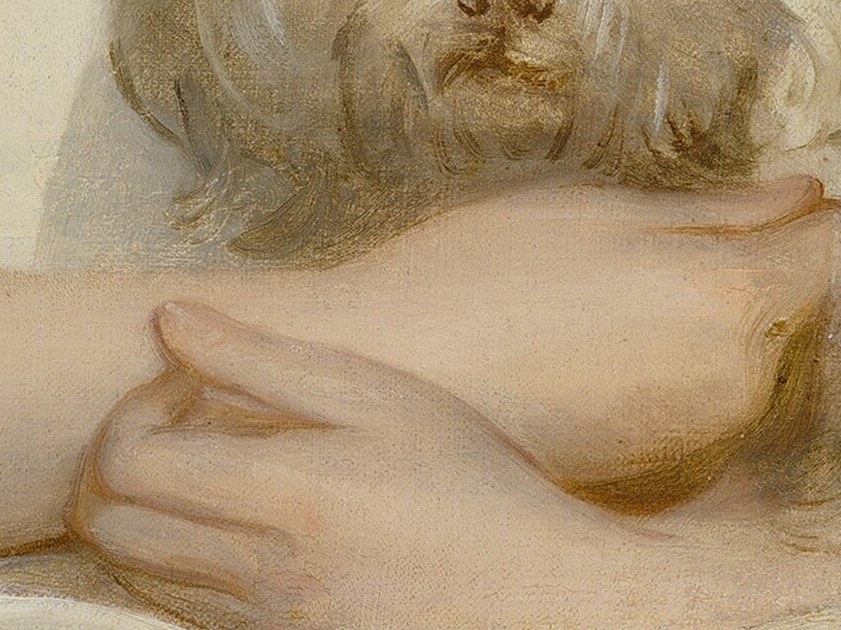
This is Mary Barry, painted in 1804. The artist, Gilbert Stuart, was known for his portraits. Notice her small white dog, cradled gently in her hands. Her hands show tenderness, the dog, companionship. In portraits of the era, dogs often had specific meanings. A small dog like this suggests fidelity and domesticity. It's a subtle clue to her character, embedded in the painting.