Château Noir by Cezanne, Paul
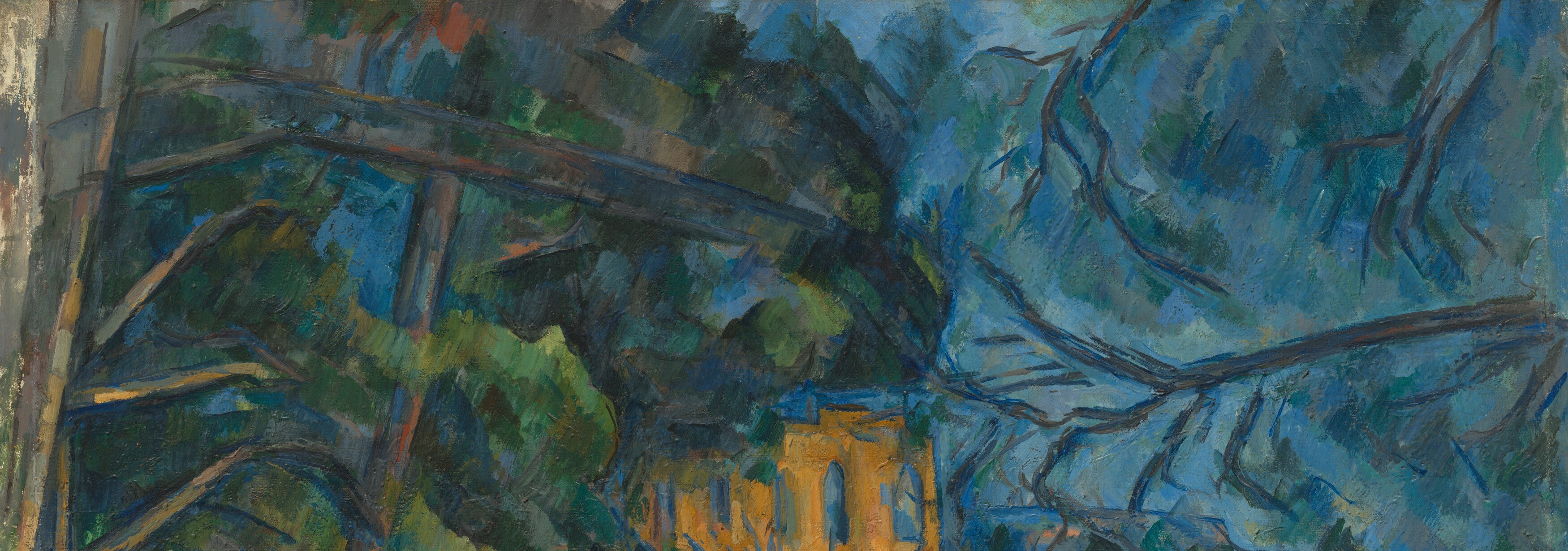
This is Paul Cézanne's 'Château Noir,' painted around 1904 and now in the collection of the Museum of Modern Art. The painting depicts a Neo-Gothic mansion near Aix-en-Provence that Cézanne rented as a studio, but what he painted is less a building than a building being devoured. The dark stone walls seem to emerge from and dissolve back into the dense forest, an effect Cézanne returned to dozens of times, as if the subject had not quite finished revealing itself to him.
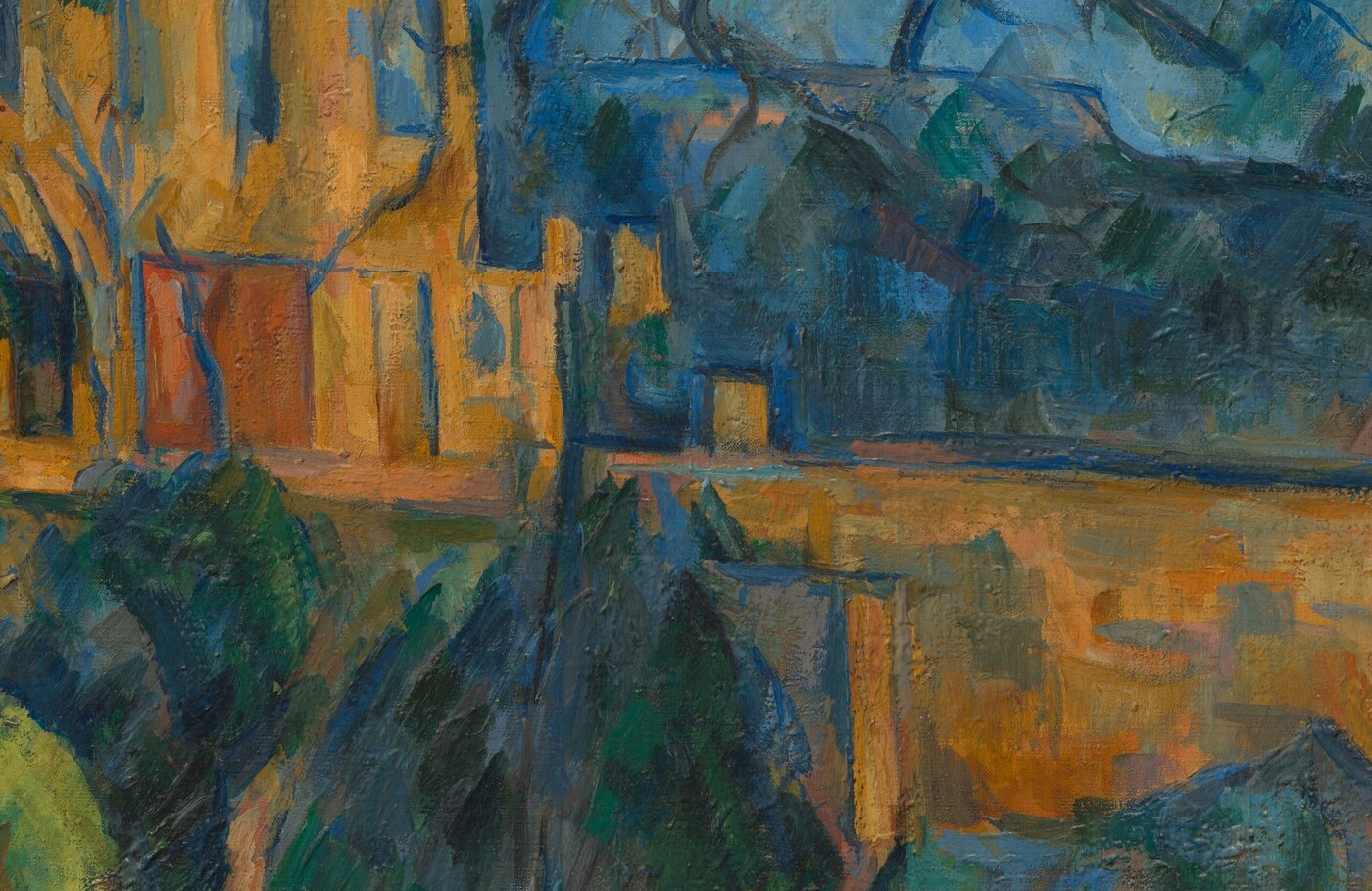
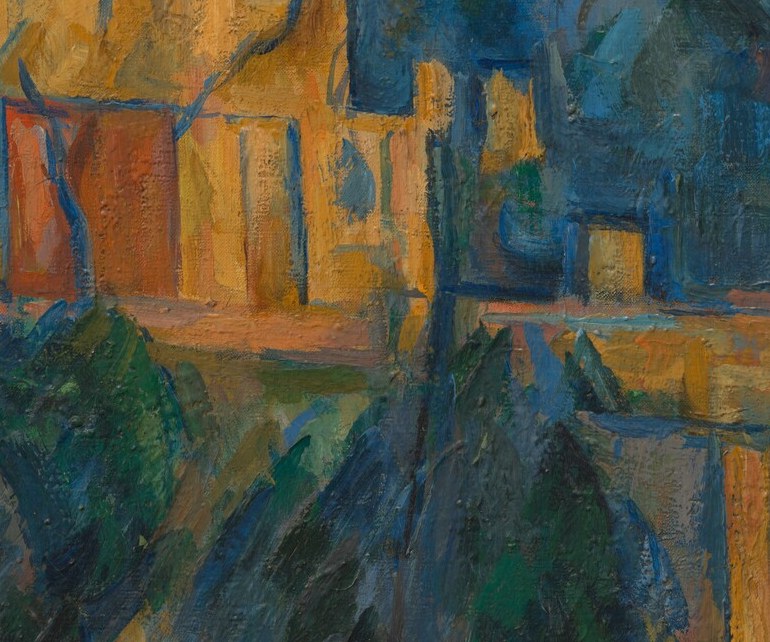
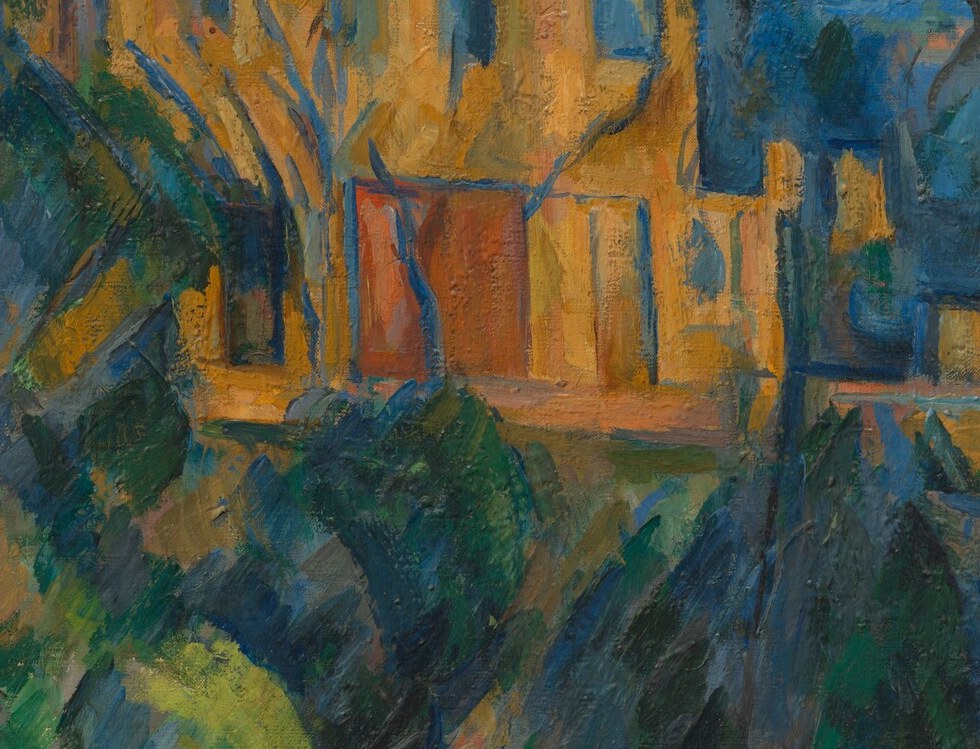
Look first at the windows. Those Gothic arches, rendered as black voids, give the structure its name, 'noir.' They read not as empty rooms but as eyes, a watchful presence in the middle of an otherwise unpopulated landscape. The whole building is encircled: a massive tree trunk blocks the left, a dense canopy presses down from above, shadowy ground seals the bottom edge. There is no path in and no clear way out.
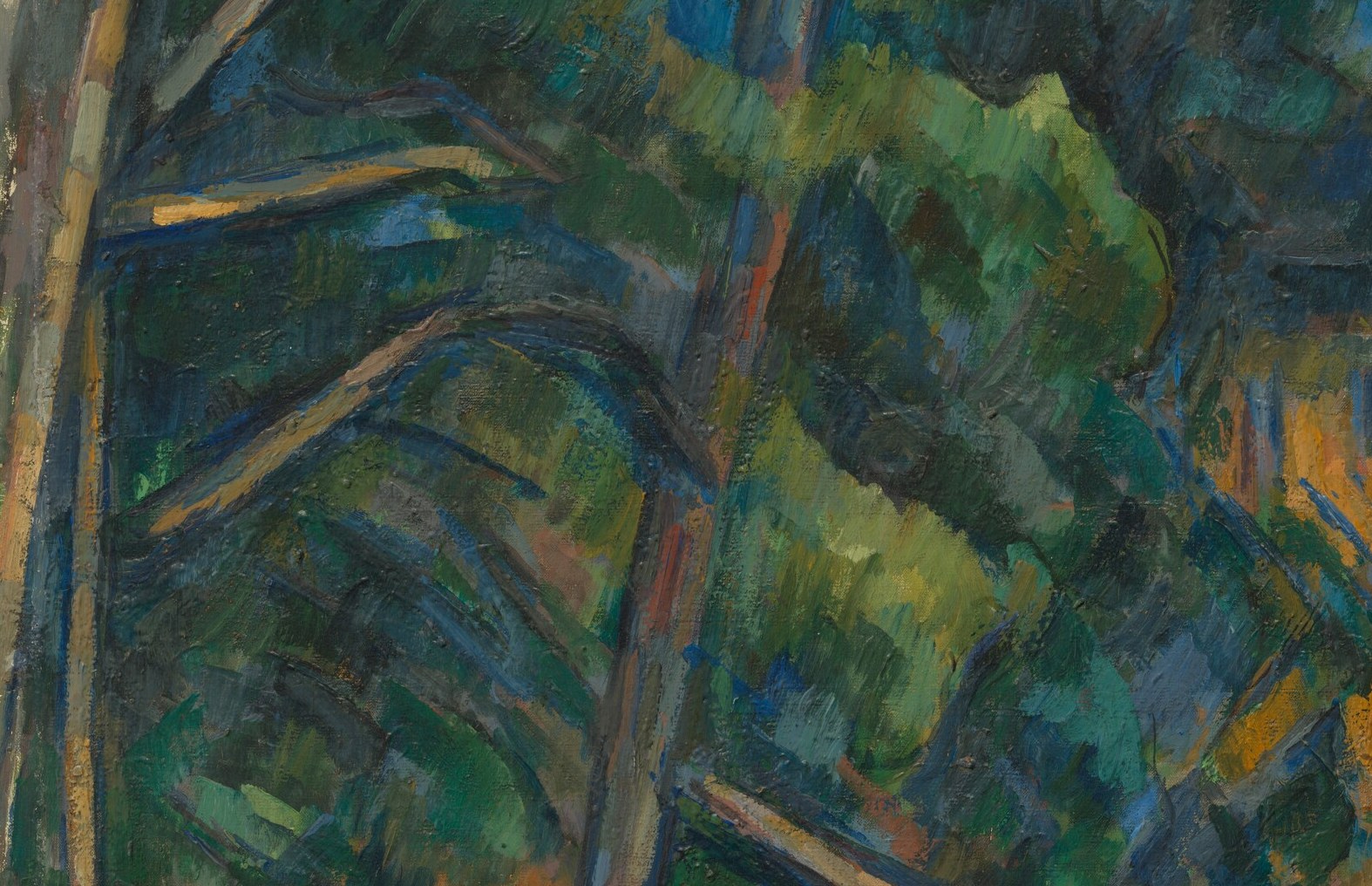
Then look at the border where the blue-green foliage meets the ochre stone wall. This is where the painting does something radical. Cézanne deliberately omits the contour line that would separate leaf from masonry. The green bleeds into the orange; the branch becomes indistinguishable from the building. He called this 'passage', a technique for showing that objects in space do not end at hard edges but flow into the air and light around them.
The brushwork carries this further. Those short, diagonal, hatched strokes across the foliage are not Impressionist dabs of color. Each mark is angled like a tiny facet, building volume through direction rather than outline. When Braque and Picasso saw this, they took the missing boundary line and the faceted surface and pushed them into full abstraction. 'Château Noir' is, in a very real sense, where Cubism begins.
Next time you stand before a landscape, ask yourself: where does the tree stop and the sky start?
Details
Transcript
A house in the south of France, 1904. Cézanne painted this same dark château over and over. Those black windows read like eyes watching from the shadows. Now look at the border between the branch and the stone wall. There is no line. The blue-green of the leaf bleeds directly into the ochre of the wall. Cézanne called this his 'passage' technique, dissolving the boundary between solid and air. Braque and Picasso would take this missing line and turn it into Cubism.