Madonna and Child by Carpaccio, Vittore
View the artwork: Madonna and Child →
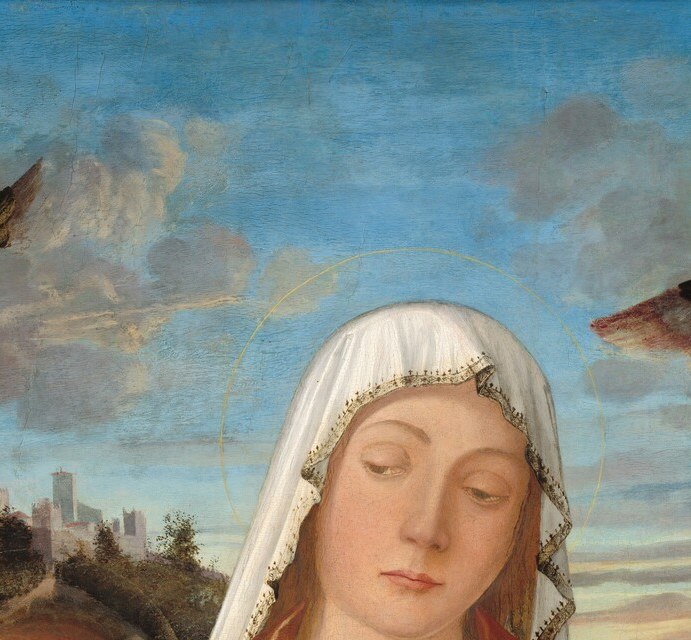
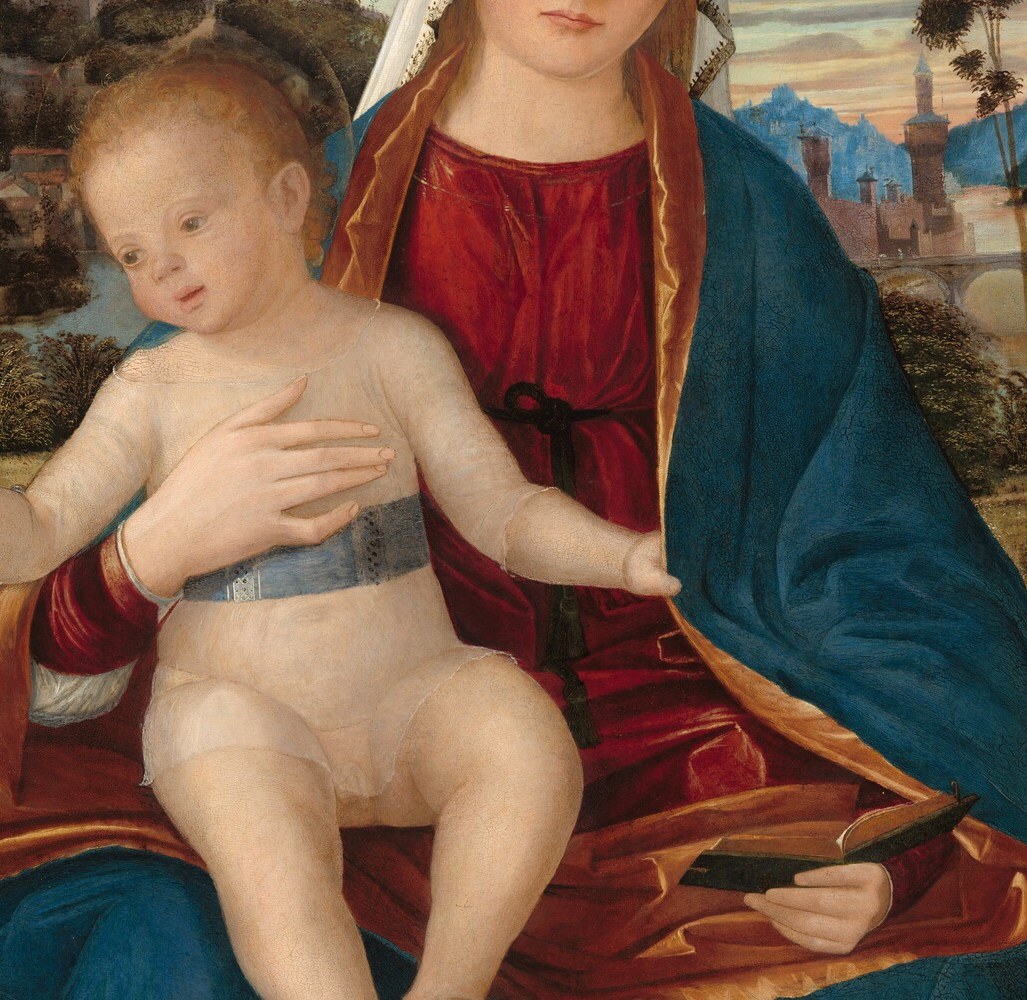
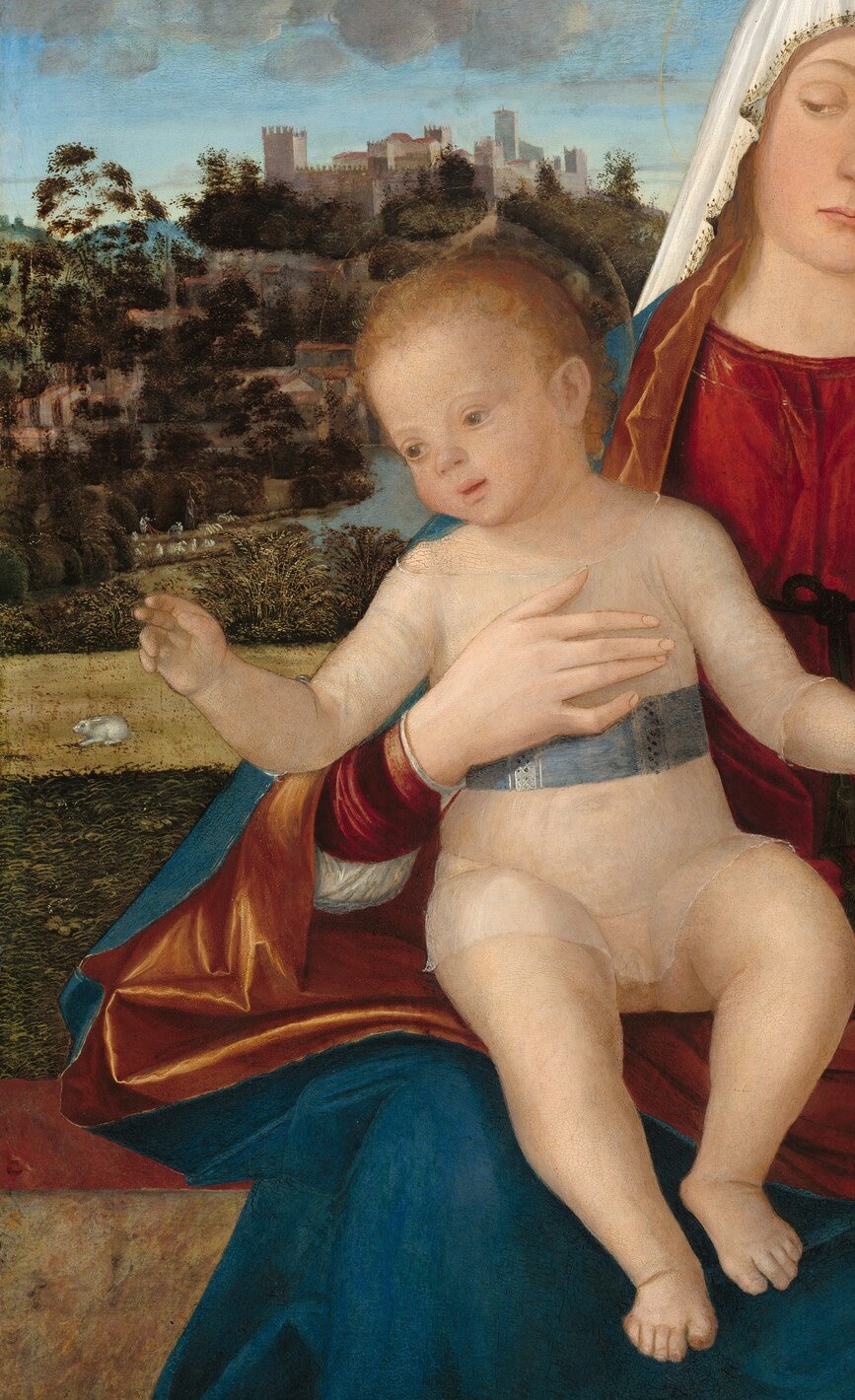
Vittore Carpaccio's 'Madonna and Child' is a study in quiet foresight. Painted in Venice around 1505/1510, it shows a mother and child in an idyllic landscape, but nearly every detail points toward loss. The goldfinch on the parapet was a medieval symbol of the Passion, a reminder of the suffering to come.
Look at the space between the Virgin's hands and her son. She holds him without grasping, her fingers a protective cage that never fully closes. His gaze, direct and unnervingly still, meets yours while his hand lifts a blessing he does not yet comprehend. The peaceful river behind them feels borrowed.
The painting once belonged to a lawyer in Marseilles before being restored in Italy and acquired by the Kress Foundation in 1954. It entered the National Gallery of Art in Washington as a gift in 1961, where it remains. In 2022, it returned to Venice for the first major Carpaccio retrospective outside his native city.
Some paintings ask to be admired. This one asks you to sit with a mother who knows.
#arthistory #renaissance #carpaccio
Details
Transcript
Her face is a pool of calm. Notice how her hands do not quite touch him. On the parapet, a goldfinch rests. A symbol of the suffering he will one day endure. He already meets your eyes, unblinking. His hand is raised in a blessing he is too young to fully give. Behind them, a river winds through a peaceful world. Carpaccio painted this quiet moment around 1505, knowing exactly what lay ahead in the story.