Artwork
Madonna and Child
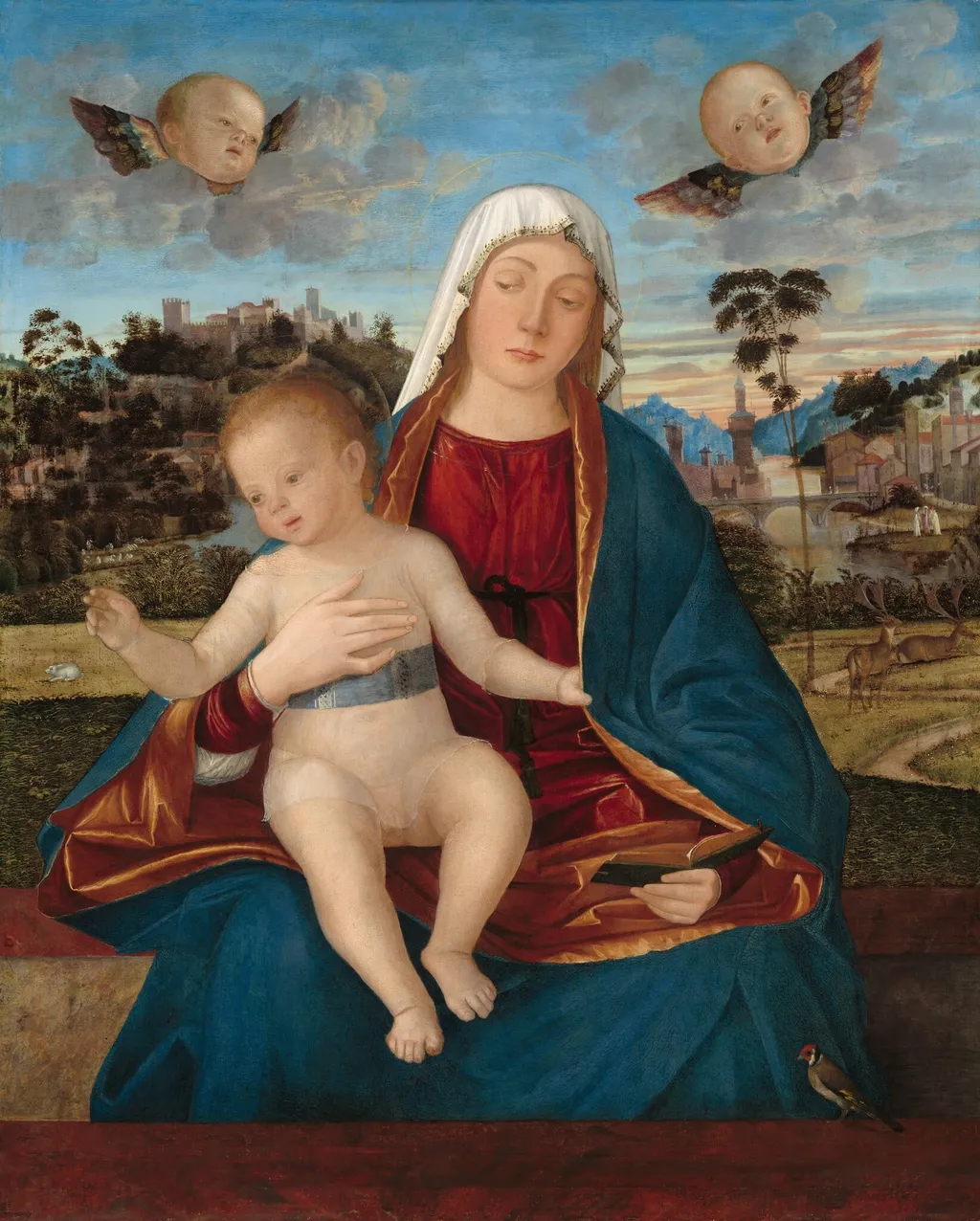
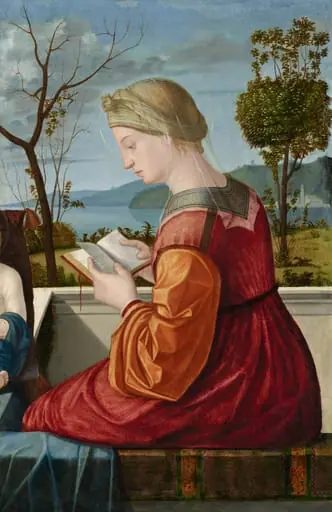
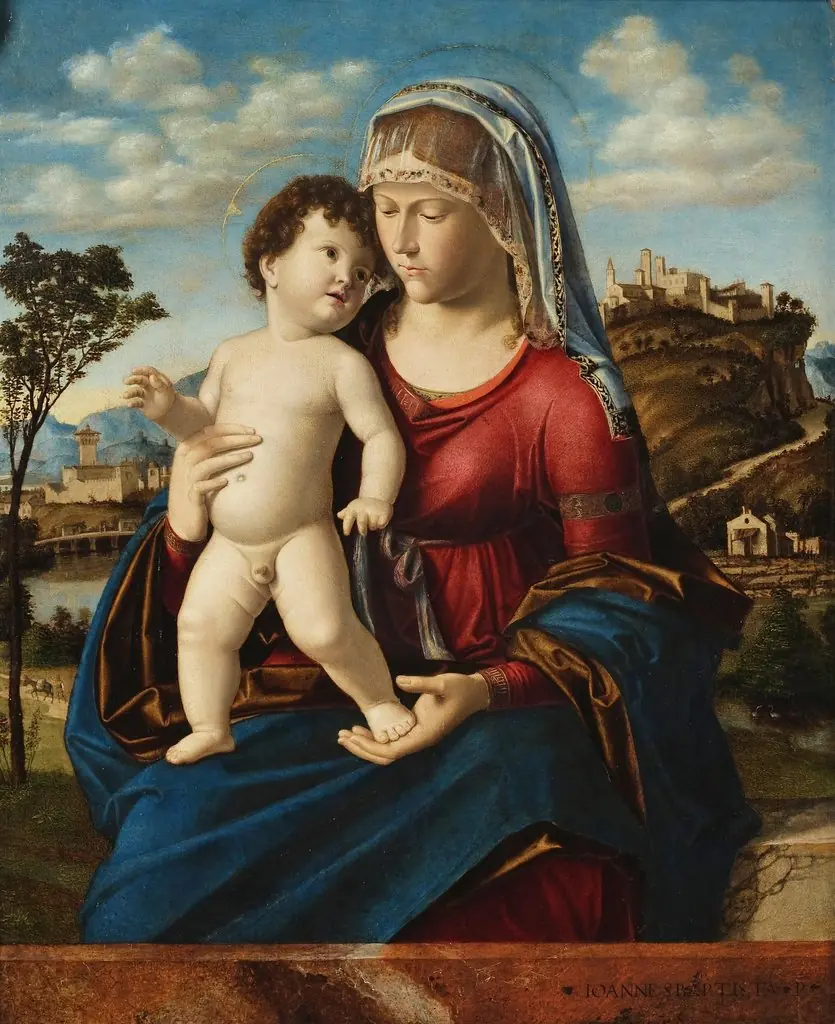
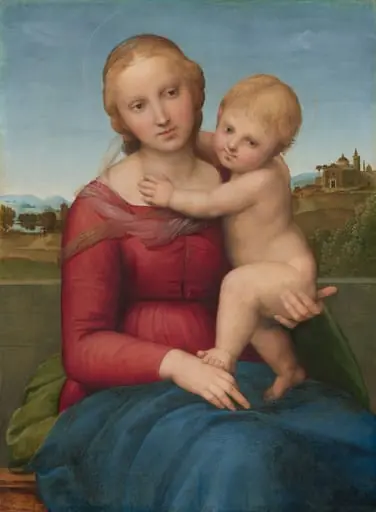
Madonna and Child is a tempera painting by the High Renaissance artist Vittore Carpaccio. It dates from 1508 and is held in the collection of the National Gallery of Art.
About this work
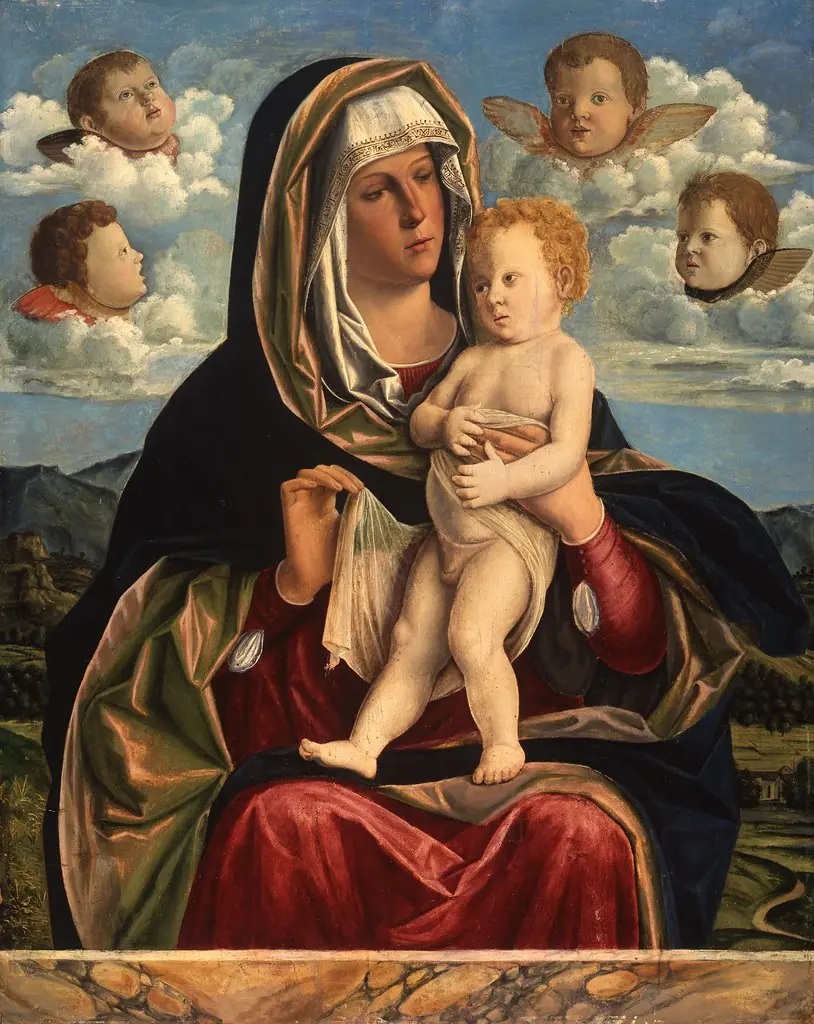
A goldfinch perches on the parapet beneath the Virgin and Christ Child in Vittore Carpaccio's panel at the National Gallery of Art, a quiet hint at the Passion. Painted on poplar, it places Mary and the seated infant below two winged putto heads, with a far-reaching Venetian landscape behind. The panel entered the museum in 1961 with the Samuel H. Kress Collection.
Subject & Meaning
The composition includes a bird (likely a finch, alluding to the Passion), a book, and a parapet, each laden with conventional religious symbolism.
The painting depicts the Virgin Mary holding the Christ Child, a standard subject in Christian art. The composition includes a bird (likely a finch, alluding to the Passion), a book, and a parapet, each laden with conventional religious symbolism. The book may represent the Scriptures or the Word made flesh, while the parapet separates the sacred figures from the viewer's space, emphasizing their divine nature. These elements collectively reinforce the work's role as a devotional image centered on the Madonna and Child.
Technique & Style
Executed in 1508, the painting uses oil on a poplar panel support. Its condition was addressed by a restoration in Italy around 1952 by G. Marchig. Dimensions measure 84.8 × 68.3 cm. Stylistically, the composition presents the Virgin and Child behind a parapet, accompanied by a bird and an open book, recurring formal motifs in Carpaccio's religious imagery.
History & Provenance
Vittore Carpaccio painted the Madonna and Child in 1508. The painting's early provenance includes ownership by a Mr. Nathan, a lawyer and Bâtonnier de l'Ordre des Avocats in Marseilles, as documented in a 1955 letter. It later passed to the New York gallery Wildenstein & Co., which sold it in February 1954 to the Samuel H. Kress Foundation.
The foundation gifted the work to the National Gallery of Art, Washington, D.C., in 1961, where it belongs to the Samuel H. Kress Collection (accession 1961.9.8).
Overview
Vittore Carpaccio's "Madonna and Child," an oil painting on poplar panel from around 1505-1510, depicts the Virgin Mary cradling the Christ Child. The figures are set against an expansive, serene landscape, with two cherubic heads hovering above. A low parapet in the foreground features a goldfinch, adding a symbolic element to this devotional work. The painting measures 84.8 by 68.3 centimeters.
Context
The work has been included in significant exhibitions, underscoring its art historical importance. Most recently, it was featured as number 46 in the major retrospective "Vittore Carpaccio: Master Storyteller of Renaissance Venice," held at the National Gallery of Art from 2022 to 2023. This inclusion highlights the painting's role in understanding Carpaccio's broader artistic output and his narrative approach during the Venetian Renaissance.
Own this work as a print
Artist & collection

Artist
Vittore Carpaccio (UK: kar-PATCH-ee-oh, US: -PAHTCH-, Italian: ; c. 1460/65 – c. 1525) was an Italian painter of the Venetian school who studied under Gentile Bellini. Carpaccio was largely influenced by the style of…

 Studied in the Renaissance Florence course