La Promenade by Pierre-Auguste Renoir
Pierre-Auguste Renoir's "La Promenade," 1870, housed at the Art Institute of Chicago, was considered scandalous in its time for its subtle echo of Rococo sensuality.
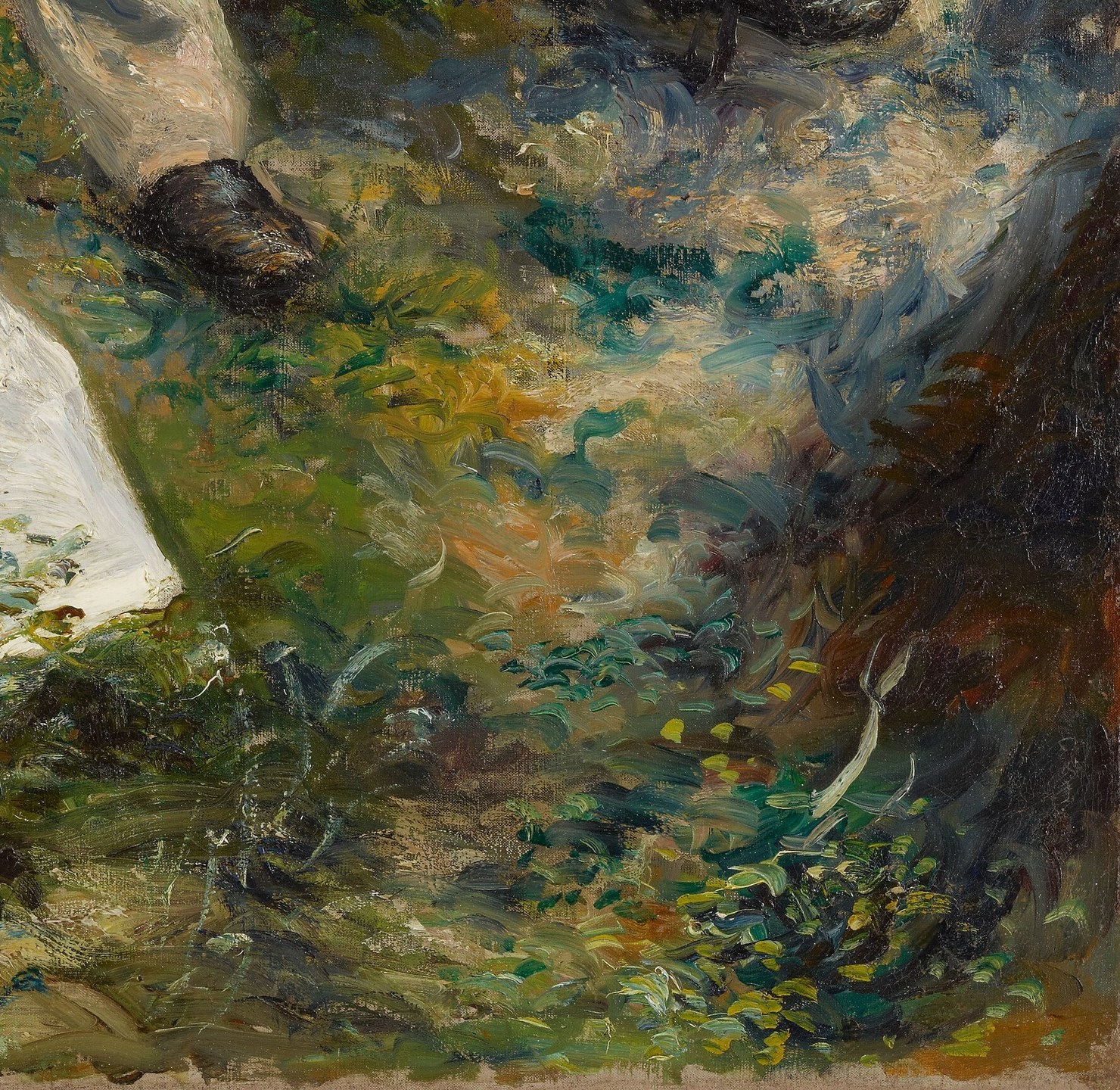
Look at the woman's fashionable hat adorned with flowers and the way Renoir captures the dappled light on her white dress and the path. Their linked hands suggest intimacy, a common theme in 18th-century art.
Created during the Second Empire, Renoir consciously borrowed from Rococo artists like Fragonard and Watteau. This influence, combined with his burgeoning Impressionist style, resulted in a work that some found suggestive for its era, bridging historical romanticism with modern sensibilities.
Did Renoir intend to recreate the playful, sometimes risqué, atmosphere of Rococo paintings?
Details
Transcript
This couple strolls in dappled woodland light. Renoir painted this in 1870, with Monet nearby. Her flowers and white dress echo Rococo style. He copied Fragonard's sensual, sunlit scenes. Look at their linked hands, an intimate gesture. But Rococo scenes often held naughty secrets. This painting was considered too suggestive then.