Roses by Gogh, Vincent van

Vincent van Gogh painted "Roses" in May of 1890 while still a patient at the asylum of Saint-Paul-de-Mausole in Saint-Rémy-de-Provence. It is one of his most strikingly optimistic canvases, a sheer celebration of fresh red roses in a simple vase, now in the permanent collection of the National Gallery of Art in Washington, D.C.

Your instinct is to think of the familiar story: the torment, the ear, the suicide in July. But look at these flowers. The paint is so thickly applied, so sculpted onto the surface, that the petals feel physically alive. He didn't paint a pretty, polite bouquet. He built an eruption of vitality.

Van Gogh was preparing for the next chapter, planning his move to Auvers-sur-Oise to be closer to his brother Theo. This work and its companion piece, "Pink Roses," are a deliberate turn toward bright color and life-affirming subject matter. They express the hope he felt stepping toward a future he believed in.

He died from a gunshot wound two months after completing this canvas. The intensity of the joy in this painting doesn't erase the tragedy that followed. It makes it more real. Knowing what we know, how are we meant to read this happiness?

#arthistory #vincentvangogh #postimpressionism

Details
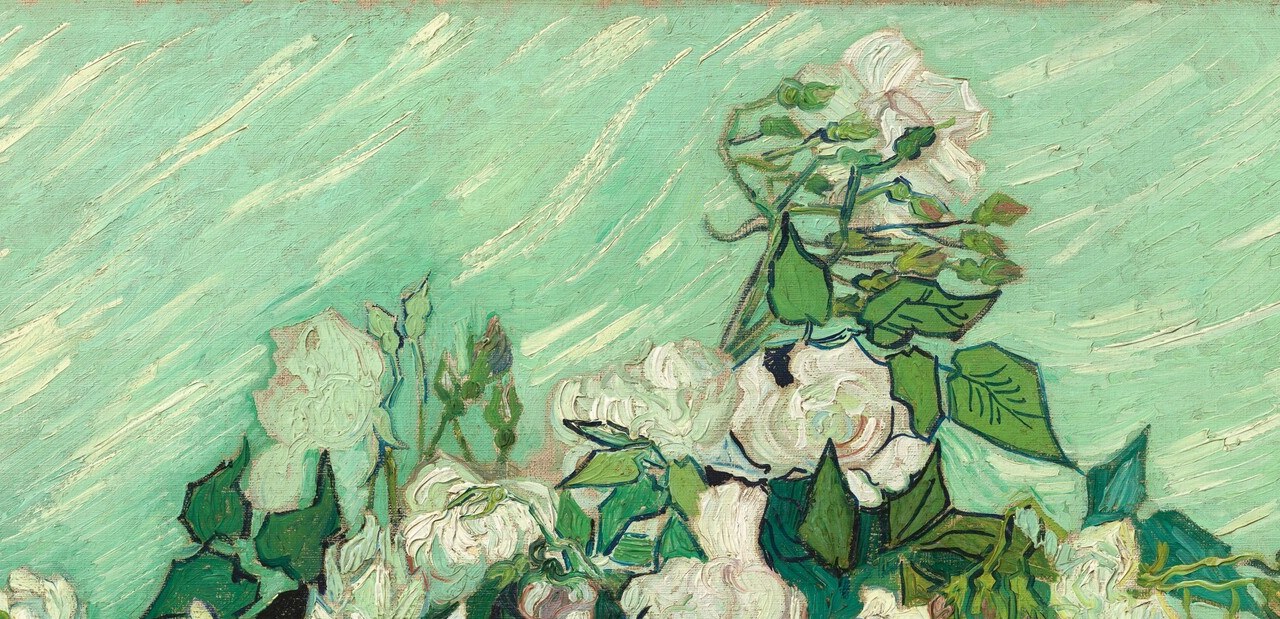
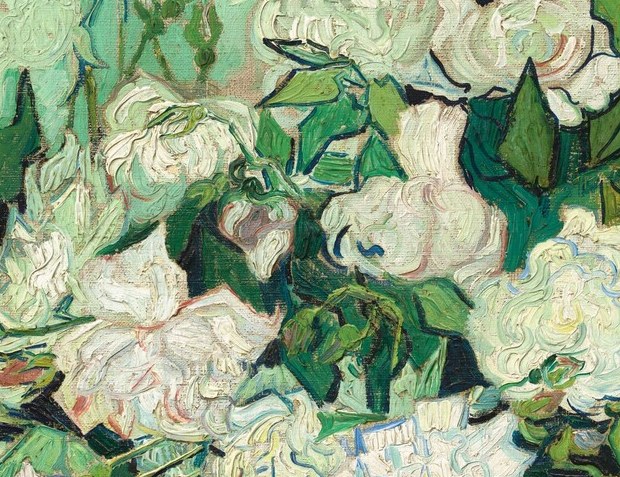
The painting's compositional apex , fully open blooms shoulder to shoulder, their layered petals showing Van Gogh's ability to describe softness through thick, directional impasto.
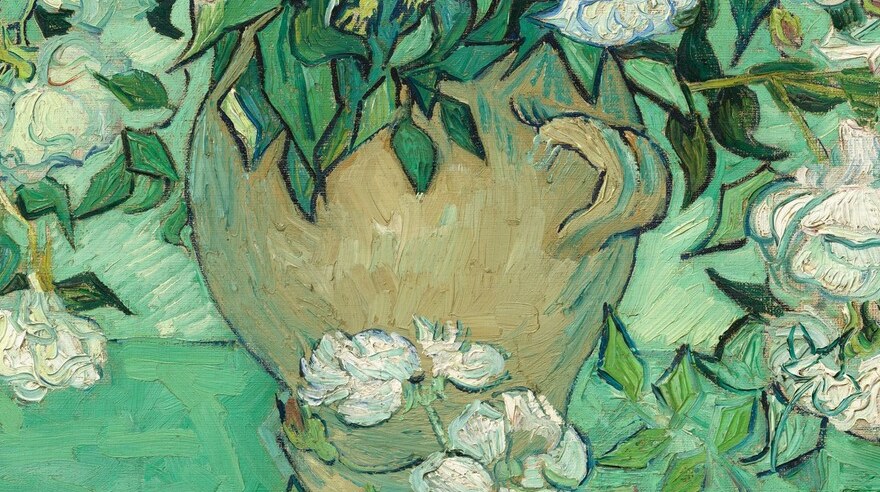
The humble, undecorated vessel is a deliberate counterpoint to the extravagance above , its warm ochre stroke-work sits quietly and grounds the composition.
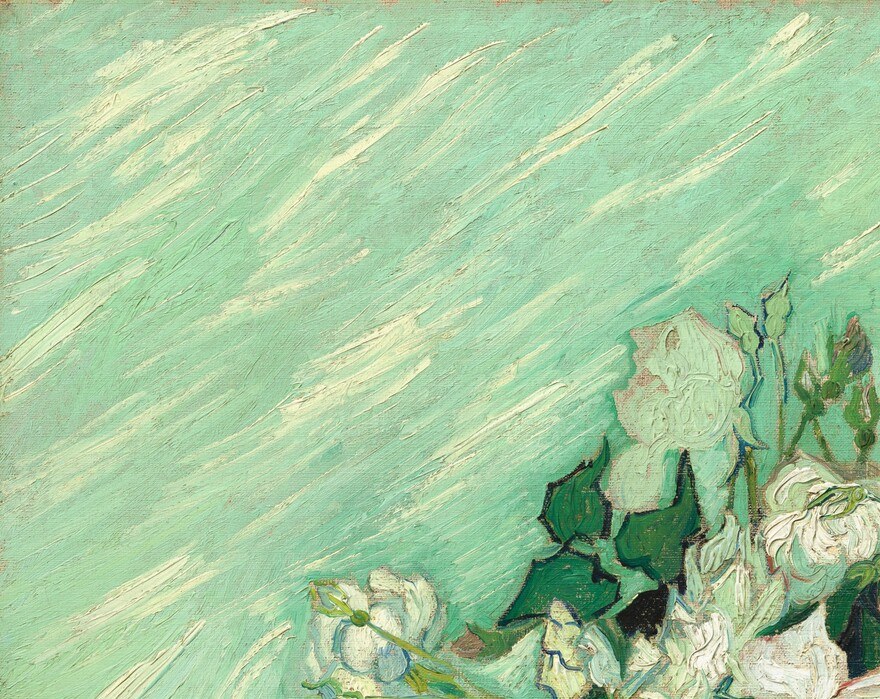
Van Gogh's signature woven-stroke background is most readable here , the strokes run in two intersecting directions creating a textile-like hatch that vibrates optically against the white flowers.
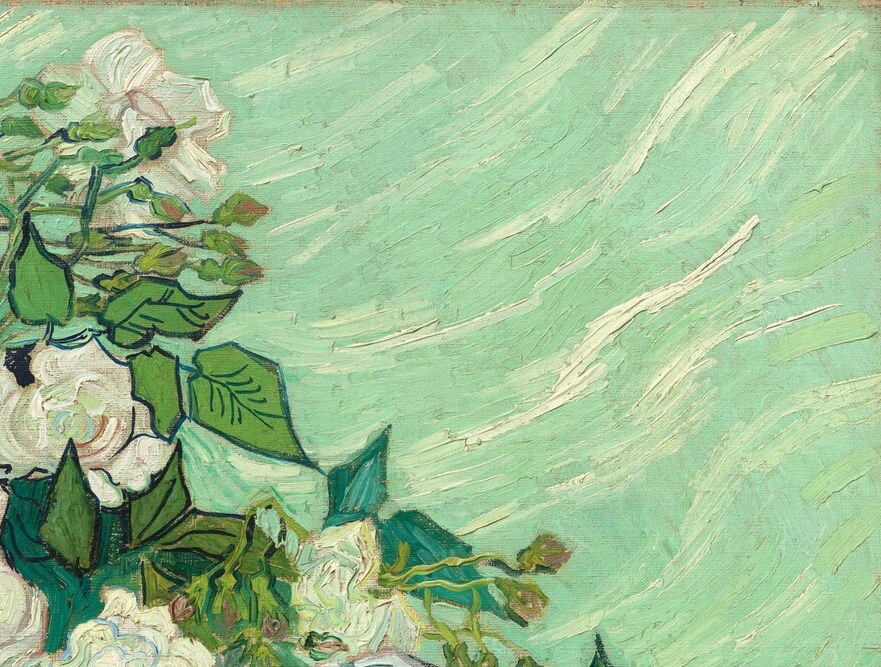
Same hatched technique as upper left but the green shifts slightly warmer , a subtle tonal modulation that suggests light source and prevents the background from reading as flat.
The most legible individual bloom; its concentric petal structure acts as an eye anchor and demonstrates Van Gogh's close observation of floral anatomy despite his reputation for expressive distortion.
Transcript

He painted these roses in May of 1890. He was about to leave the asylum behind. He filled the canvas with a reckless amount of paint. He sculpted the petals with thick, living strokes. The vase is barely there. Just a quiet, simple shape. He found this joy. Two months later, he was dead.