Artwork
Roses
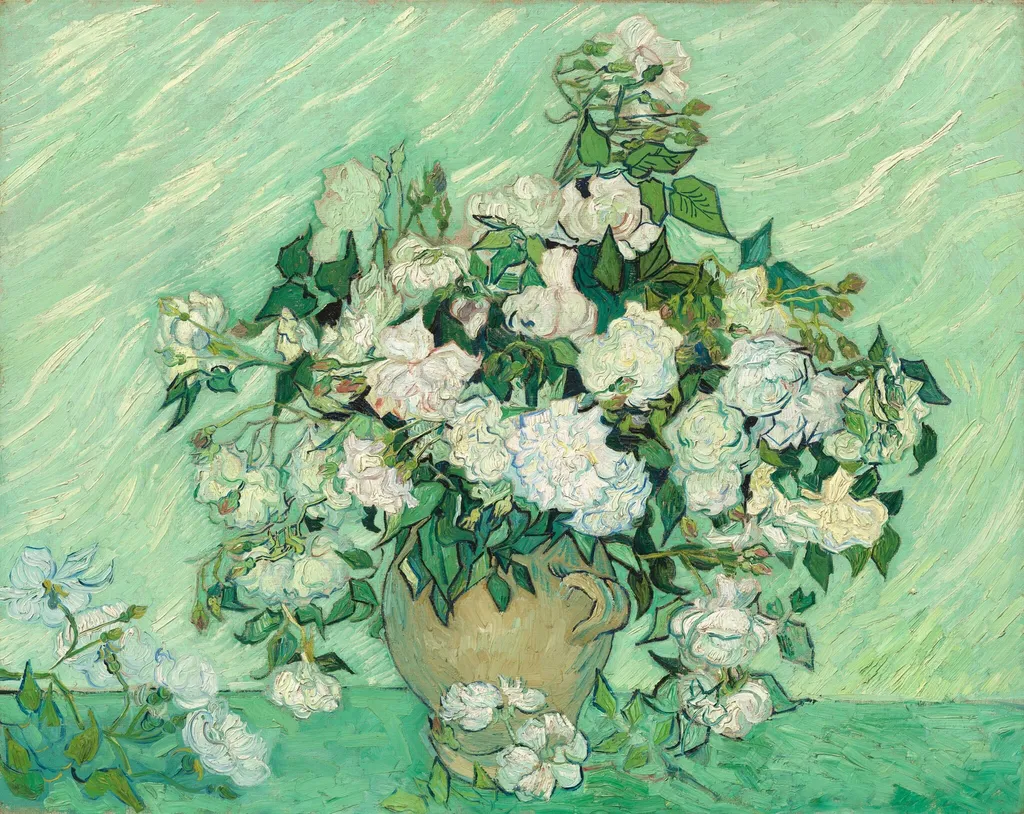
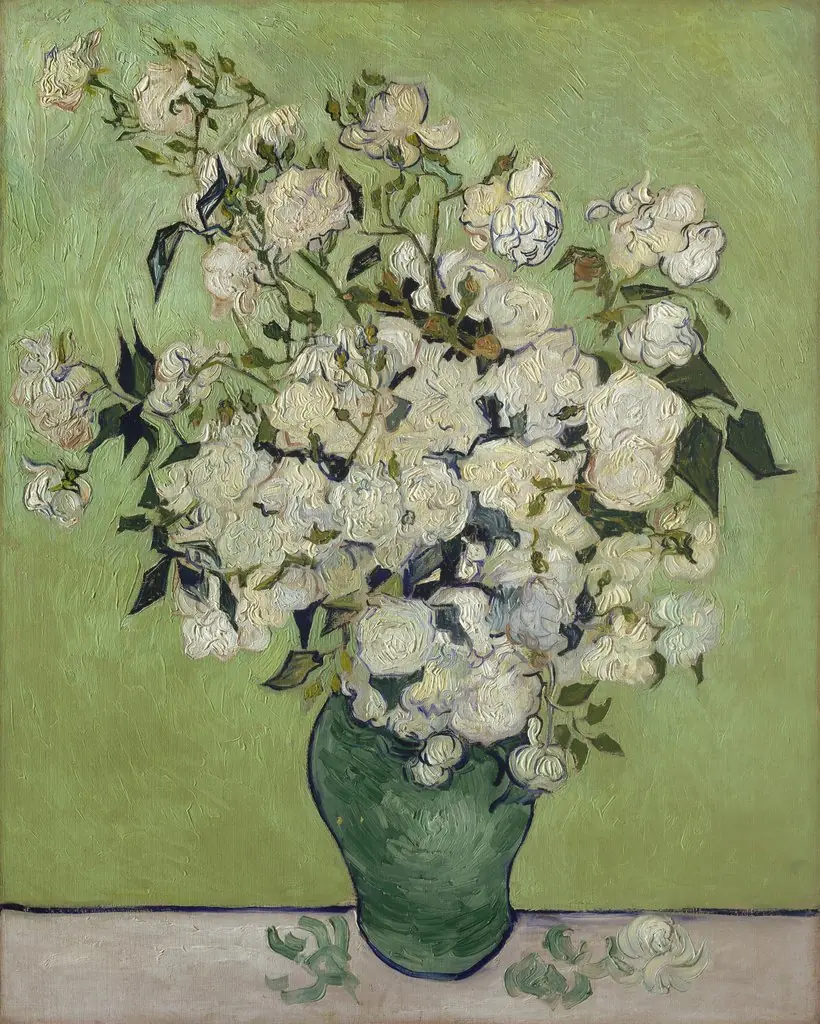
Roses is an oil painting by the Impressionist artist Vincent van Gogh. It dates from 1890 and is held in the collection of the National Gallery of Art.
About this work
Subject & Meaning
Still Life: Vase with Pink Roses belongs to Van Gogh's late flower paintings, which embody his belief in blossoming plants as symbols of birth and renewal.
Still Life: Vase with Pink Roses belongs to Van Gogh's late flower paintings, which embody his belief in blossoming plants as symbols of birth and renewal. The exuberant bouquet, rendered in thick, undulating strokes, overflows the vase to fill the picture plane, conveying vitality and optimism. During his final weeks in the Saint-Paul-de-Mausole asylum, Van Gogh explicitly linked his choice of flowers to celebrations of birth and renewal, and described the fresh green background as the delicate hue of spring leaves.
The original pink roses, now faded, once contrasted vividly with the green under the law of simultaneous contrast, intensifying the emotional charge. While Van Gogh did not single out roses for special iconographic meaning, he associated all flowers with life's fullness and transformation, a theme underscored by the painting's energetic technique and saturated palette.
Technique & Style
Executed in oil on canvas in 1890 at Saint-Rémy-de-Provence, the work employs a densely handled impasto in which undulating ribbons of paint are laid down in diagonal strokes across the surface, animating the composition and echoing the furled forms of blooms and foliage. The support is a standard rectangular canvas measuring 71 × 90 cm. Originally the bouquet's roses were a deeper pink that contrasted with the fresh green background, which itself evokes the delicate hue of spring leaves; over time the pink has faded, muting the intended complementary vibration. Stylistically, the painting exemplifies Van Gogh's late still-life practice of overflowing the picture plane with exuberant floral abundance, here realized through thickly applied, directional brushwork that conveys both the energy of growth and the artist's buoyant anticipation as he prepared to leave the asylum.
History & Provenance
Vincent van Gogh created Roses in 1890 at the Saint-Rémy-de-Provence asylum, shortly before relocating to Auvers-sur-Oise. The work remained in the artist's possession until his death in July 1890, after which it passed by inheritance to his brother Theo van Gogh in Paris. Following Theo's death in 1891, the painting was inherited by his widow, Johanna van Gogh-Bonger.
She sold the work to Paul Gallimard on June 9, 1891, for 400 francs. The painting subsequently entered the Bernheim-Jeune family collection in Paris by 1917 before being sold to the London dealers Alex Reid & Lefèvre in 1929. A half-share was held by M. Knoedler & Co., and the full work was acquired in January 1930 by W. Averell Harriman of New York.
Pamela Harriman later gifted it partially to the National Gallery of Art in 1991, with the transfer completed in 1997, where it is exhibited under accession number 1991.67.1.
Context
The work is recognized as a key example of van Gogh's late floral still lifes, painted in Saint-Rémy in 1890 while he prepared to leave the asylum, expressing optimism about renewal through blossoming flowers. Scholars highlight his systematic use of complementary colors and the law of simultaneous contrast to heighten emotional intensity, a technique rooted in studies of Delacroix and Chevreul. Its provenance documents a chain from the artist's brother to private collectors and finally to the National Gallery of Art, where it was gifted by Pamela Harriman in 1991.
The painting is catalogued as a post-Impressionist still life that exemplifies the artist's exploration of color symbolism and his influence on modernist approaches to nature.
Overview
Vincent van Gogh's painting, titled Roses, is an oil on canvas created in 1890. This still life depicts a vibrant arrangement of fresh red roses in a simple vase, set against an understated background. The work exemplifies the artist's distinctive style, characterized by bold colors and a palpable texture, making the floral subject appear lively and immediate. It was produced during a pivotal period in Van Gogh's life.
Own this work as a print
Artist & collection
Artist
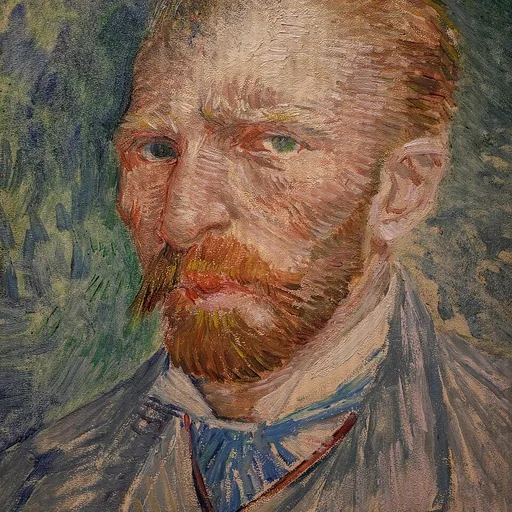
Vincent Willem van Gogh was a Dutch Post-Impressionist painter who is among the most famous and influential figures in the history of Western art.